 Birch Bay Roofing
 Why Cottonwood Beach Siding Wears Differently
Cottonwood Beach sits close enough to the water that siding here lives a harder life than siding a few miles inland. Salt-laden air settles into every seam and fastener hole. Wind-driven rain off the Strait doesn't just fall on a wall — it gets pushed sideways into laps, corners, and trim joints that were never designed to handle standing moisture. And then there's the long stretch of gray, damp months every year when moss and algae get a head start on any surface that holds water even a little too long. None of this is exotic — it's just what coastal Whatcom County does to a house, year after year. The homes that hold up best are the ones where the siding, the flashing, and the water management behind the siding were all installed with that reality in mind from day one.
That's the lens we bring to every Cottonwood Beach siding replacement: not "what looks good going up," but "what's still doing its job in fifteen years, in this exact microclimate."
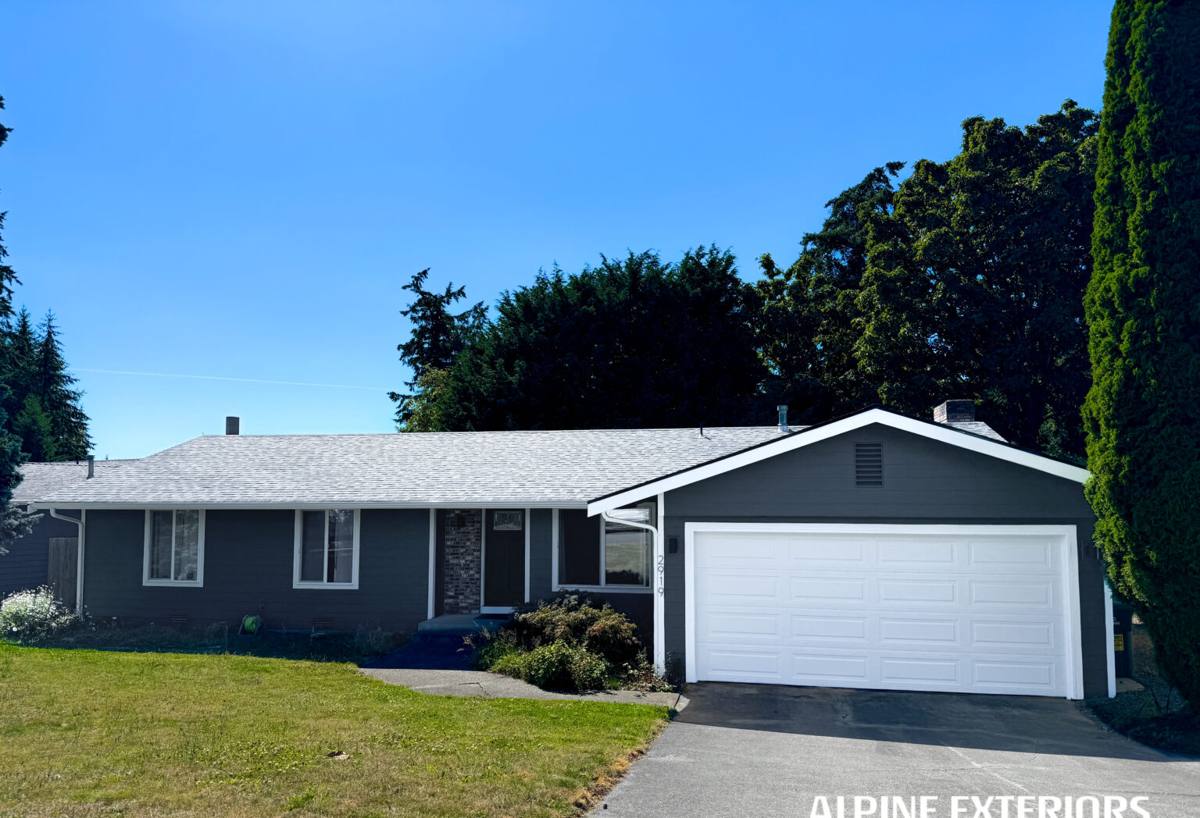
Signs a Cottonwood Beach Home Needs Replacement, Not Repair
Siding problems near the water tend to hide until they don't. A homeowner will often mention a small soft spot near a downspout, not realizing it's a symptom of something larger happening behind the cladding. Here's what we look for during an inspection, and what should prompt you to get one scheduled:
- Soft, spongy, or visibly swollen siding, especially near the bottom courses, corners, and window trim
- Paint that's failing repeatedly in the same spots no matter how often it's touched up
- Persistent moss or algae growth that returns within a season of cleaning
- Visible gaps, warping, or buckling at panel seams and butt joints
- Cracking or delaminating at cut edges, especially on the weather-facing side of the house
- A musty smell or unexplained interior moisture near exterior walls
- Fastener heads rusting, popping, or leaving streaks down the face of the siding
Any one of these can be a localized repair. Several of them together, especially on the side of the house that takes the worst of the wind and rain, usually mean the siding system as a whole has stopped keeping water out and it's time to talk replacement.
What a Correct Siding Replacement Actually Involves
It's Not Just the Visible Layer
The siding itself is the part everyone sees, but it's the least important part of a proper replacement. What actually determines whether a home stays dry for the next few decades is what happens underneath: the weather-resistive barrier, the flashing at every window and door, and the details at penetrations like hose bibs, vents, and light fixtures. A replacement that skips inspecting and correcting this layer just buries the same problems under new material.
Our Standard Process
- Full tear-off of the old siding and trim, with the sheathing inspected for rot, soft spots, or existing water damage
- Repair or replacement of any compromised sheathing before anything new goes back on the wall
- Installation of a new weather-resistive barrier, lapped and sealed correctly at every seam
- Proper flashing at all windows, doors, and penetrations — this is where most coastal siding failures actually start
- Installation of James Hardie fiber cement siding and trim to manufacturer specification, including correct fastener type, spacing, and clearance
- Careful attention to butt joints, corners, and caulking points, since these are the spots wind-driven rain finds first
- Final cleanup and a walkthrough so you understand what was done and why
Skipping any one of these steps is how a siding job that looks fine at completion ends up with rot behind it five years later — which is a common story on older homes near the water that were sided quickly and cheaply the first time around.
Why We Install Only James Hardie Fiber Cement
We don't install vinyl siding, LP SmartSide, Cemplank, Allura, primed spruce, or cedar. That's a deliberate standard, not a lack of options. Every one of those products has genuine strengths — vinyl is inexpensive, cedar looks beautiful, engineered wood siding has come a long way — but in a salt air, high-moisture, moss-prone environment like Cottonwood Beach, each of them asks a homeowner to accept a trade-off we're not willing to install and stand behind.
| Material | Common Trade-Off Near the Water | Why It Matters Here |
|---|---|---|
| Vinyl siding | Expands and contracts with temperature swings; can warp or crack with age; seams can allow wind-driven rain intrusion | Driving rain off the water finds loose seams and gaps at corners over time |
| LP SmartSide / engineered wood | Wood-based core is more sensitive to sustained moisture exposure at cut edges and butt joints if not perfectly sealed and maintained | Long damp seasons give moisture more time to work into any gap |
| Cedar | Beautiful but needs ongoing refinishing and is naturally attractive to moisture, rot, and moss in shaded, humid conditions | Higher long-term maintenance burden in a climate that's damp most of the year |
| James Hardie fiber cement | Higher upfront material cost than vinyl | Non-combustible, dimensionally stable, engineered specifically for wet climates, factory finish holds color and resists moisture damage |
James Hardie's HZ5 product line was engineered specifically for climates like ours — the Pacific Northwest's combination of rain, humidity, and temperature swings. Paired with the ColorPlus factory finish, which is baked on under controlled conditions rather than field-applied, you get a color layer that resists fading and moisture damage far better than a job-site paint job. It's also backed by a strong, transferable warranty — worth something when you're investing in a home you plan to keep, or one you may eventually sell.
How We Approach Work in Cottonwood Beach Specifically
Every coastal neighborhood has its own quirks — prevailing wind direction, how close homes sit to the water, how much tree cover shades a roofline and slows drying time. Working Cottonwood Beach regularly means we already know which sides of a typical home take the worst weather, where moss tends to establish first, and how to sequence a tear-off so a home isn't sitting exposed to open siding on a day the forecast turns. That local familiarity shows up in small decisions — like scheduling around tide and wind patterns, or knowing which flashing details matter most on homes closer to the water line — that a crew unfamiliar with this specific stretch of Birch Bay wouldn't think to plan for.
We also treat every estimate as a real inspection, not a walk-around guess. That means checking siding at corners, behind shrubs, and at ground-contact areas where moisture problems near the water tend to start and go unnoticed longest.
What Drives Cost on a Cottonwood Beach Siding Job
Every home is different, and we won't quote a number without seeing the house, but these are the factors that most often move a project up or down in scope and cost:
| Factor | Why It Matters |
|---|---|
| Condition of the sheathing underneath | Hidden rot found during tear-off adds repair scope before new siding can go on |
| Home size and number of stories | More square footage and access complexity (scaffolding, lifts) affect labor time |
| Trim, corner, and detail complexity | Homes with more windows, dormers, and architectural detail take more precision and time |
| Siding profile chosen | Lap width, board-and-batten, and shingle-style Hardie products vary in material and labor cost |
| Existing paint or old siding removal | Lead-safe practices and disposal add cost on older homes |
| Access and site conditions | Waterfront lots, tight setbacks, and limited staging space can affect logistics and timeline |
The honest answer to "what will this cost" is always "let's look at your house" — but these are the variables that actually move the number, and any estimate worth trusting should walk you through them specifically.
What to Expect During the Project
A full siding replacement on an average home typically runs from about a week to a few weeks, depending on size, weather, and how much sheathing repair turns up once the old siding comes off. We sequence the tear-off in sections rather than stripping an entire home at once, so your house isn't left exposed to the weather longer than necessary — an important detail in a climate where a sudden squall off the water is always a possibility. You'll get clear communication about what we find once the old siding is off, especially if hidden moisture damage changes the scope, before any additional work happens.
Why the Right Crew Matters More Than the Right Product
Even the best siding system fails if it's installed wrong. James Hardie publishes detailed installation specifications for a reason — clearance from grade, fastener placement, flashing integration, caulking points — and skipping or rushing any of those details is how a quality product still ends up with moisture problems in a climate like this one. When you're vetting a contractor for a Cottonwood Beach siding job, it's worth asking directly whether they're James Hardie trained or certified, how they handle flashing at windows and doors, and whether they'll show you the sheathing before it's covered back up. A contractor confident in their work will welcome those questions.
If you're weighing a siding replacement for a home in Cottonwood Beach, we're glad to come take a look and give you a straightforward, no-pressure estimate — including an honest read on whether you're looking at full replacement or a smaller repair. Use the form below to get started.