 Birch Bay Roofing
 Birch Bay Village Sits in a Different Roofing Environment Than Inland Whatcom County
A roof in Birch Bay Village works harder than a roof twenty minutes inland. The neighborhood sits close enough to the water that salt-laden air is a constant, wind off the Strait of Georgia drives rain sideways into eaves and valleys, and the tree cover common through the area keeps sections of many roofs shaded and damp for much of the year. None of that is unusual for coastal Whatcom County, but it does mean a roof built or repaired using generic, one-size-fits-all methods tends to fail earlier here than the same roof would inland. Replacement is the point where you get to correct that — not just put new material over an old problem, but build a roof system suited to where it actually sits.
This page covers roof replacement specifically for Birch Bay Village: what the local climate does to a roof over time, what a properly done replacement includes, how our process works from first look to final walk-through, and what to weigh when you're comparing bids from contractors who may or may not actually work this area regularly.
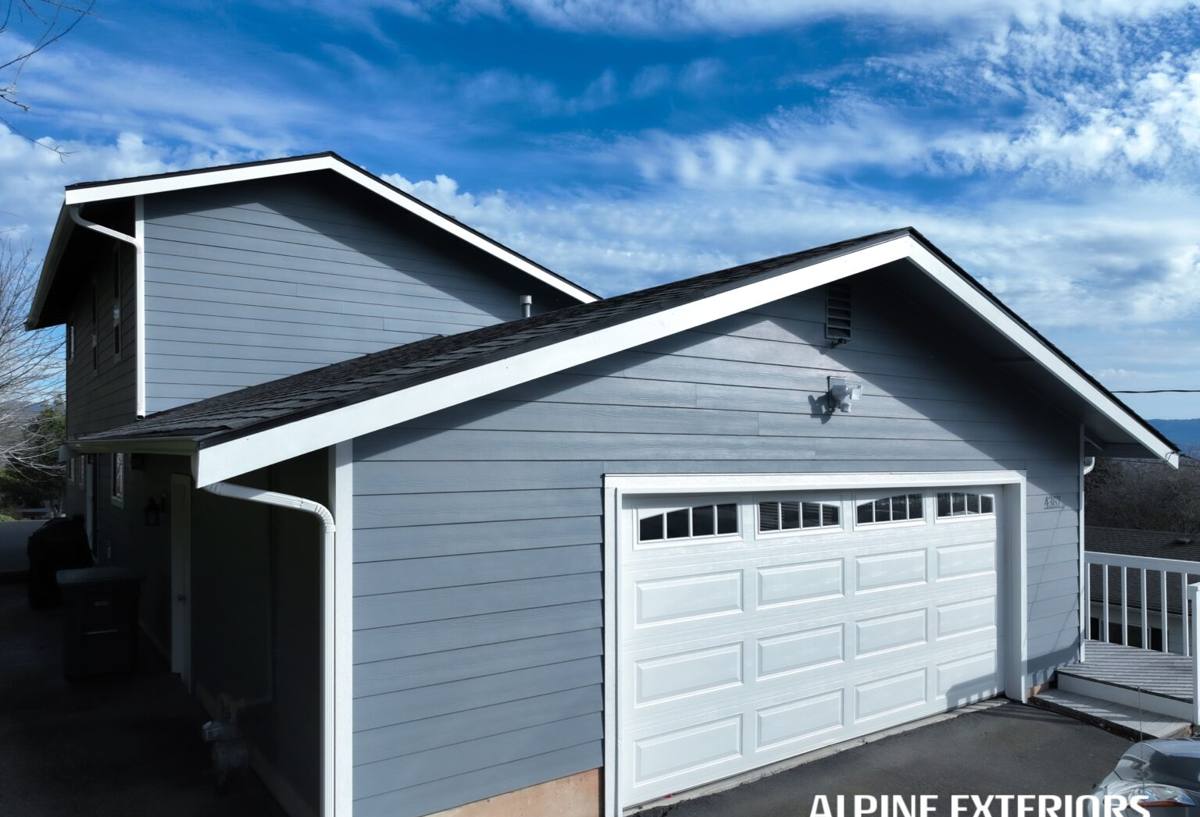
What Salt Air, Driving Rain, and a Long Moss Season Actually Do to a Roof
These three factors don't act alone — they compound each other, and understanding how helps explain why some roofs in this area age faster than their rated lifespan would suggest.
Salt Air and Metal Components
Salt-laden coastal air accelerates corrosion on any exposed metal — nails, flashing, vent boots, gutter hardware, and fasteners. Standard electro-galvanized fasteners can start showing rust streaks well before the shingles around them are due for replacement. Once a fastener corrodes, it loses holding power and can allow water to track down the shaft into the decking. This is a slow, quiet failure mode — it rarely shows up as an obvious leak until the damage underneath has already spread.
Wind-Driven Rain and Flashing Details
Rain that comes in mostly straight down is forgiving of minor flashing gaps. Wind-driven rain off the water is not — it gets pushed sideways and even slightly upward under eaves, around chimneys, and through step flashing that's a little short or a little loose. Most of the leaks we find on older Birch Bay-area roofs trace back to flashing details, not the field shingles themselves. The shingles can look fine while water is quietly working its way in at a valley, a sidewall, or a vent penetration.
Moss, Shade, and Trapped Moisture
Tree cover and the region's mild, damp climate give moss a long growing season. Moss holds moisture against the roof surface far longer than open sun and airflow would allow, which softens shingle mat over time and can lift edges enough for wind and rain to get underneath. Moss growing in a valley or along a ridge is also a sign of restricted drainage or poor airflow at that spot — worth checking, not just scraping off.
What This Adds Up To
none
Signs a Birch Bay Village Roof Needs Full Replacement, Not Another Repair
Repair makes sense when the damage is isolated and the roof underneath is still sound. Replacement is the honest answer once the roofing system as a whole — decking, underlayment, flashing, and covering — has reached the end of its useful service life. Signs worth taking seriously include:
- Granule loss heavy enough that shingles look patchy or bald, especially on south- and west-facing slopes
- Shingles that are cupping, curling at the edges, or cracking when walked on
- Persistent moss or algae staining that returns within a season or two of cleaning
- Rust staining or visibly corroded flashing, vent boots, or fasteners
- Soft or spongy spots underfoot, or sagging visible from the ground
- Daylight visible through the roof deck from inside the attic
- Water stains on interior ceilings, especially near valleys, chimneys, or skylights
- Multiple past repairs in different areas within a short span of time
- A roof approaching or past the upper end of its material's rated lifespan, particularly if it has faced heavy coastal exposure
One or two of these on their own might point to a targeted repair. Several at once, or damage that keeps reappearing after repairs, usually means the roof system as a whole is done and patching it further is just spending money to delay the inevitable.
What a Correct Roof Replacement Actually Involves
A roof replacement is more than swapping old shingles for new ones. Done right, it's a full rebuild of the roofing system, and every layer matters for how the roof performs against salt air, wind-driven rain, and moss.
Tear-off and deck inspection. We remove the old roofing down to the deck rather than layering over it. This is the only way to actually see the deck's condition and catch soft or water-damaged sheathing before it's covered up again. Any compromised decking gets replaced, not roofed over.
Underlayment. A synthetic or self-adhered underlayment goes down as the roof's real waterproofing backstop. In areas exposed to wind-driven rain — eaves, valleys, and rakes — we pay particular attention to ice-and-water-shield-type membrane at the vulnerable points, since these are the spots where sideways rain is most likely to find a way in.
Flashing. New step flashing, counter-flashing, valley metal, and vent boots are installed as part of the job, not reused from the old roof. Given how many local leaks trace back to flashing rather than field shingles, this is one of the areas where cutting corners shows up fastest.
Fasteners and hardware. We use fasteners and metal components suited to coastal exposure rather than the cheapest standard-grade option, to slow the corrosion that salt air accelerates.
Ventilation. Intake and exhaust venting are checked and corrected as needed so the attic can actually dry out between wet stretches, which matters for both moss resistance and the long-term health of the decking.
Field material. The shingles, panels, or other covering go down last, over a properly prepared and flashed system — which is exactly why skipping the earlier steps to save time undercuts the whole job, no matter how good the visible material looks.
Choosing a Roofing Material for a Coastal Whatcom County Site
There's no single "best" material for every home — the right choice depends on your roof's pitch, your home's exposure to wind and salt air, your budget, and how long you plan to own the home. Here's how the common options generally compare for a site like Birch Bay Village.
| Material | Coastal / Salt Air Behavior | Moss Resistance | Typical Lifespan Here |
|---|---|---|---|
| Architectural asphalt shingles | Good when paired with corrosion-resistant fasteners and flashing; the industry standard for a reason | Moderate — benefits from good airflow and periodic cleaning | 20-30 years with proper install and ventilation |
| 3-tab asphalt shingles | Adequate but thinner mat means less margin against wind and moisture over time | Lower — thinner profile holds less resistance to prolonged dampness | Shorter end of the asphalt range |
| Metal (standing seam or panel) | Very good when finished and fastened for coastal use; sheds moss and debris well | High — smooth surface resists moss attachment | Longest of the common options, higher upfront cost |
| Wood shake | Higher maintenance burden in damp, shaded conditions; needs diligent upkeep to avoid moisture retention | Lowest without regular maintenance | Shortest without a strong maintenance commitment |
We're honest with homeowners about trade-offs rather than pushing whatever's easiest to install. Wood shake, for example, can look great, but in a shaded, damp coastal setting it demands a maintenance routine most homeowners underestimate — that's a fair thing to know before you commit to it, not a knock on the product itself.
Our Roof Replacement Process, Start to Finish
- On-site inspection. We walk the roof, check the attic, and look at flashing, ventilation, and deck condition — not just the shingles — to see the full picture before recommending anything.
- Written estimate. You get a clear scope of work and pricing broken down by what's actually being done, so you know what you're paying for.
- Material selection. We go over the options that make sense for your roof's pitch, exposure, and budget, with honest pros and cons for each.
- Scheduling around weather. Because this area sees regular wet stretches, we plan the job for a realistic weather window and keep the roof protected if conditions shift mid-project.
- Tear-off and deck check. Old roofing comes off, the deck is inspected, and any damaged sheathing is replaced before anything new goes down.
- Underlayment, flashing, and ventilation. Each layer goes in correctly before the next, with particular attention to the details that matter most for coastal exposure.
- New roofing installed. Material goes on per manufacturer specifications, which also keeps your material warranty intact.
- Cleanup and walk-through. The site is cleared of debris and nails, and we walk the finished roof with you so you know what was done and what to expect from it going forward.
Ventilation and Moss Prevention Built Into the New Roof
A new roof gives you a real opportunity to fix ventilation problems that were quietly working against the old one. Poor attic airflow traps moisture, which feeds moss growth and shortens shingle life from underneath — you can have new shingles on top and still be fighting the same underlying moisture problem within a few years if intake and exhaust venting aren't corrected.
We also talk through simple maintenance that extends a new roof's life in this climate: keeping gutters and valleys clear of needles and debris so water actually drains instead of sitting, trimming back branches that shade sections of the roof and keep them damp, and scheduling periodic moss treatment before it becomes heavy growth rather than after. None of this replaces a good install, but it meaningfully extends how long that install performs well.
What Influences the Cost of a Roof Replacement Here
Every roof is different, so we don't quote sight-unseen — but the factors that most commonly move price are consistent enough to lay out plainly.
| Factor | Why It Matters |
|---|---|
| Roof size and pitch | More surface area and steeper pitches mean more material and labor time |
| Number of layers to remove | Tearing off multiple old layers takes longer and adds disposal cost |
| Deck condition | Rotted or soft sheathing found during tear-off needs replacing before new roofing goes on |
| Material choice | Asphalt, metal, and specialty materials sit at different price points and labor requirements |
| Roof complexity | Valleys, dormers, chimneys, and skylights each add flashing work and labor time |
| Ventilation upgrades | Correcting inadequate intake or exhaust venting adds a modest amount to the scope but pays off long-term |
As a rough sense of scale, most full roof replacements on typical single-family homes in this region land in a broad middle range that shifts up or down significantly based on the factors above — which is exactly why an accurate quote requires an actual look at your roof rather than a number pulled from a phone call.
Why Hiring a Crew That Already Works Birch Bay Village Matters
A contractor who regularly works this stretch of Whatcom County isn't guessing about how to handle salt air, wind exposure, or moss — they've seen how roofs here actually age and know which details are worth extra attention versus which are fine done to standard spec. That shows up in small but meaningful ways: which fastener grade to use without being asked, where wind-driven rain tends to find weak flashing, and which slopes in a shaded, damp neighborhood need the most attention to ventilation and drainage.
It also matters for the practical side of the job — knowing local permitting requirements, being familiar with the area's weather patterns well enough to schedule realistically, and being reachable afterward if a question comes up rather than having moved on to a job hours away. A roof replacement is a significant investment; it's worth having it done by a crew that treats Birch Bay Village as home turf, not an unfamiliar stop.
If your roof is showing wear, or you just want a straight answer about whether repair or replacement makes more sense for your home, we're glad to take a look. Reach out using the form below for a free, no-pressure estimate — we'll walk the roof, tell you honestly what we see, and lay out your options in plain terms.