 Birch Bay Roofing
 Why Decks in Birch Bay Village Take a Beating
Birch Bay Village sits close enough to the water that salt air is part of daily life, not an occasional nuisance. That salt carries on the wind and settles on everything outdoors, including your deck's wood, fasteners, and hardware. Add in Whatcom County's marine climate — long stretches of driving rain, short dry summers, and a moss season that can run from early fall well into spring — and you have a near-constant cycle of wetting, drying, and slow corrosion working against your deck year-round.
None of that means a deck in this neighborhood is doomed to fail early. It means a deck here needs to be built and repaired with those conditions in mind. A repair that would hold up fine forty miles inland can fail in a couple of seasons this close to Birch Bay if the materials and details aren't matched to the exposure.
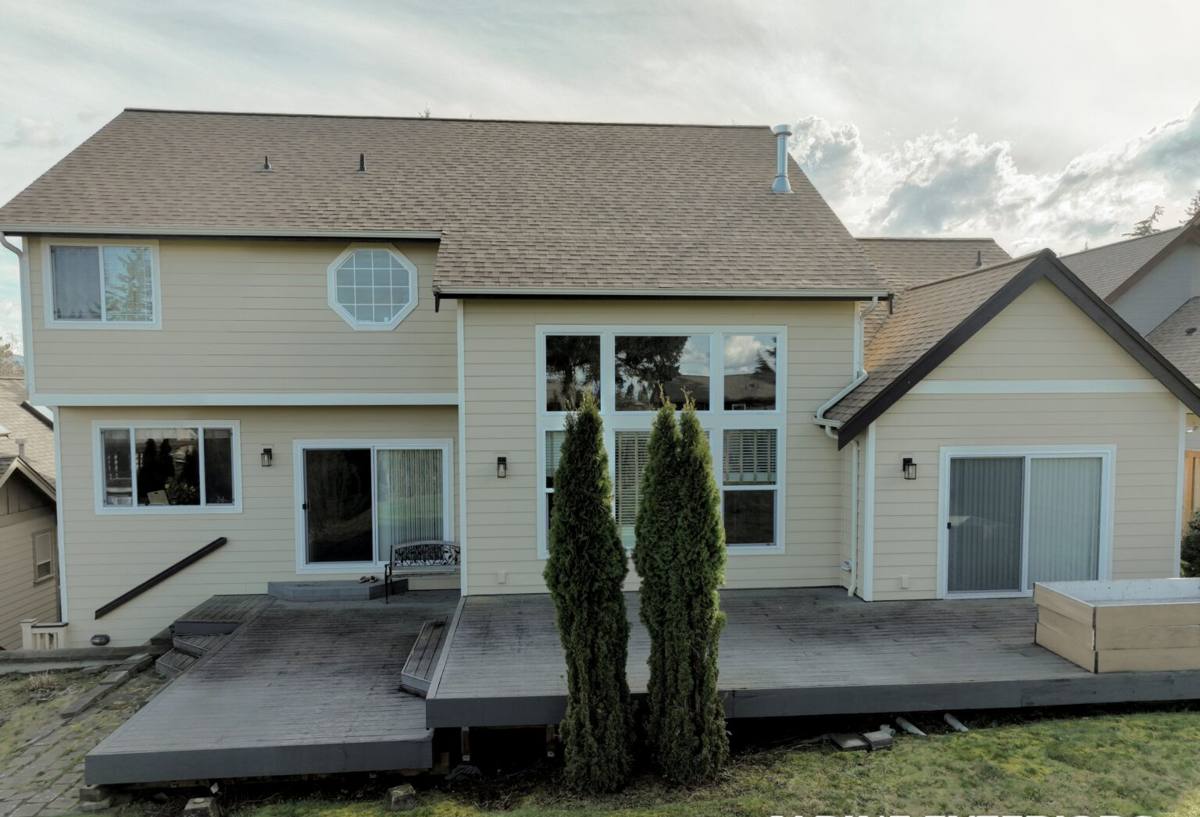
Signs Your Deck Needs Repair, Not Just Cleaning
A pressure wash can make a tired deck look better without telling you anything about what's happening underneath. Before you spend money on cosmetics, it's worth knowing what actually signals a structural or moisture problem:
- Boards that feel soft, spongy, or flex underfoot, especially near the house or along the outer edge
- Dark, wet-looking staining or moss growing on the underside of boards or where boards meet joists
- Rust streaks bleeding out from screw heads, joist hangers, or bolts
- Any movement or gap where the deck meets the house — this is the ledger board connection and it's the most safety-critical joint on the whole structure
- Railings or posts that wiggle when pushed, rather than staying rigid
- Stairs that bounce, creak, or feel less solid than the deck itself
- Standing water or slow-draining spots after a normal rain
Any one of these is worth a real inspection. Several together usually mean the deck has been quietly losing structural margin for a while.
What a Correct Deck Repair Actually Involves
The Ledger Board Connection
Where the deck attaches to the house is the single most important connection to get right, and it's also the one most exposed to hidden water damage, since it's often covered by decking and siding. Correct repair means confirming the flashing behind the ledger actually sheds water away from the house framing, not just checking that the bolts are tight. If we find soft framing behind the ledger, that gets addressed before anything else — a deck that looks fine on top but has a compromised ledger connection is a safety issue, not a cosmetic one.
Joists, Beams, and Footings
Joists take the brunt of standing moisture, especially at the ends and anywhere a joist hanger traps water against the wood. We check for rot at these connection points, look at whether hangers and hardware have corroded, and sister in new framing next to damaged joists rather than just patching over them. Footings matter too — in the wetter, sandier soils common along this stretch of coast, footings can settle or heave slightly over the years, which shows up as a deck that's no longer quite level.
Decking Boards and Railings
Individual board replacement is straightforward when the framing underneath is sound. Railings deserve their own scrutiny, since a railing post is only as strong as its attachment to the structure below — a post that's screwed to a rim joist that's already softening isn't providing real fall protection, no matter how solid it looks.
Repair Decision Factors
| Component | Sign of Trouble | Typical Fix |
|---|---|---|
| Ledger board | Gap, staining, or movement at house connection | Re-flash and re-fasten, or reframe if wood is compromised |
| Joists | Soft spots, rust at hangers, sagging between supports | Sister new lumber alongside, replace hangers with coated hardware |
| Footings | Deck no longer level, one area sinking | Re-level, add or extend footing support |
| Decking boards | Soft, cupping, or splitting boards | Spot replacement of individual boards |
| Railings/posts | Wobble or give when pushed | Re-secure to solid framing, replace corroded fasteners |
| Fasteners | Rust streaks, popped screw heads | Replace with corrosion-rated hardware matched to the wood |
Repair or Rebuild? How We Decide
Most decks don't need to be torn out completely — but some do, and it's worth being honest about which is which before spending money on the wrong one. The deciding factor is almost always the framing, not the decking surface. If the ledger, joists, and footings are structurally sound and the damage is limited to boards, railings, and fasteners, a targeted repair is the right call and it's a fraction of the cost of a rebuild. If rot has spread through multiple joists, the ledger connection is compromised, or footings have shifted enough to affect the whole structure, patching around those problems just delays a bigger repair later — and in the meantime, you're living with a deck that may not be as safe as it looks.
We'll tell you plainly which category your deck falls into and why, including what we found and what it would take to fix it. If a repair is genuinely the right call, that's what we'll recommend.
Fasteners and Hardware: The Detail Most Repairs Get Wrong
This close to Birch Bay, fastener choice matters more than most homeowners expect. Salt air accelerates corrosion, and mixing incompatible metals — say, a bare steel screw against galvanized joist hardware — can actually speed up corrosion on both through galvanic reaction. A repair that looks identical to the original but uses the wrong-grade fasteners can start rusting and bleeding stains into the wood within a season or two.
For coastal exposure, that generally means stainless steel or heavy hot-dip galvanized fasteners and hardware rated for the wood treatment being used, not the cheapest option that happens to fit the hole. It's a detail that's invisible on the day the work is finished and very visible two winters later, which is exactly why it's worth getting right the first time.
Decking Material Trade-offs in a Wet, Salty Climate
When boards need replacing, homeowners usually end up choosing between wood and composite. Both can work well here, but they behave differently under these conditions.
Wood decking (cedar or pressure-treated lumber) is affordable to repair in sections and matches easily to existing boards, but it needs periodic sealing or staining to keep moisture from getting into the end grain and fastener holes — skip that maintenance in this climate and rot returns faster than it would inland.
Composite decking resists moisture and moss staining better and needs less upkeep, but it's a bigger investment up front, and it doesn't take a coat of stain if you later want to change the look. It also needs to be installed with the manufacturer's specified fastening and gapping details, since composite expands and contracts differently than wood — get that wrong and you'll see waviness or buckling within a year or two.
Neither material is automatically the "right" answer. It depends on how much of the deck needs replacing, your maintenance appetite, and your budget.
Our Deck Repair Process
- Inspection: We check the ledger connection, probe joists and footings for soft spots, and look at every fastener and hardware point, not just the boards you can see from standing height.
- Honest assessment: You get a plain explanation of what's structural versus cosmetic, and what happens if each item is left alone.
- Scoped proposal: A clear plan covering exactly what gets repaired, replaced, or reinforced, with materials and fasteners matched to this climate.
- The work itself: Framing repairs first, then decking, railings, and hardware — in that order, because a solid surface over weak framing is not a finished repair.
- Final walk-through: We check the deck is level, railings are rigid, and drainage is doing what it should before we call it done.
Why Hiring a Crew That Already Works Birch Bay Village Matters
A deck repair crew that only occasionally works this close to the water can miss things that are obvious to someone who deals with Birch Bay conditions regularly — how quickly moss reestablishes on north-facing sections, which framing details tend to fail first in homes of a certain age in this area, or how the wind off the bay drives rain into spots a deck built for a more sheltered lot wouldn't need to worry about. Working in Birch Bay Village and the surrounding area regularly also means we're not guessing at what the local soil and exposure do to footings and fasteners over time — we've seen it.
It also means straightforward logistics: showing up when scheduled, being reachable if something comes up mid-project, and standing behind the work because we're not driving in from somewhere else to do it.
Keeping Your Repaired Deck Sound Longer
A good repair buys you years, but a little upkeep buys you more. A few habits make a real difference in this climate:
- Sweep leaves, needles, and moss debris off the deck surface regularly — trapped organic matter holds moisture against the boards
- Check that gutters and downspouts near the deck are actually directing water away from it, not onto it
- Reseal or restain wood decking on a regular schedule rather than waiting until it looks obviously weathered
- Do a quick fastener and railing check once a year, ideally before the wet season sets in
- Keep nearby shrubs and trees trimmed back so the deck surface gets some airflow and sun between rain events
If you're noticing soft spots, rust stains, or a railing that doesn't feel as solid as it used to, it's worth having it looked at before the next wet season rather than after. We're happy to come take a look and give you a straight answer on what your deck actually needs — no pressure, no upsell, just a clear estimate based on what we find. Use the form below to get a free estimate scheduled.