 Birch Bay Roofing
 Birch Bay Village sits inside one of the more demanding stretches of coastline in Whatcom County, and siding is usually the first exterior system to show it. The neighborhood's housing stock is a mix — older cottages and cabins that started life as seasonal or vacation homes, newer builds oriented toward the water, and additions that have been tacked onto original structures over the years. That mix means no two siding jobs in this community look quite the same, but the climate they all have to stand up to is consistent: salt-laden air off the bay, storms that drive rain sideways into wall assemblies, and a moss and mildew season that runs long on shaded and north-facing walls.
We install siding specifically for this kind of exposure, and in Birch Bay Village that means treating the job as more than a cosmetic swap. Siding is the primary barrier between the weather and the wall assembly behind it, and in a location where wind-driven rain and salt air are part of daily conditions, the installation details matter as much as the material itself.
Why Siding Installation Here Isn't a Generic Job
A siding installer working a few miles inland can get away with following a manufacturer's standard installation guidance and rarely running into trouble. That guidance assumes average exposure — moderate wind, occasional rain, dry stretches long enough for anything marginal to recover. Birch Bay Village doesn't offer those dry stretches often enough to rely on that assumption. Water that would evaporate off a wall inland can sit against siding and trim here for days, and wind-driven rain finds gaps in flashing and laps that a calmer location would never test.
The age and variety of homes in this neighborhood add another layer. Older cottages and cabins were often built to whatever framing and sheathing standards were common decades ago, which means the wall assembly behind the siding isn't always what a current installation guide assumes it will be. Additions and remodels create transition points where new wall assembly meets old, and those seams need particular attention during a siding installation, not a generic wrap-and-nail approach.
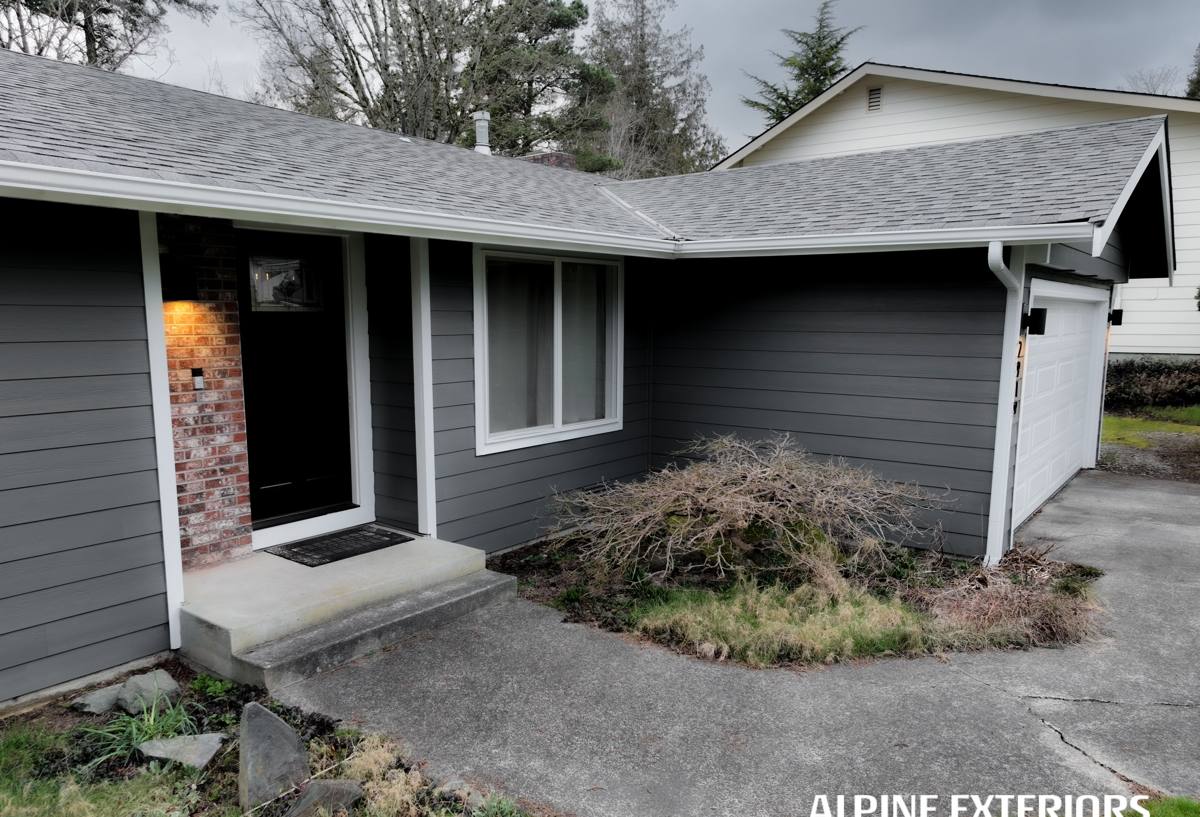
What This Climate Does to Siding
Salt Air and Corrosion
Being close to the water puts Birch Bay Village siding in more direct contact with salt-laden air than homes set back further inland. Salt accelerates corrosion of fasteners, flashing, and any lower-grade metal trim, and it can break down cheaper finishes faster than a drier climate would. Fastener selection and finish quality matter more here than they would on an installation a few miles from the coast.
Wind-Driven Rain
Storms off the water push rain sideways into siding laps, seams, and penetrations rather than letting gravity carry it straight down and off the wall. That's a different stress than a simple annual rainfall total suggests, and it's exactly the kind of load that exposes a siding installation with shortcuts in the lap sequencing or flashing detail. A siding job that would perform fine in a sheltered location can fail here specifically because water gets pushed in from the side.
Moss, Mildew, and Shaded Walls
Mild temperatures, shade from trees and neighboring structures, and near-constant moisture combine into a moss and mildew season that can run most of the year on north-facing or shaded siding. Any material that holds moisture against the substrate, or that has a porous or unsealed surface, becomes a growth surface over time. On a lot of Birch Bay Village homes, the shaded side of the house needs more attention during installation — and more attention afterward — than the sun-facing walls.
Why We Install Only James Hardie Fiber Cement
We install James Hardie fiber cement siding exclusively. We don't offer vinyl siding, LP SmartSide, Cemplank, Allura, primed spruce, or cedar, and that's a professional standard, not a supplier arrangement. In a climate like Birch Bay Village's — sustained salt exposure, wind-driven rain, and a long wet season — the trade-offs of those other products show up faster and more visibly than they would inland.
- Non-combustible core: Fiber cement doesn't feed a fire the way wood-based siding products can.
- Factory-applied ColorPlus finish: The color is baked on under controlled factory conditions instead of applied on site, which holds up longer against fading and chalking in sustained sun and salt exposure.
- Climate-engineered HZ formulation: Hardie's HZ5 product line is engineered for regions with heavy moisture exposure, which fits waterfront Whatcom County.
- Dimensional stability: Fiber cement doesn't swell, cup, or warp the way engineered wood products can after repeated wetting.
- Transferable warranty: Hardie backs the product with a strong warranty structure, provided the installation follows their published specification.
Each of the products we've stepped away from has a legitimate place in the market, and plenty of homeowners elsewhere are satisfied with them. On a shoreline exposure like this one, though, we'd rather install one system we fully stand behind than offer a cheaper option that shifts more long-term maintenance risk onto the homeowner.
What a Correct Siding Installation Involves
Tear-Off and Wall Assessment
We remove the existing siding rather than installing over it. That's the only way to actually see the wall assembly underneath — sheathing condition, existing moisture damage, and whether the weather-resistive barrier is intact. On older Birch Bay Village cottages especially, this step is where hidden issues from decades of coastal exposure typically surface, and it's better to find them before new siding goes up than after.
Weather-Resistive Barrier and Drainage Plane
A correctly lapped weather-resistive barrier, installed with proper shingle-style overlaps, is what actually keeps incidental moisture that gets past the siding from reaching the sheathing. In a wind-driven rain climate, this layer isn't optional or an upgrade — it's baseline. Where conditions call for it, we build in a drainage plane behind the siding so any moisture that does get past the cladding has somewhere to go instead of sitting against the wall.
Flashing at Every Penetration
Windows, doors, hose bibs, vents, and roof-to-wall transitions are the places siding installations most commonly fail, not the flat field of the wall. Each penetration needs its own flashing detail, lapped correctly with the weather-resistive barrier and the siding courses above and below it. Rushed installations skip or shortcut this step because it takes real time to do right, and it's exactly the step that determines whether a home stays dry through a windy winter storm.
Fastening and Clearances
Hardie siding only performs to spec when it's fastened correctly — the right fastener type, spacing, and penetration depth — and installed with proper clearance from grade, roof lines, and other transitions. Clearance matters more here than in a drier climate, since standing water or splash-back against the bottom edge of siding is a common source of long-term moisture damage.
Joints and Finish Work
Butt joints, corners, and trim intersections need to be sealed or detailed correctly, and factory-primed cut edges need field-sealed before they're exposed to weather. Left unsealed, a cut edge is one of the fastest ways moisture gets into fiber cement siding, regardless of how well the rest of the installation was done.
Our Process, Start to Finish
- On-site assessment — we walk the exterior, check the condition of the existing siding and wall assembly, and note anything specific to your home's age or additions.
- Honest scope and product plan — what needs full tear-off, what the flashing plan looks like at doors, windows, and roof lines, and which Hardie profile and color fit the home.
- Written estimate — a clear scope of work and timeline before anything is scheduled.
- Removal and wall assessment — old siding comes off, and any sheathing or moisture issues found underneath get addressed before new material goes up.
- Weather-resistive barrier and flashing — installed to the sequence the specific wall and penetrations require, not a generic template.
- Siding installation — fastened to Hardie's specification, with correct clearances and joint detailing throughout.
- Final walkthrough — we review the finished work with you before calling the job complete.
Signs a Birch Bay Village Home May Need New Siding
- Soft spots or visible bowing when you press on the siding, especially near the bottom courses
- Persistent moss or dark staining on shaded or north-facing walls that keeps returning after cleaning
- Cracked, warped, or delaminating panels, particularly around older cottage additions
- Paint or finish that's chalking, peeling, or fading unevenly across the exterior
- Gaps at joints, corners, or trim where caulk has failed or pulled away
- Interior signs like peeling paint, musty smells, or soft drywall near exterior walls
What Affects the Cost of a Siding Installation
| Factor | How It Affects the Job |
|---|---|
| Wall condition underneath | Sheathing repair or replacement adds time and material before new siding can go up |
| Home age and construction | Older cottages and additions often need extra flashing or transition work at seams |
| Number of penetrations | More windows, doors, and roof transitions means more flashing detail to install correctly |
| Siding profile and trim | Lap, panel, and shingle-style Hardie profiles differ in material and labor requirements |
| Access and site conditions | Water-facing lots, slopes, or limited access can add time to staging and installation |
| Color and finish | Factory ColorPlus finishes come in a range of standard colors; custom finishes cost more |
We won't quote a firm number without seeing the home in person, since wall condition alone can shift a project significantly. What we can tell you upfront is which of these factors are likely to apply to your specific home once we've walked the exterior.
Why a Local Birch Bay Village Crew Matters
Manufacturer installation guidance is written around average conditions, and Birch Bay Village doesn't offer average conditions very often. A crew that has actually installed siding on this stretch of coastline — on older cottages, newer water-facing builds, and everything in between — knows which parts of the standard installation sequence need extra attention here and which shortcuts that pass fine inland will show up as problems in two or three wet seasons.
That experience shows up in decisions that don't come up in a sales conversation: how much lap a flashing course needs at a roof-to-wall transition facing prevailing wind, whether an older cottage's original sheathing needs repair before new siding goes on, how a shaded north wall gets detailed differently than the rest of the house. Those are the details that decide whether a siding job is still performing cleanly in twenty-five years or showing moisture problems in five.
What to Ask Before Hiring for Siding Work
- Ask whether the quote includes full tear-off or installation over existing siding
- Ask how they detail flashing at windows, doors, and roof-to-wall transitions specifically
- Confirm current Washington contractor licensing and active insurance
- Get a written scope of work, timeline, and warranty terms before signing anything
- Ask what happens if hidden sheathing damage is found once old siding comes off
If you're weighing a siding replacement for a Birch Bay Village home — whether it's an older cottage due for its first full re-side or a newer build that needs work done right the first time — it's worth having someone walk the exterior with you before you start pricing materials. We offer free, no-pressure estimates for siding installation in Birch Bay Village and the surrounding area; use the form below to get a time on the schedule.