 Birch Bay Roofing
 Windows Built for California Creek's Coastal Climate
California Creek sits close enough to the water and the tree cover around Birch Bay that homes here take on a specific mix of weather stress: salt-laden air off the bay, wind-driven rain that comes in sideways during winter storms, and long stretches of shade and dampness that keep everything slower to dry out than it would inland. Windows are one of the first things to show that stress — fogged glass, swollen sashes, hardware that won't turn smoothly, trim that's gone soft. A window that's correctly chosen and correctly installed for this specific environment holds up. One that isn't will show problems within a few winters, no matter how good the glass itself is.
This page is about that one job, done right, for this one area. We're not going to walk through every window style on the market — we're going to talk about what actually matters for a California Creek home in Whatcom County, and what a proper installation looks like here.
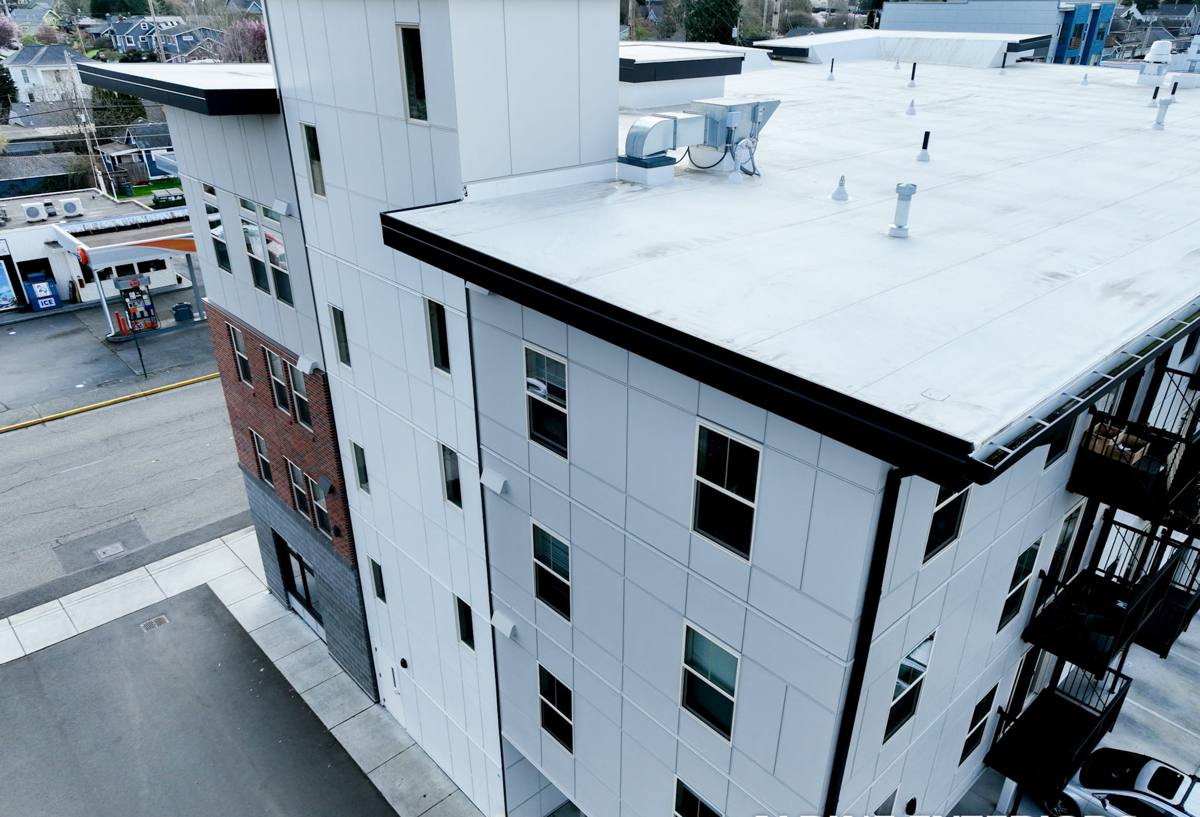
Why Salt Air and Driving Rain Wear Windows Out Faster Here
Salt Air and Hardware
Airborne salt from the bay settles on everything outdoors, including window hardware, screen frames, and exposed fasteners. Lower-grade hinges, cranks, and locks corrode faster in this environment than they would twenty miles inland. It's not dramatic — it's a slow stiffening and pitting that shows up over a few years, and it's one reason we pay attention to hardware specification, not just glass and frame, when we quote a job in this area.
Wind-Driven Rain and Water Intrusion
Rain that falls straight down is easy for a window to shed. Rain that's being pushed sideways by wind off the water is a different problem — it tests the flashing, the sill pan, and the sealant joints, not just the sash. Most window failures we find in this part of Whatcom County aren't glass failures at all. They're water finding a path around the frame because the flashing detail was skipped or done wrong the first time. Getting that detail right is more important here than in a sheltered inland lot.
Moss Season and Your Window Frames
Birch Bay's long moss season isn't just a roof and siding problem. Shaded lots near the creek corridor stay damp longer into the spring, and that dampness collects on horizontal surfaces — window sills, sloped trim, the tops of exterior casing. On wood-trimmed windows, that's exactly where rot starts. On any window, sustained moisture and organic growth around the perimeter breaks down caulk and sealant faster than direct sun exposure would.
This is part of why we look at more than the window itself during an estimate. If a home's sill trim, cladding, or the wall assembly around the opening is already holding moisture, replacing the window without addressing that just buries the same problem behind new glass. We'll tell you if that's the case rather than install over it.
Signs a California Creek Home Needs New Windows
Not every issue means full replacement — sometimes a reseal or hardware repair solves it. But these are the signs worth having looked at, especially on a home exposed to bay wind or sitting under tree cover:
- Fog or moisture trapped between the panes of a double- or triple-pane window — the seal has failed and it won't clear
- Visible gaps, soft spots, or dark staining in the wood trim or sill around the frame
- Drafts you can feel with a hand near the frame on a windy day, even with the window latched
- Cranks, locks, or hinges that have gone stiff, gritty, or hard to operate
- Condensation forming on the inside of the glass regularly during colder months
- Paint or finish that's bubbling or peeling specifically around the window opening, not the wider wall
- Noticeably higher heating bills in a room with older or single-pane windows compared to the rest of the house
What a Correct Energy-Efficient Window Installation Actually Involves
Flashing and Water Management
The window itself is only part of the assembly. A proper install includes a sloped sill pan so any water that gets past the sash drains back outside instead of sitting against the framing, plus flashing tape or building paper integration that ties the window into the existing wall's drainage plane. On a home exposed to wind-driven rain off the bay, this step matters more than the brand of window going in.
Insulation and Air Sealing
Gaps between the window frame and the rough opening need to be filled with a low-expansion foam or backer rod and sealant, not just caulked around the exterior trim. Overfilling with high-expansion foam can bow a frame out of square; underfilling leaves a cold, drafty gap. Either mistake shows up as a comfort and energy problem within the first heating season.
Glass Package for This Climate
For this area, we generally look at double- or triple-pane units with a low-E coating tuned for a marine, mixed-humidity climate — good at holding heat in during our long wet winters without overheating rooms with strong afternoon sun. Argon or krypton gas fill between panes adds a modest efficiency bump. None of this substitutes for a correct installation — a good glass package in a poorly flashed opening will still leak.
Choosing a Frame Material for a Marine Climate
Frame material matters more here than in a dry inland climate, because it has to deal with sustained moisture, salt exposure, and temperature swings without warping, corroding, or opening gaps at the joints.
| Frame Material | How It Holds Up Near Salt Air & Damp Shade | Maintenance | General Cost Position |
|---|---|---|---|
| Vinyl | Good — won't corrode or rot; seams are the main thing to check over time | Low | Lower |
| Fiberglass | Very good — dimensionally stable through wet/dry and temperature swings | Low | Higher |
| Wood-clad | Depends entirely on the cladding and joinery — exposed wood is a moss-season liability | Higher | Higher |
| Aluminum | Conducts cold and can corrode near salt air unless properly coated | Moderate | Varies |
We don't push one material on every job. The right call depends on the home's exposure, existing trim, budget, and how much upkeep you want to take on. What we won't do is recommend a frame material or cladding detail that we know struggles in this specific climate just because it's cheaper up front — we'll tell you the trade-off honestly and let you decide.
Our Installation Process
- On-site assessment of each window opening, including a check of the surrounding trim, sill, and wall condition for existing moisture or rot
- Honest discussion of frame material, glass package, and any repair work the opening needs before a new window goes in
- Written estimate with no pressure to decide on the spot
- Careful removal of the old unit, checking framing underneath before anything new goes in
- Sill pan flashing, air sealing, and integration with the existing weather barrier
- Installation, leveling, and hardware check
- Exterior trim and sealant finish work rated for sustained damp exposure
- Final walkthrough so you know how to operate and maintain the new windows
Why a Local Birch Bay Crew Matters for California Creek Homeowners
A crew that already works this specific area knows what a California Creek home is dealing with before we even get on site — the shaded lots that hold moisture longer, the exposure patterns to wind off the bay, the kind of trim and siding common on homes built in this part of Whatcom County. That's not something you get from a crew that installs windows across three counties and treats every job the same.
It also matters after the install. If a seal needs attention or a question comes up two winters from now, you're calling a crew that's a short drive away and already familiar with your home, not waiting on a company based somewhere else in the region.
What Energy Efficiency Actually Means for Your Utility Bills Here
We'd rather be straight with you than promise a specific savings number — actual savings depend on your current windows, your heating system, insulation elsewhere in the house, and how the house is used. What we can say plainly: a home with drafty, single-pane, or seal-failed windows is losing conditioned air every day, and that loss is worse on a windy, rain-exposed lot than a sheltered one. Replacing those windows with a properly installed, well-sealed unit reduces that loss and generally makes rooms near those windows noticeably more comfortable — less draft, less cold-glass radiant chill, fewer condensation problems on cold mornings.
If you're noticing drafts, fogged glass, or stiff hardware on a California Creek home, we're happy to take a look and give you a straightforward, no-pressure estimate — just fill out the form below.