 Birch Bay Roofing
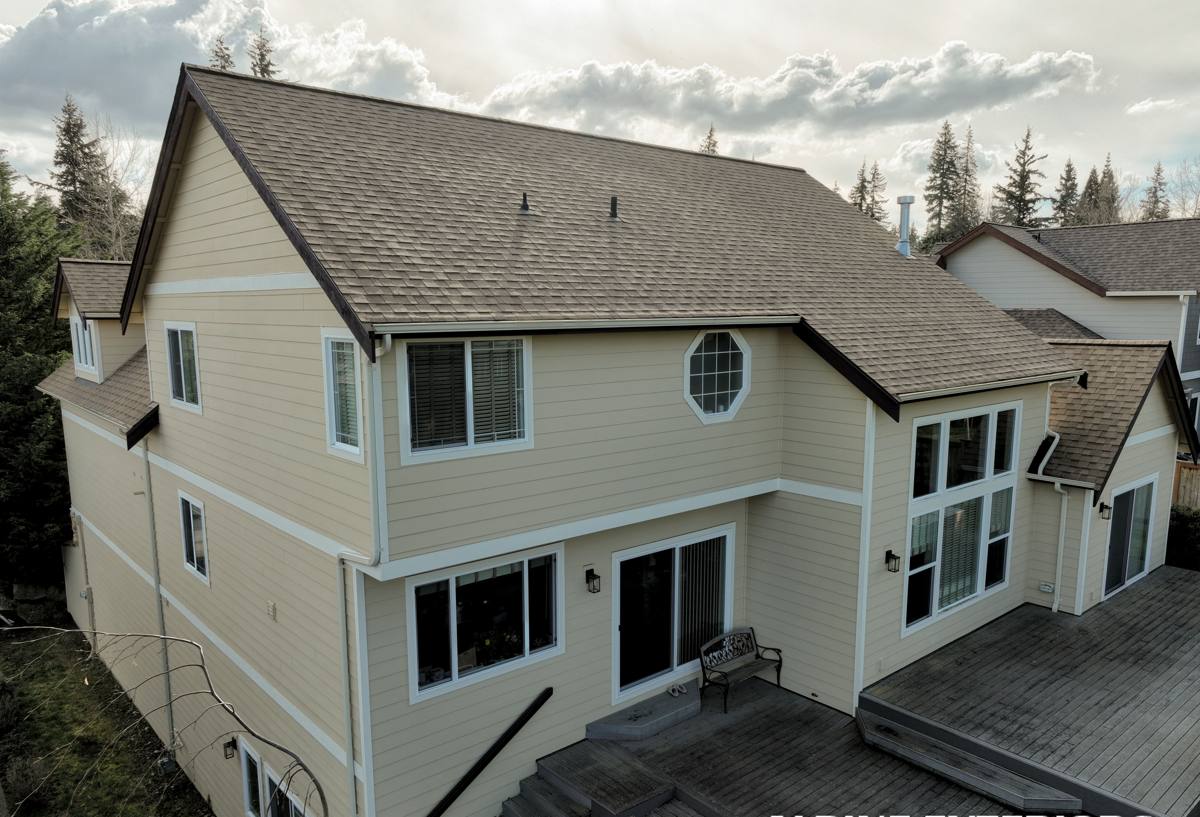
 New Roof Installation in California Creek
California Creek sits close enough to the water that every roof in the area lives with the same three problems: salt-laden air moving in off Birch Bay and the Strait, wind-driven rain that doesn't fall straight down, and a moss season that runs longer here than it does twenty miles inland. None of that makes roofing in this pocket of Whatcom County impossible — it just means a new roof has to be built with those conditions in mind from the first course of shingles to the last piece of flashing. A roof that would be perfectly adequate in a dry inland town can fail early here if it's installed to a generic standard instead of a coastal one.
This page covers what a correctly installed roof looks like for a California Creek home, what our process actually involves, and why it matters to work with a crew that already knows this specific stretch of coastline rather than one learning it on your roof.
What Salt Air, Rain, and Moss Actually Do to a Roof
Salt Air
Airborne salt is corrosive to exposed metal — nails, flashing, fasteners, and drip edge — long before it does anything visible to shingles. Standard electro-galvanized fasteners can start rusting at the head within a few years this close to the water, which is exactly where a roof needs its connections to be strongest. This is why fastener and flashing material selection matters more here than it does even a few miles inland.
Driving Rain
Rain that comes in sideways doesn't just run down a roof plane and off the edge — it gets pushed up under shingle tabs, into open valleys, and around anything that penetrates the roof deck (vents, chimneys, skylights). A roof detailed for straight-down rain will leak here even when every shingle looks intact, because the water is finding its way in through laps and transitions, not through the field of the roof.
Moss
Moss needs shade, moisture, and time, and California Creek's tree cover combined with a long damp season gives it plenty of all three. Moss holds water against the roofing material, lifts shingle edges as it grows, and works its way under flashing over a few seasons if it isn't controlled. A roof installed without moss prevention built in is starting a slow-motion problem on day one.
What a Correct New Roof Installation Includes
A new roof is more than shingles on plywood. The parts homeowners can't see from the ground are what determine whether the roof holds up to this specific climate:
- Deck inspection and repair — any soft, delaminated, or water-stained sheathing gets replaced before anything new goes down. Roofing over a compromised deck just hides the problem.
- Ice-and-water shield at vulnerable zones — eaves, valleys, and roof-to-wall transitions get a self-adhering waterproof membrane underneath the primary underlayment, not just felt paper.
- Synthetic underlayment across the full roof — more tear- and moisture-resistant than old-style felt, and it holds up better during the install itself when weather doesn't cooperate.
- Corrosion-resistant fasteners and flashing — stainless or high-grade coated fasteners and flashing metal suited to a marine-influenced environment, not the cheapest standard-grade option.
- Properly lapped, sealed valleys — valleys are where driving rain concentrates; they need to be built to shed water under pressure, not just under a light drizzle.
- Balanced attic ventilation — intake at the eaves and exhaust at the ridge, sized correctly for the attic volume, so moisture from inside the house doesn't get trapped against the underside of the new deck.
- Flashing detail at every penetration — chimneys, plumbing vents, skylights, and wall transitions are where most roof leaks actually start, and each needs its own properly lapped flashing, not just a bead of sealant.
Material Choices for a Coastal Whatcom County Roof
There's no single "best" roofing material — the right choice depends on budget, the home's style, and how much long-term maintenance the owner wants to take on. Here's how the common options compare specifically for a California Creek install:
| Material | Coastal Durability | Moss Resistance | Maintenance | Typical Lifespan Here |
|---|---|---|---|---|
| Architectural asphalt shingle | Good, with corrosion-resistant fasteners | Moderate — benefits from zinc/copper strips | Periodic moss treatment recommended | 20–30 years |
| Standing seam metal | Very good with marine-grade coatings | High — sheds moss naturally | Low | 40–60 years |
| Cedar shake | Fair — needs consistent upkeep near salt air | Low without regular treatment | High | 20–30 years with upkeep |
| Composite/synthetic shake | Good | Moderate to high depending on product | Low to moderate | 30–50 years |
Asphalt shingle remains the most common choice for California Creek homes because it balances upfront cost with solid performance when the underlying details — fasteners, underlayment, ventilation — are handled correctly. Metal roofing costs more up front but earns that cost back in reduced maintenance and moss resistance over the life of the roof, which is a real consideration in a neighborhood with this much tree cover and moisture.
We install fewer cedar shake roofs than we used to, not because cedar can't perform, but because it demands a maintenance schedule most homeowners don't stay on top of — and an unmaintained cedar roof in a damp, shaded environment ages faster than almost any other material on this list. If a homeowner wants the look and is committed to the upkeep, we'll install it correctly and explain exactly what that upkeep involves.
Our New Roof Installation Process
- On-site inspection and estimate. We walk the roof and attic, check the deck condition, note ventilation, and look at how the roof handles water in valleys and at penetrations. This is where climate-specific decisions — fastener grade, underlayment type, ventilation upgrades — get scoped out.
- Written proposal. Material options, scope of work, and a clear cost range, so there's no guessing about what's included.
- Tear-off and deck inspection. Old roofing comes off down to the deck, and any damaged sheathing is identified and replaced before new material goes on.
- Waterproofing layer. Ice-and-water shield goes down at eaves, valleys, and penetrations; synthetic underlayment covers the rest of the deck.
- Flashing and ventilation installation. New flashing at every penetration and transition; intake and exhaust ventilation set up to move air correctly through the attic.
- Roofing material installation. Installed to manufacturer spec with attention to fastener placement, exposure, and nailing pattern — details that affect both wind resistance and warranty validity.
- Final walkthrough and cleanup. Site is cleared of debris and nails, and we walk the finished roof with the homeowner.
Moss and Moisture Prevention Built Into the Install
Rather than treating moss as an afterthought, we build prevention into the installation itself. This is the checklist we work from on a California Creek roof:
- Zinc or copper control strips near the ridge on shingle roofs, which release trace metal ions that inhibit moss growth every time it rains
- Trimming recommendations for overhanging branches that keep sections of roof shaded and damp longer than necessary
- Correct shingle exposure and nailing so moss and debris don't get a foothold at lifted edges
- Clear guidance on gutter and downspout maintenance, since clogged gutters back water up under the roof edge and feed moss growth
- A realistic maintenance schedule — soft-washing or moss treatment on a set interval rather than waiting until growth is visible from the ground
Ventilation: The Part Homeowners Rarely Ask About
Attic ventilation doesn't show up in curb appeal, but it's one of the biggest factors in how long a new roof actually lasts near the water. Warm, moist air from inside the house rises into the attic; without a balanced path in through the eaves and out through the ridge, that moisture condenses on the underside of the roof deck. Over time that leads to rot, mold, and premature failure of the new roofing material from underneath — a problem that has nothing to do with the shingles themselves and everything to do with airflow. On a re-roof, we check existing intake and exhaust ventilation and recommend corrections when the attic isn't breathing the way it should, before the new roof goes on top of it.
Cost Factors for a California Creek Re-Roof
Every roof is priced individually after an on-site inspection, but the factors that move the number are consistent:
| Factor | Why It Matters |
|---|---|
| Roof size and pitch | More square footage and steeper pitches mean more material and labor time |
| Deck condition | Rotted or delaminated sheathing found during tear-off adds repair cost |
| Material choice | Asphalt, metal, and composite carry different material and labor costs |
| Number of penetrations | Chimneys, skylights, and vents each require individual flashing work |
| Ventilation upgrades | Adding or correcting intake/exhaust vents is a smaller add-on cost with a large payoff in roof lifespan |
| Tree cover and access | Heavier shading affects moss-prevention recommendations; tight access can affect labor time |
Homeowners should expect a wide range depending on these factors — we'd rather give an honest number after seeing the actual roof than a ballpark that doesn't hold up once tear-off starts.
Why a Local California Creek Crew Matters
A roofing crew that already works this stretch of Whatcom County isn't guessing at how much salt exposure, wind-driven rain, or moss pressure a California Creek roof sees — they've priced fasteners for it, detailed valleys for it, and specified ventilation for it on other roofs in the same few square miles. That translates into fewer surprises during tear-off, material choices that are actually suited to the site rather than generic defaults, and a finished roof built for the conditions it will sit under for the next few decades, not for a mild-climate average. It also means someone who knows the local permitting process and can be back out quickly if a question comes up after the job is done.
Signs Your Current Roof May Need Replacement, Not Repair
- Granule loss heavy enough that shingles look patchy or bald in sections
- Multiple layers of past repairs that are starting to fail independently
- Soft spots or visible sagging in the roof deck
- Persistent moss regrowth despite treatment, especially with visible lifting at shingle edges
- Daylight visible through the attic roof deck or consistent staining on attic sheathing
- A roof approaching or past the upper end of its material's expected lifespan in this climate
Not every one of these means a full replacement is the only option — sometimes targeted repair is the right call, and we'll say so if that's what the roof actually needs.
Get a Free, No-Pressure Estimate
If you're weighing a new roof for a California Creek home, we're glad to come take a look, walk the attic, and give you a straight answer on condition, options, and cost — no pressure either way. Use the form below to request a free estimate.