 Birch Bay Roofing
 Storm Damage in California Creek Is Different From Storm Damage Inland
California Creek sits close enough to the water that every storm arrives with a little extra punch: wind that funnels off Semiahmoo Bay and Drayton Harbor, driving rain that comes in sideways instead of straight down, and salt-laden air that never fully leaves your shingles alone even on calm days. A roof here doesn't just get rained on — it gets rained on at an angle, gritted with salt, and then left damp under a marine layer that can hang around for days. That combination is why storm damage in this part of Whatcom County tends to show up differently than it does twenty miles inland, and why repairs need to account for more than just the obvious hole or missing shingle.
We work on roofs in this area regularly, which matters more than it might sound. A crew that mostly works dry, inland roofs will often treat a California Creek storm repair like any other patch job. A crew that knows this stretch of coastline knows to check for the damage that isn't visible from the ground — the stuff that causes the callback six months later.
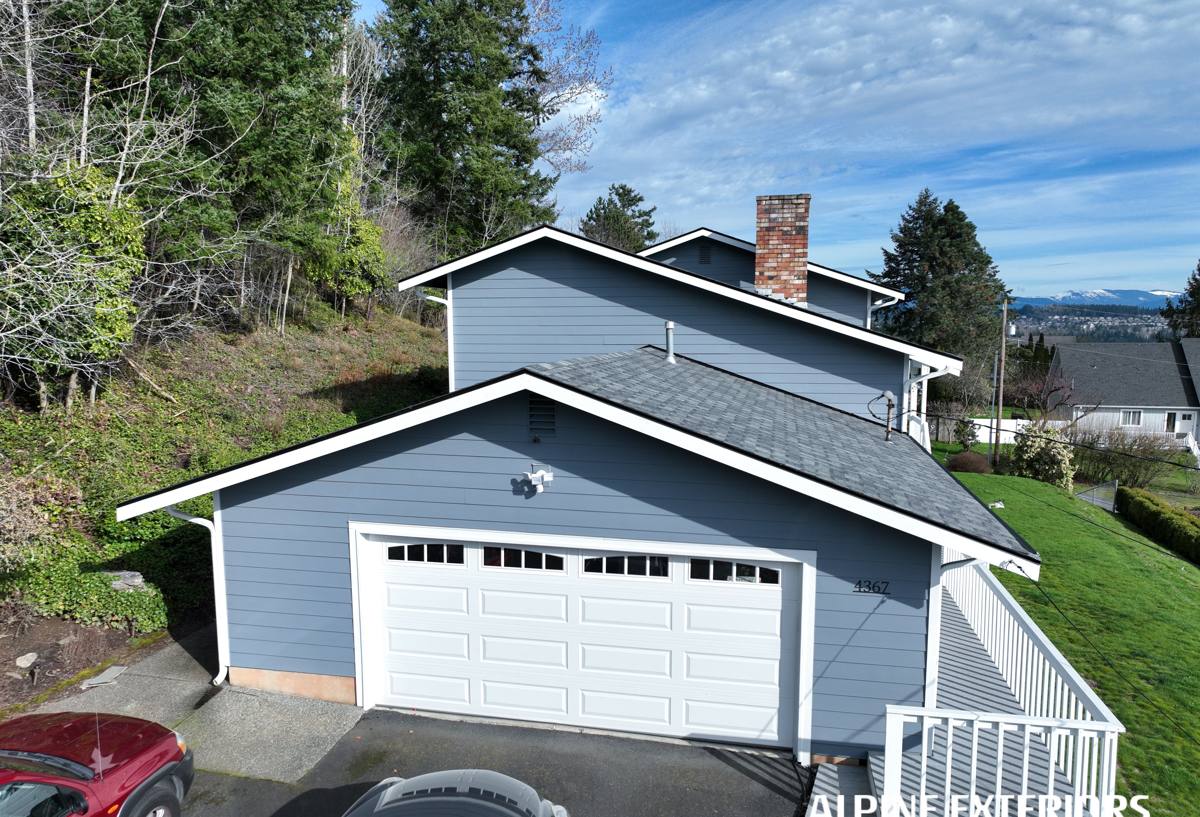
What a Storm Actually Does to a Roof Out Here
Wind and rain rarely damage a roof in one clean way. Usually it's a combination of smaller failures that add up:
- Wind-lifted shingles: Gusts get under a shingle's edge, break the sealant strip, and either tear the shingle off or leave it loose enough that the next rain gets underneath it.
- Driven rain intrusion: Wind-driven rain doesn't behave like normal rainfall. It can push water sideways under flashing, around vent boots, and into laps that are perfectly fine in a straight-down rain.
- Impact damage: Branches, debris, and hail (less common here, but it happens) can bruise or puncture shingles, especially older ones that have already lost some flexibility.
- Flashing failure: Chimney flashing, valley flashing, and step flashing along walls take the brunt of wind-driven rain and are a common source of leaks that get blamed on "the roof" when the field of shingles is actually fine.
- Gutter and edge damage: Wind can tear gutters loose or drive debris under drip edge, which then backs water up under the first course of shingles.
The tricky part is that a storm can do real damage without leaving anything dramatic to look at from the driveway. That's the case we see most often — a homeowner notices a small ceiling stain weeks after a windstorm and has no idea the roof took a hit the night it happened.
Signs of Storm Damage Worth Checking After a Rough Night
You don't need to get on a ladder to do a reasonable first pass. From the ground, look for:
- Shingles that look curled, lifted at the edges, or visibly out of alignment with the rest of the roof plane
- Granules collecting in gutters or at downspout outlets — a sign of impact or wear, especially after hail-mixed weather
- Bent, missing, or displaced flashing around the chimney, skylights, or roof-to-wall joints
- New water stains on ceilings or upper walls, even faint ones
- Debris caught on the roof that could have caused impact damage when it landed
- Sagging or uneven sections along the roofline
If you see any of this, or even suspect it, the right move is a proper inspection before the next system rolls through — not after another round of wind and rain has had a chance to work the damage wider.
Repair or Replace? How We Actually Decide
Not every storm-damaged roof needs to come off. But not every roof should be patched, either. We base the call on a few honest factors rather than defaulting to whichever job is bigger:
| Factor | Leans Toward Repair | Leans Toward Replacement |
|---|---|---|
| Age of existing roof | Under 10-12 years, still flexible | Nearing or past its rated lifespan |
| Extent of damage | Isolated to one section or slope | Spread across multiple slopes or the whole roof |
| Shingle condition nearby | Surrounding shingles still sealed and pliable | Widespread brittleness, curling, or granule loss |
| Underlying decking | Dry, solid sheathing | Soft spots or rot from prior undetected leaks |
| History of repairs | First real issue on a sound roof | Third or fourth storm-related repair in a few years |
Salt air and repeated wet-dry cycling age shingles faster near the water than the same product ages further inland, which is why we weigh "age" a little more heavily on California Creek homes than we would on an identical roof twenty miles east.
Our Storm Damage Repair Process
1. Inspection, Not Guesswork
We start on the roof itself, not just from the ground. That means checking the field of shingles, all flashing points, valleys, vent boots, and the attic side where accessible, since attic moisture and daylight gaps often tell us more than the exterior does.
2. A Written Explanation, Not Just a Number
You get a plain description of what we found, what caused it, and what we recommend — including if we think a full repair isn't the best use of your money and a small section replacement or a longer-term plan makes more sense.
3. Matching Materials Correctly
Patch repairs only hold up long-term if the shingle profile, color lot, and fastening pattern match closely enough that the repair doesn't become its own weak point. We source materials with that in mind rather than grabbing whatever's closest.
4. Flashing and Underlayment First
On a coastal repair, we treat flashing and underlayment as equally important as the visible shingles. A repair that replaces shingles but reuses compromised flashing is a repair that leaks again in the next driving rain.
5. Cleanup and a Final Check
Nails, granules, and old material get cleared off gutters and the ground, and we do a final walk of the repair area before calling the job done.
Moss, Salt Air, and the Slow Damage No One Notices
Birch Bay's moss season is long, and California Creek's moisture-heavy microclimate makes it longer still on north-facing slopes and anywhere shaded by trees. Moss isn't just cosmetic — it holds moisture against the shingle surface, works its way under tabs as it grows, and can lift shingle edges enough that the next windstorm finishes the job moss started. Combine that with salt air, which accelerates corrosion on exposed fasteners, flashing, and metal roof edges, and you get a roof that ages faster than the calendar would suggest.
Storm damage repair out here often turns up moss-related wear or early salt corrosion alongside the storm damage itself. When we find it, we'll point it out and explain the maintenance that slows it down — this isn't an upsell, it's the difference between a repair that lasts and one that becomes a repeat visit.
Insurance Claims: What Homeowners Should Know
Many storm repairs in this area go through homeowners insurance, and a few things help that process go smoothly:
- Document damage with photos as soon as it's safe to do so, before any temporary repairs change the scene
- Get a written inspection report that separates storm damage from pre-existing wear — adjusters look closely at this distinction
- Avoid full replacement decisions before the adjuster has seen the roof, unless there's an active leak that needs immediate protection
- Keep any tarping or emergency work documented, since insurers typically reimburse reasonable temporary protection
We're glad to provide the documentation and meet an adjuster on-site if that's useful, but the decisions about your policy and your home are yours — we're not going to steer you toward a bigger job than the damage supports.
Why Local Experience Matters for This Kind of Repair
A roof near California Creek deals with a different mix of stress than most roofs in Whatcom County. Crews that work here regularly know which flashing details tend to fail first in wind-driven rain, which slopes hold moss longest, and how salt exposure changes the maintenance timeline compared to an inland roof of the same age and material. That knowledge shows up in small decisions during a repair — where to add extra flashing protection, which fastener spacing holds up better in sustained wind, when a "small" repair is actually a sign of a bigger issue underneath.
It also means a faster, more accurate read on what actually happened during a given storm, instead of a generic assessment that treats every roof in Whatcom County the same way.
A Quick Homeowner Checklist After a Storm
- Walk the ground-level perimeter and look up — don't get on the roof yourself
- Check ceilings and upper walls for new stains, even small ones
- Note any debris on or near the roof that could indicate impact
- Check gutters and downspouts for granule buildup or debris blockage
- Photograph anything unusual before it's cleaned up or moved
- Get a professional inspection before the next storm system arrives, not after
If a recent windstorm or heavy rain has you wondering about the condition of your roof, we're happy to take a look and give you a straight answer — whether that's a small repair, a bigger conversation, or just peace of mind that everything held up fine. Reach out for a free, no-pressure estimate using the form below.