 Birch Bay Roofing
 Roof Repair in California Creek: What This Corner of Whatcom County Puts Roofs Through
California Creek sits close enough to the water that homes here deal with a different set of roofing stresses than houses further inland. The combination of salt-laden air off the Strait, wind-driven rain, and a moss season that can run for most of the year means roofs in this part of Whatcom County age differently than roofs in drier, more sheltered parts of the state. A repair that works fine on an inland roof isn't automatically the right fix here — the materials, the flashing details, and the ventilation all have to account for what this specific environment does to a roof over time.
We repair roofs in California Creek regularly, and the calls we get tend to follow a pattern tied directly to that climate. This page walks through what local homes actually need from a roof repair, what a correct repair involves from top to bottom, and how our process works so you know what to expect before we ever get on your roof.
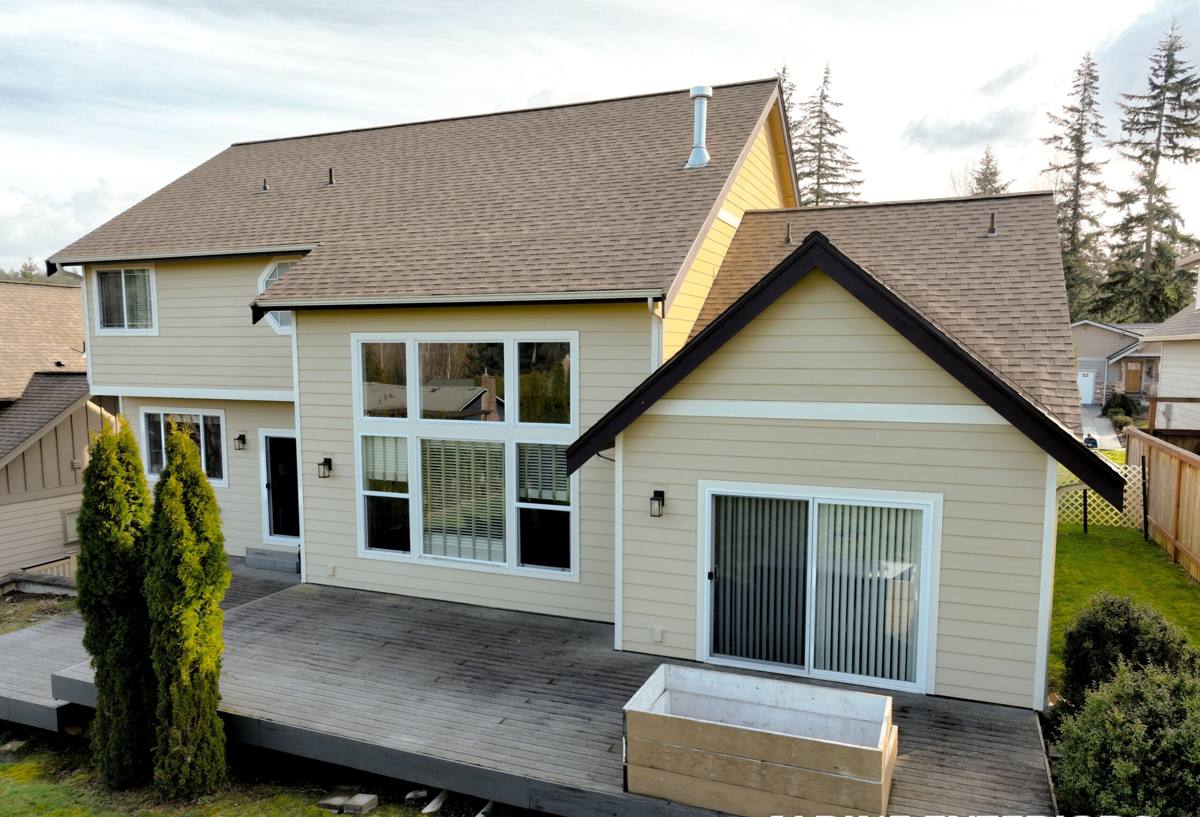
How Salt Air, Rain, and Moss Damage Roofs Differently Here
Salt Air and Metal Components
Airborne salt accelerates corrosion on exposed metal — flashing, fasteners, gutter hardware, and vent caps all take more abuse near the water than they would a few miles inland. Corroded flashing is one of the most common failure points we find during repair inspections in this area, because a pinhole of rust at a flashing seam is enough to let water into the roof deck long before the shingles themselves show any obvious wear.
Moss, Moisture, and Shingle Breakdown
Whatcom County's damp, mild winters and shaded lots create ideal conditions for moss growth on roofs that don't get much direct sun. Moss doesn't just look bad — it holds moisture directly against the shingle surface, works its way under shingle edges as it grows, and gradually lifts tabs and granules loose. A roof with heavy moss coverage is often losing its watertight seal well before a homeowner notices a leak indoors.
Driving Rain and Wind-Driven Water
Storms coming off the water often bring rain at an angle rather than straight down, which pushes water into places a roof isn't necessarily built to handle in calmer conditions — under shingle tabs, up and under flashing edges, and into valleys that aren't sealed as tightly as they should be. Roofs that have been fine for years can start leaking the first time a storm hits from an unusual direction, which is why we look at valley and edge details carefully on every repair call out here.
Common Roof Repair Calls We Get in California Creek
Most of the repair work we do in this neighborhood falls into a handful of recurring categories:
- Shingles lifted or cracked from moss growth working under the tabs
- Corroded or failing flashing around chimneys, skylights, and roof-to-wall transitions
- Valley leaks where water volume concentrates during heavy rain
- Soft or spongy decking sections from long-term trapped moisture, often discovered only once shingles are pulled back
- Nail pops and seal failures from repeated wind exposure loosening fasteners over time
- Gutter and roof-edge rot where debris and moss have held water against wood trim
Some of these show up as an obvious leak indoors. Others don't announce themselves until a routine inspection catches them, which is part of why we always check the full roof system during a repair call rather than just patching the spot a homeowner points to.
What a Correct Roof Repair Actually Involves
Diagnosing the Real Source
Water doesn't always show up indoors directly below where it entered the roof — it can travel along the underlayment or decking before finding a path through the ceiling. A repair that only addresses the visible interior stain without tracing the actual entry point tends to fail again within a season or two. We start every repair by finding the actual source, not just the symptom.
Matching Materials Correctly
Repairs need to match the existing roofing system in more than just color. Shingle weight, flashing metal type, and underlayment compatibility all affect how well a repair blends into the surrounding roof and how long it holds up. Mismatched materials can create new weak points — for example, pairing dissimilar metals at a flashing repair can accelerate corrosion right at the seam we just fixed.
Addressing the Cause, Not Just the Symptom
If moss caused the damage, a repair that doesn't also address moss control and airflow will likely need to be redone within a few years. If poor attic ventilation is trapping moisture against the underside of the deck, patching the topside alone won't solve the underlying problem. A correct repair considers why the damage happened in the first place.
Repair or Replace? How We Help You Decide
Not every roof issue in California Creek calls for full replacement, and not every roof is a good candidate for another round of patching. We walk homeowners through the honest trade-offs rather than defaulting to the bigger job:
| Factor | Leans Toward Repair | Leans Toward Replacement |
|---|---|---|
| Roof age | Under roughly two-thirds of expected lifespan | Nearing or past expected lifespan for the material |
| Extent of damage | Isolated to one section or component | Spread across multiple areas or slopes |
| Repair history | First or second repair on this roof | Repeated repairs to the same areas over recent years |
| Decking condition | Solid, no soft spots found | Soft, delaminated, or rotted decking present |
| Moss and ventilation | Manageable with cleaning and minor airflow fixes | Chronic moss tied to poor ventilation across the whole roof |
We'll give you a straight answer based on what we actually find, including telling you when a repair is the more sensible near-term choice even if replacement is coming eventually.
Our Roof Repair Process in California Creek
Inspection and Diagnosis
We get on the roof, not just the ladder. That means checking flashing, valleys, penetrations, and decking condition, along with attic ventilation where accessible, before forming an opinion on what's actually needed.
Written Estimate
You get a clear explanation of what we found, what we recommend, and why — along with a written estimate before any work starts. No surprise scope changes once we're on the roof.
The Repair Itself
We remove damaged material back to sound decking, address the root cause, and rebuild the affected area with materials matched to your existing roof system. Flashing gets particular attention given how much salt-air corrosion we see on repair calls in this area.
Cleanup and Follow-Up
The site gets cleaned of debris and fasteners before we leave, and we'll tell you what to keep an eye on afterward — including whether moss treatment or gutter maintenance should be part of your regular upkeep going forward.
Materials We Use — and Why We're Selective
For repair work, we favor materials with a track record of holding up to coastal exposure rather than whatever happens to be cheapest at the moment. Flashing gets matched carefully to avoid corrosion from dissimilar metals, and underlayment choices account for the extra moisture exposure common in this area. We're intentionally conservative about products that carry higher maintenance burdens or unforgiving installation tolerances in a wet climate — not because any particular product is bad, but because our standard is picking materials that perform predictably here, year after year, with the amount of rain and salt air this location sees. If a product isn't a good fit for California Creek's conditions, we'll tell you why rather than installing it and hoping for the best.
Signs Your California Creek Roof May Need Repair
- Visible moss buildup, especially on north-facing or shaded slopes
- Shingle tabs that look lifted, curled, or granule-bare
- Rust streaking below flashing, vents, or chimney caps
- Water stains on interior ceilings, especially after a windy rainstorm
- Sagging or soft-feeling spots when walking the attic near the roof line
- Gutters overflowing or pulling away from the fascia
- Daylight visible through the roof deck from inside the attic
Any one of these is worth a look before it turns into a bigger repair. Catching flashing corrosion or a moss-lifted shingle early is a much smaller job than dealing with rotted decking after months of undetected leaking.
Why It Matters to Hire a Crew That Already Works in California Creek
A roofer who works this stretch of Whatcom County regularly already knows which failure points show up most on homes exposed to salt air and driving rain, and doesn't need to relearn that on your roof. That familiarity shows up in small but important ways — knowing to check flashing corrosion before it's asked about, recognizing moss damage patterns early, and understanding how wind off the water tends to drive rain into valleys and edges that inland crews might not scrutinize as closely. It's the difference between a generic patch and a repair built for the conditions your roof actually faces every year.
If you're seeing signs of roof trouble or just want an honest opinion on what your roof needs, we're glad to take a look. Reach out for a free, no-pressure estimate using the form below.