 Birch Bay Roofing
 Why California Creek Homes Face a Tougher Siding Challenge
Homes near California Creek sit close enough to Birch Bay and the Strait of Georgia that salt-laden air is a daily fact of life, not an occasional nuisance. Add Whatcom County's long, wet fall-through-spring stretch of driving rain, plus a moss season that can run half the year on north-facing walls and shaded siding, and you have a climate that actively works against whatever material is nailed to the house. This isn't a coastal exaggeration — it's the reason siding that performs fine in a drier inland town can fail early here.
Salt air accelerates corrosion on fasteners, trim, and any metal flashing that isn't rated for the exposure. Driving rain, especially in wind events off the water, doesn't just fall straight down — it gets pushed sideways into laps, seams, and butt joints that were never designed to handle that kind of pressure. And moss doesn't just look bad; it holds moisture against the siding surface far longer than open air would, which matters on any material that isn't fully water-resistant at its core. Any siding installation in this neighborhood has to be built around these three realities from the first nail, not treated with a one-size-fits-all approach borrowed from a drier part of the state.
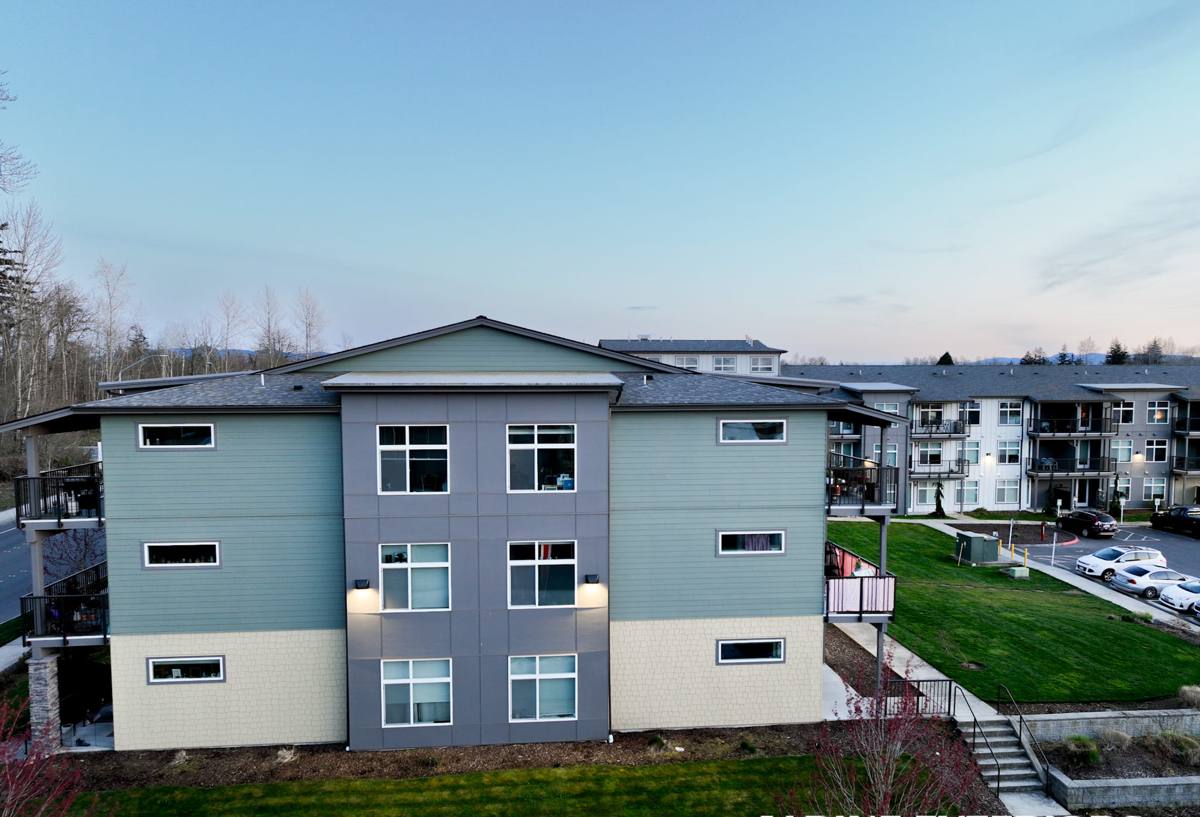
What a Correct Siding Installation Actually Involves
Siding is a system, not a single product. The board or panel you see is the last piece — everything underneath it is what actually determines whether your walls stay dry for the next few decades.
Water Management Comes First
Before a single piece of siding goes up, the wall needs a continuous weather-resistive barrier, properly lapped so water sheds downward and outward rather than working its way behind the material. Every window, door, and penetration needs correctly integrated flashing — not caulk used as a substitute for flashing, which is one of the most common shortcuts that leads to hidden rot. In a driving-rain climate like this one, the barrier and flashing details matter as much as the siding itself.
Fastening, Clearances, and Butt Joints
Fastener spacing, type, and depth are specified by the manufacturer for a reason — get them wrong and you either crack the material or leave it loose enough to work free in high wind. Ground clearance, roof-to-wall clearance, and gaps at butt joints all need to follow spec so water has somewhere to go instead of pooling against the material. These are the details that separate a job that looks fine at closing from one that's still performing correctly ten winters later.
Why We Install Only James Hardie Fiber Cement Here
We made a deliberate decision to install James Hardie fiber cement siding exclusively, and a coastal Whatcom County climate is exactly why. Hardie's HZ5 product line is engineered for climates with significant moisture exposure, which describes California Creek about as well as anywhere in the county. The material is non-combustible, it doesn't swell or rot the way wood-based products can when repeatedly wetted, and the factory-applied ColorPlus finish is baked on under controlled conditions rather than field-painted, which matters when salt air and UV exposure are working against a finish year-round.
Hardie also backs the product with a strong, transferable warranty — meaningful in a market where homes change hands and buyers want documented siding history, not a verbal assurance. We don't install vinyl, LP SmartSide, Cemplank, Allura, or primed wood siding, and we're upfront with homeowners about why: those products each carry real trade-offs in moisture behavior, maintenance burden, or installation sensitivity that we're not willing to gamble on in this climate. Fiber cement done right is what we've seen hold up, and it's the only thing we put our name behind.
Our Installation Process for California Creek Homes
Step 1: On-Site Assessment
We start by walking the exterior and identifying exposure zones — which walls take the worst of the wind-driven rain, where moss and shade are already a factor, and where existing trim, flashing, or sheathing shows signs of past moisture problems. This assessment shapes the flashing and detailing plan before any material is ordered.
Step 2: Tear-Off and Substrate Prep
Old siding comes off and the sheathing underneath gets inspected. Any soft, delaminated, or water-damaged sheathing is addressed before we move forward — covering damaged substrate with new siding just hides a problem that keeps getting worse.
Step 3: Weather-Resistive Barrier and Flashing
A new, continuous weather-resistive barrier goes on, properly lapped, with correctly integrated flashing at every window, door, and penetration. This is the step most likely to get rushed on a lower-quality job, and it's the one we spend the most care on given how much driving rain this area sees.
Step 4: Installing and Finishing the Siding
James Hardie boards or panels go up to manufacturer spec — correct fastener type and spacing, proper clearances at grade and roofline, and clean, sealed butt joints. Trim and caulking are finished to hold up under UV and salt exposure, not just to look good on installation day.
Comparing Siding Materials for Salt Air and Moss Season
Homeowners often ask why we don't offer cheaper alternatives. The honest answer is that material choice matters more in this climate than in most, and the comparison makes the case better than we can in a sales pitch.
| Factor | James Hardie Fiber Cement | Vinyl | Wood / LP SmartSide |
|---|---|---|---|
| Moisture resistance | Engineered core resists swelling and rot | Doesn't rot, but seams can trap water behind it | Vulnerable to swelling and rot if moisture gets in |
| Performance in salt air | Factory finish holds up well to coastal exposure | Can chalk, warp, or discolor over time | Finish breaks down faster; more frequent recoating |
| Moss and mildew behavior | Doesn't feed mold growth; cleans up well | Resists mold but traps moisture in seams | Organic material can support moss and mildew growth |
| Fire resistance | Non-combustible | Melts and can contribute fuel in a fire | Combustible |
| Long-term maintenance | Low; occasional wash, minimal recoating | Low, but panels crack and fade over decades | Higher; regular painting/sealing required |
What Affects the Cost of Your Project
Every California Creek home is a little different, so we don't quote off a flat rate — but a few factors consistently drive cost up or down. Full tear-off and replacement projects generally land in a broader range than a straightforward overlay would, though we don't recommend overlays here given the moisture concerns.
| Factor | How It Affects Cost |
|---|---|
| Home size and number of stories | More square footage and steeper access add labor time |
| Existing moisture or rot damage | Sheathing repair adds cost but is essential, not optional |
| Siding profile and trim complexity | Lap, shingle, and panel combinations with detailed trim take longer than a single simple profile |
| Color and finish selection | Factory ColorPlus finishes vary slightly by line and color |
| Number of windows, doors, and penetrations | Each one requires correct flashing, which adds labor |
We walk every project in person and give a written estimate based on what we actually find on your walls — not a phone-quoted average.
Signs Your California Creek Home May Need New Siding
- Visible cracking, warping, or soft spots anywhere on the siding surface
- Persistent moss or dark streaking that returns quickly after cleaning
- Peeling or bubbling paint, especially on wood-based or previously painted siding
- Soft or spongy areas near the base of walls or around window trim
- Visible gaps at seams, butt joints, or where siding meets trim and flashing
- A noticeable rise in heating costs that could point to moisture-compromised insulation behind the siding
Why a Crew That Already Works California Creek Matters
Siding crews that split time across drier inland towns don't always plan for the level of wind-driven rain and salt exposure that a home near Birch Bay actually experiences. A crew that regularly works this area already understands which walls take the worst weather, how aggressive moss growth can get on shaded north sides, and how salt air shortens the usable life of lower-grade fasteners and trim. That local pattern recognition shows up in the small decisions — where extra flashing attention goes, which fastener grade to spec, how tight the clearances need to be — that don't show up on a generic bid sheet but absolutely show up in how the siding performs five and ten years down the road.
It also matters for permitting and inspection. Whatcom County and local building requirements are things a crew working this area regularly already has a working relationship with, which keeps a siding project moving instead of stalling on paperwork a less familiar contractor hasn't dealt with before.
Caring for Your Siding After Installation
James Hardie siding is low-maintenance, not no-maintenance. In a moss-prone climate like this one, an occasional gentle wash — garden hose pressure, not a high-pressure washer aimed directly at seams — keeps organic growth from taking hold. Keep gutters clear so overflow isn't running down the wall face, and keep an eye on caulking at trim joints over the years, since UV and salt exposure will eventually call for a touch-up. None of this is heavy upkeep, but a five-minute seasonal walk-around catches small issues before they become expensive ones.
If you're weighing a siding project for a home near California Creek, we're happy to take a look and talk through what your walls actually need — no pressure, no generic phone quote. Request a free estimate below and we'll walk the property with you.