 Birch Bay Roofing
 Deck Replacement Built for the California Creek Environment
California Creek sits close enough to the water that homes here deal with a specific combination of conditions: salt-laden air drifting off Birch Bay and the Strait of Georgia, long stretches of driving rain through fall and winter, and a moss and algae season that can run for months when the sun disappears. A deck built without that combination in mind will show it early — soft boards, rusted fasteners, slick surfaces, and a substructure that's rotting quietly underneath a deck that still looks fine from the top.
We replace decks in this specific corner of Whatcom County regularly, and the failures we see are consistent. Understanding why decks fail here is the first step to building one that won't repeat the same problems in ten years.
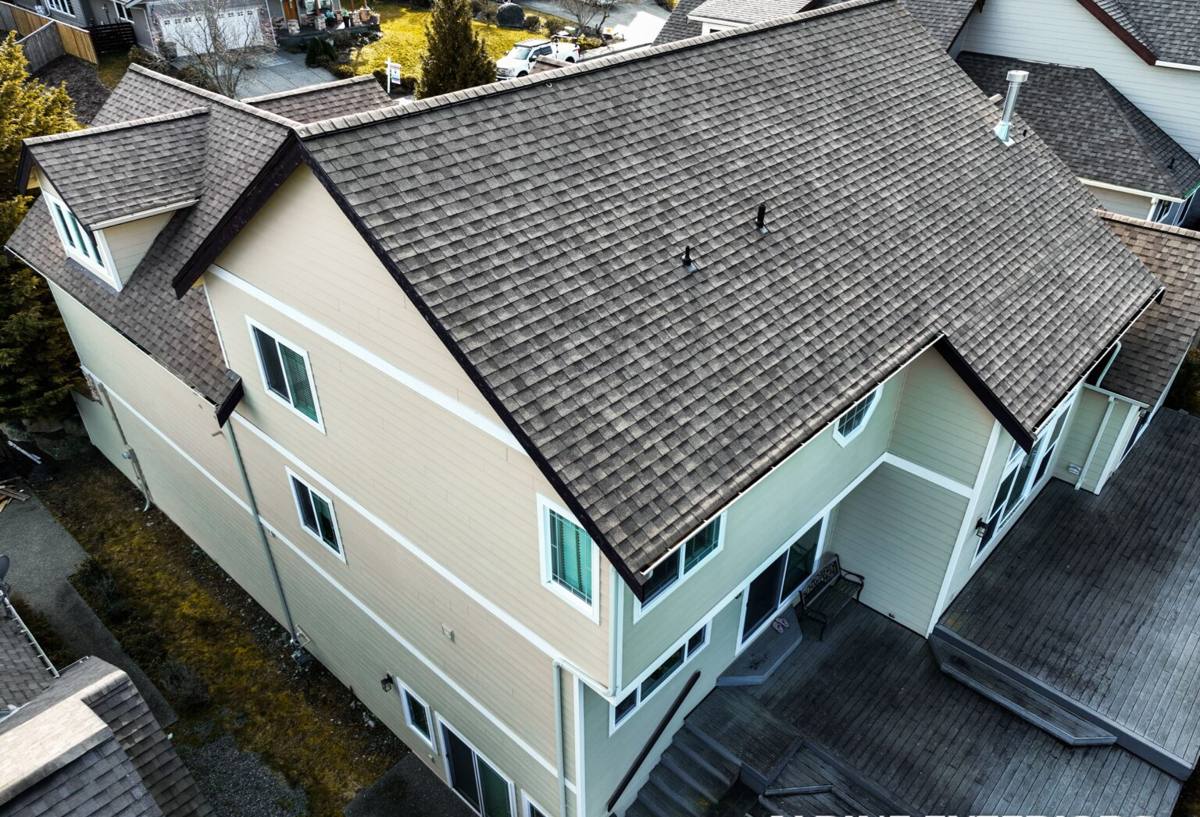
Signs a Deck Needs Replacement, Not Just Repair
Homeowners often call us for a repair estimate and end up needing a full replacement once we get underneath the surface. Here's how to tell which situation you're actually in before you spend money on the wrong fix.
Repair usually makes sense when:
- A handful of boards are cupped, splintering, or soft, but the framing underneath is dry and solid
- Fasteners are working loose or staining the wood, but the ledger board and joists are intact
- Railings are wobbly due to loose connections, not rotted posts
Replacement is usually the right call when:
- You can push a screwdriver into a joist, ledger board, or post base with light pressure
- The ledger board attachment to the house shows staining, gaps, or soft wood — this is the connection most likely to fail catastrophically
- More than a third of the decking boards are failing at once, which usually means the whole batch was exposed to the same moisture problem
- The deck was built without proper flashing at the house connection, which is common on older builds in this area and almost guarantees hidden rot
A deck can look structurally fine and still be unsafe. Salt air accelerates corrosion on fasteners and connectors in ways that aren't always visible from above, which is why we check the substructure directly rather than basing a recommendation on surface appearance alone.
What Actually Fails First in a Coastal Whatcom County Deck
The ledger board connection
This is where the deck attaches to the house, and it's the single most important structural point on the entire build. Without proper flashing, water works its way behind the ledger and into the house framing over time. In a climate with as much sustained rain as Birch Bay gets, an unflashed or poorly flashed ledger is less a question of if it fails and more a question of when.
Fasteners and metal hardware
Salt air is genuinely harder on exposed metal than inland moisture alone. Standard galvanized fasteners and connectors can corrode faster near the water than they would a few miles inland, which shows up as rust streaking, weakened joints, and eventually fastener failure. Material choice on hardware matters more here than it does on a deck built twenty miles from the coast.
Moss, algae, and surface moisture
The long stretch of low sun and steady rain from fall through spring keeps deck surfaces damp for extended periods, which is exactly what moss and algae need to take hold. Beyond the slip hazard, moss holds moisture against the decking surface long after the rain has stopped, which speeds up rot in wood decking and can dull or stain composite and PVC surfaces if it isn't kept off.
Decking Material Options for This Climate
There's no single "best" decking material — the right choice depends on your budget, how much upkeep you're willing to do, and how close you are to the water. Here's an honest comparison of the main options we install.
| Material | Moisture & Salt Air Behavior | Maintenance | Typical Lifespan |
|---|---|---|---|
| Pressure-treated wood | Performs well if sealed and re-sealed on schedule; end grain and cut edges need extra attention | Annual cleaning, periodic re-staining or sealing | Shorter than composite if maintenance lapses; solid if kept up |
| Cedar | Naturally rot-resistant but still needs sealing near salt air to hold color and resist checking | Regular cleaning and refinishing to prevent graying and cracking | Comparable to treated wood with good upkeep |
| Composite decking | Doesn't absorb moisture like wood, resists rot, but surface can still support moss/algae growth if shaded | Periodic washing to keep surface clear; no sealing or staining required | Longer than wood in most cases, with a manufacturer-backed warranty |
| PVC decking | Fully moisture-resistant material, holds up well in wet, salt-influenced air | Lowest maintenance of the group; occasional washing | Long-lasting, typically the strongest warranty coverage |
Whichever surface material you choose, the framing underneath matters just as much. We use pressure-treated or naturally durable framing lumber and give it the same attention to flashing and fastener quality regardless of what decking sits on top — a beautiful composite deck on a poorly protected frame is still a deck that will need early rework.
What a Correct Deck Replacement Involves
A deck replacement is a chance to fix the mistakes of the original build, not just swap old boards for new ones. Done right, it includes:
- Full removal of the old decking, railing, and framing down to the ledger and posts, so nothing hidden gets covered back up
- Inspection of the house connection point behind the ledger board for rot or water intrusion before anything new goes up
- Proper flashing installation at the ledger board, using flashing designed to shed water away from the house rather than trap it
- Corrosion-resistant fasteners and structural connectors suited to a coastal-influenced environment, not just whatever meets minimum code inland
- Correct joist spacing and beam sizing for the decking material you've chosen, since composite and PVC often have different span requirements than solid wood
- Proper drainage and airflow underneath the deck so moisture doesn't sit and slowly break down the framing from below
- Code-compliant railing and stair construction, including graspable handrails and baluster spacing where required
Skipping any one of these steps is how a "new" deck ends up with the same underlying problems as the one it replaced, just with fresh boards hiding them for a while longer.
Our Deck Replacement Process
1. On-site evaluation
We look at the existing deck, the ledger connection, the framing condition, and how the site drains, then talk through material options that fit your budget and how you actually use the space.
2. Clear, written estimate
You get a straightforward scope of work and price before anything starts — no vague allowances, no surprise change orders for work that should have been included from the beginning.
3. Permitting
Deck replacements of most sizes require a permit through the relevant local building department, and decks near water or on properties with shoreline considerations can have additional review. We handle the permit process as part of the job.
4. Demolition and structural assessment
Once the old deck is off, we inspect the ledger, posts, and any framing that's staying, and flag anything that changes the scope before we proceed.
5. Build
Framing, flashing, decking, and railing go in following the standards above — not just what passes minimum inspection, but what actually holds up to this climate over the long run.
6. Final walkthrough
We walk the finished deck with you, cover basic care for the material you chose, and make sure everything's been addressed before we call the job done.
Permits and Local Considerations Near the Water
Because California Creek sits near Birch Bay's shoreline areas, deck projects here can carry additional layers of review beyond a standard building permit, depending on proximity to water and site-specific factors. We don't guess on this — we pull the actual permit requirements for your property before work starts rather than assuming a standard inland process applies. This protects you from having to redo work or deal with a stop-work order mid-project.
Keeping a New Deck in Good Shape Through Moss Season
A well-built deck still needs some seasonal attention in this climate. A short annual routine goes a long way:
- Clear leaves and debris from between boards before fall rains set in, so moisture and organic matter don't sit trapped
- Wash the surface at least once a year to remove early moss and algae growth before it takes hold
- Check that gaps between boards haven't closed up with debris, which restricts drainage and airflow underneath
- Inspect railings and stair connections annually for looseness, especially after a hard winter
- For wood decking, keep sealing or staining on schedule — this is the single biggest factor in how long a wood deck lasts near the coast
- Keep gutters and downspouts above the deck clear so runoff isn't dumping extra water directly onto the surface
Why Hiring a Crew That Already Works This Area Matters
A deck built to a generic inland standard is not the same as a deck built for a property exposed to Birch Bay's salt air, sustained rain, and moss season. Crews who work this specific stretch of Whatcom County regularly know which fastener grades hold up, where flashing tends to get skipped on older builds, and what the local permitting process actually requires for properties near the water. That local familiarity shows up later as a deck that isn't back on your repair list in five years.
If you're weighing repair against replacement, or you know your California Creek deck is due, we're happy to take a direct look and give you a straight answer — no pressure, no upsell. Reach out through the form below for a free estimate.