 Birch Bay Roofing
 Window Replacement in California Creek: A Different Kind of Wet
California Creek runs through a wooded, low-lying corridor on the edge of Birch Bay, and homes along it deal with a moisture pattern that's a little different from a straight waterfront lot. Tree canopy and creek-bottom shade keep the ground and the air around these homes damp longer after a storm than an open, sun-exposed property nearby would see. Add in the wind-driven rain and salt-laden marine air that reach every corner of this part of Whatcom County off Birch Bay and the Strait of Georgia, and you get a climate that's genuinely tough on window systems — not because any one factor is extreme, but because several of them stack on top of each other and rarely let up.
We handle siding, roofing, windows, and decks for homes throughout the Birch Bay area, and window work along California Creek gets treated as its own category. A window that performs fine on an open, breezy lot a half-mile away can still struggle here if the flashing and drainage detailing weren't built for a shaded, slow-drying site. Getting that right is less about the window brand on the label and more about how the whole opening is built to shed water and dry out between wet spells.
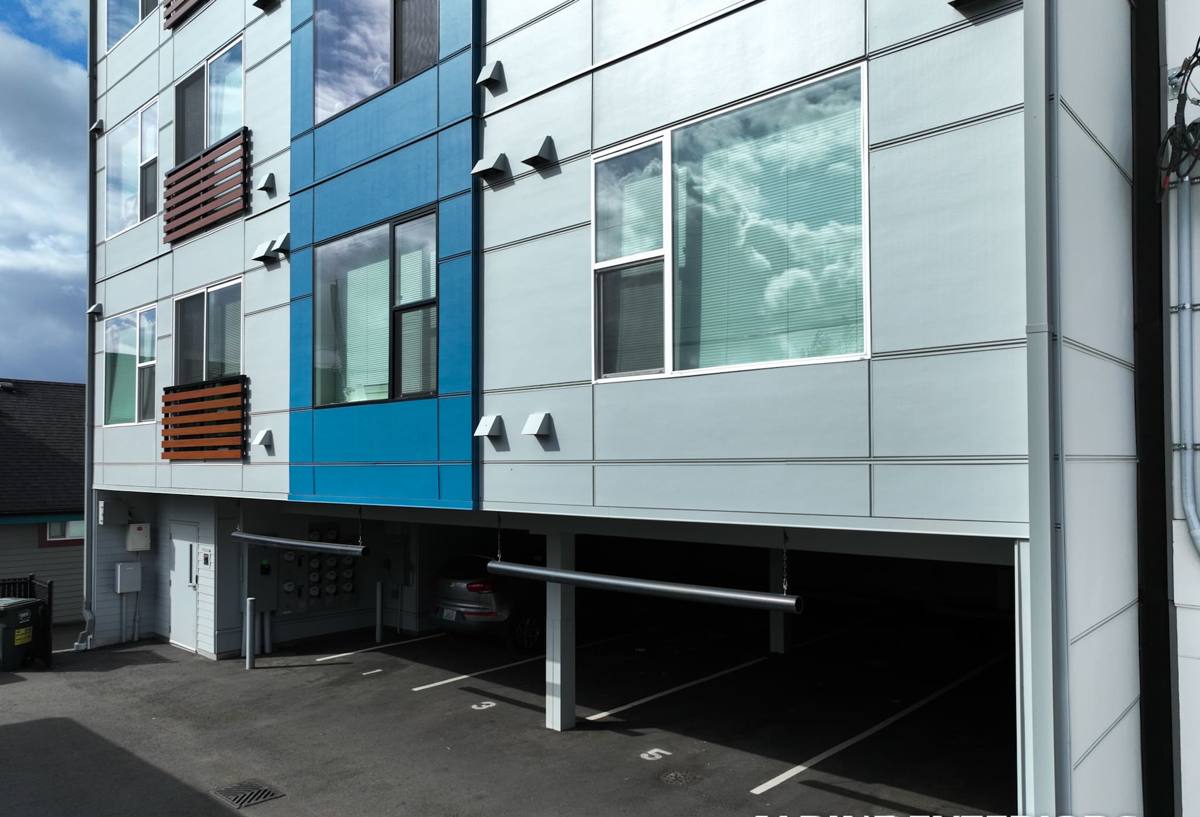
What Makes the California Creek Corridor Different
Shade and Slow Drying
Tree cover along the creek blocks a lot of the direct sun that would otherwise dry out siding, trim, and window sills after rain. On an open lot, a wall might be damp for an hour after a storm passes; under creek-corridor canopy, that same wall can stay damp for most of the day. Window openings on shaded elevations, especially anything facing north or tucked under mature trees, take the brunt of that extended moisture exposure.
Marine Air and Wind-Driven Rain
Even set back from open water, California Creek homes still sit within reach of the salt-laden air and driving rain that come off Birch Bay and the wider Strait of Georgia. Storms push rain sideways into wall assemblies and window openings rather than straight down, and that salt content in the air accelerates corrosion on lower-grade window hardware and fasteners faster than a drier inland climate would.
Ground Moisture and Humidity
A creek corridor keeps ambient humidity higher than a property set back from any water feature, and that shows up as more persistent condensation on interior glass and more sustained moisture load on exterior wood trim. It's a slower, steadier kind of wear than a single hard storm — the kind that shows up as soft sills and failed seals years before a homeowner expects it.
Moss, Algae, and Organic Growth
Shade plus moisture is exactly what moss and algae need, and the growth season along California Creek tends to run longer than it does on more open, sun-exposed Birch Bay properties. Window sills, trim, and the wood framing around older windows are common places it takes hold first, especially anywhere water sits instead of draining cleanly away.
Signs a California Creek Home Needs Window Attention
- Fogging or visible moisture trapped between the panes of a double-pane window
- Sills or trim that feel soft, look discolored, or show green or black growth that keeps returning
- Drafts or cold spots near the frame even with the window fully closed and locked
- Difficulty opening, closing, or locking a window that used to operate smoothly
- Visible daylight or gaps where the frame meets the surrounding siding or trim
- Paint or finish peeling or bubbling faster on shaded elevations than on sun-exposed ones
Replacement vs. Repair: How We Make the Call
Not every window on a California Creek property needs full replacement. A window with a failed seal but sound framing and working hardware is often a fair repair or reglaze candidate. A window with soft or rotted framing, a warped sash, or hardware that's been sticking and failing for years usually isn't — at that point, repeated patching starts costing more over time than doing the job right once.
| Condition | Repair Usually Makes Sense | Replacement Usually Makes Sense |
|---|---|---|
| Fogged glass, sound frame | Yes — reglaze or seal replacement | Only if the frame is also compromised |
| Stiff, sticking, or broken hardware | Yes — hardware replacement | Not on its own |
| Soft, discolored, or rotted framing | Rarely a lasting fix | Yes |
| Recurring moss or algae on sills | Cleaning helps short-term | Yes, if trim is deteriorating underneath |
| Persistent drafts despite sealing | Sometimes, if flashing is the cause | Yes, if the unit itself is the source |
What Correct Window Flashing Looks Like on a Shaded Lot
On a creek-corridor property, we spend more time on flashing than on window brands, because flashing is what actually keeps water out of the wall assembly once it's past the glass. Done right, the flashing laps correctly with the weather-resistive barrier and siding, directs water out and away from the rough opening instead of letting it pool behind it, and every seam gets sealed with materials rated for sustained, not occasional, moisture exposure. On a shaded site where surfaces stay wet longer, that drainage path matters even more than it does on an open, quick-drying lot.
The Mistake We See Most on Older Homes Here
On repair and replacement calls along California Creek, water damage almost never traces back to the window unit itself failing first — it traces back to flashing that was never lapped correctly, or caulk that was used as the primary seal instead of a backup to proper flashing. Caulk breaks down and cracks over time, and on a slow-drying lot like this one, a small gap left unsealed has more time to do damage before anyone notices.
Choosing Windows for a Shaded, Damp Site
We install vinyl and fiberglass window systems built for the Pacific Northwest's wet, mild climate, and on a California Creek property specifically, we weigh frame material and glazing choices against the extra moisture and shade the site sees. There's no single brand that's automatically right for every home — the frame's rot resistance, the glazing package, and the hardware grade matter more than the name on the sticker.
- Frame material: Vinyl and fiberglass both resist rot in a way uncladded wood frames don't, which matters on a lot that stays damp longer than average.
- Glazing package: Double or triple-pane options with low-E coatings cut down on interior condensation, which tends to be more noticeable in homes near a creek corridor with higher ambient humidity.
- Hardware grade: Corrosion-resistant hardware holds up longer against the marine-influenced air reaching this area off Birch Bay than standard-grade hardware does.
- Sill and trim detailing: On shaded elevations, sloped sills and properly primed or capped trim matter more than they would on a sun-exposed wall, since there's less natural drying to fall back on.
- Warranty structure: A manufacturer's product warranty is only as good as the installation behind it — we stand behind our installation work separately from the window maker's own coverage.
How Windows Fit Into the Rest of the House
A window doesn't fail on its own. A replacement done without attention to the surrounding siding, trim, and drainage plane can look fine for a season or two and still leak, because water that gets past a poorly integrated window travels into the wall assembly rather than staying visible where anyone would notice it right away. We treat window work as connected to siding and roofing rather than a standalone job, which matters more on a shaded, slow-drying property where a hidden leak has more time to do real damage before it shows up as a stain or soft spot inside.
Our Process for California Creek Homes
We start with an on-site look at the existing windows — frame condition, seal integrity, hardware function, and how the current flashing ties into the siding around each opening. On a shaded or creek-adjacent lot, we also look specifically at how well water is draining away from sills and trim, since standing moisture is usually the first thing that turns a minor issue into a bigger one. From there, we give a straightforward read on which windows are reasonable repair candidates and which make more sense to replace, along with a written scope before any work begins. Flashing and drainage detailing are handled as standard practice on every job, not offered as an optional upgrade.
A Simple Checklist Before Hiring for Window Work Near California Creek
- Ask specifically how they handle flashing and drainage on shaded or slow-drying elevations, not just what window brand they sell
- Confirm current Washington contractor licensing and active liability insurance
- Get a written scope that separates the manufacturer's product warranty from the contractor's installation warranty
- Ask whether they recommend repair or replacement and why, for each affected window individually
- Ask about lead times, since custom-sized window orders in this region can run several weeks depending on configuration
Why Local Experience Matters Here
A contractor who works the Birch Bay area regularly already knows that a shaded, creek-adjacent lot doesn't dry out the way an open one does, and that the marine air reaching this part of Whatcom County still carries enough salt to matter even a mile or two off the water. That understanding shows up in small decisions — how much lap a flashing detail gets, whether a sill is sloped enough to shed water on a lot that rarely sees direct sun, which hardware grade gets specified — and those are the decisions that determine whether a window installation holds up for one damp winter or several decades.
If you're dealing with foggy, drafty, or hard-to-operate windows on a California Creek property — or you're just not sure whether repair or replacement is the right call for a shaded, damp lot like this one — we're happy to take a look and give an honest assessment. Reach out below for a free, no-pressure estimate.