 Birch Bay Roofing
 Composite Decking Built for Ferndale's Climate
Ferndale sits close enough to the water that homes here deal with a specific mix of conditions: salt-laden air drifting off Birch Bay and the Strait, driving rain for a good chunk of the year, and a moss season that seems to start earlier and last longer every winter. A deck that looks great going in but wasn't built for those three things will show it within a couple of seasons — soft spots, green film on the boards, corroded hardware, or a substructure that's rotting quietly underneath while the surface still looks fine.
Composite decking is a strong answer to that problem when it's installed correctly. It doesn't absorb water the way wood does, it won't feed rot, and modern capped boards resist the moss and algae growth that's a constant fight on wood decks in Whatcom County. But "composite" isn't a magic word — the material only performs as well as the job underneath it. This page covers what a composite deck actually needs to hold up in Ferndale, and how we build them.
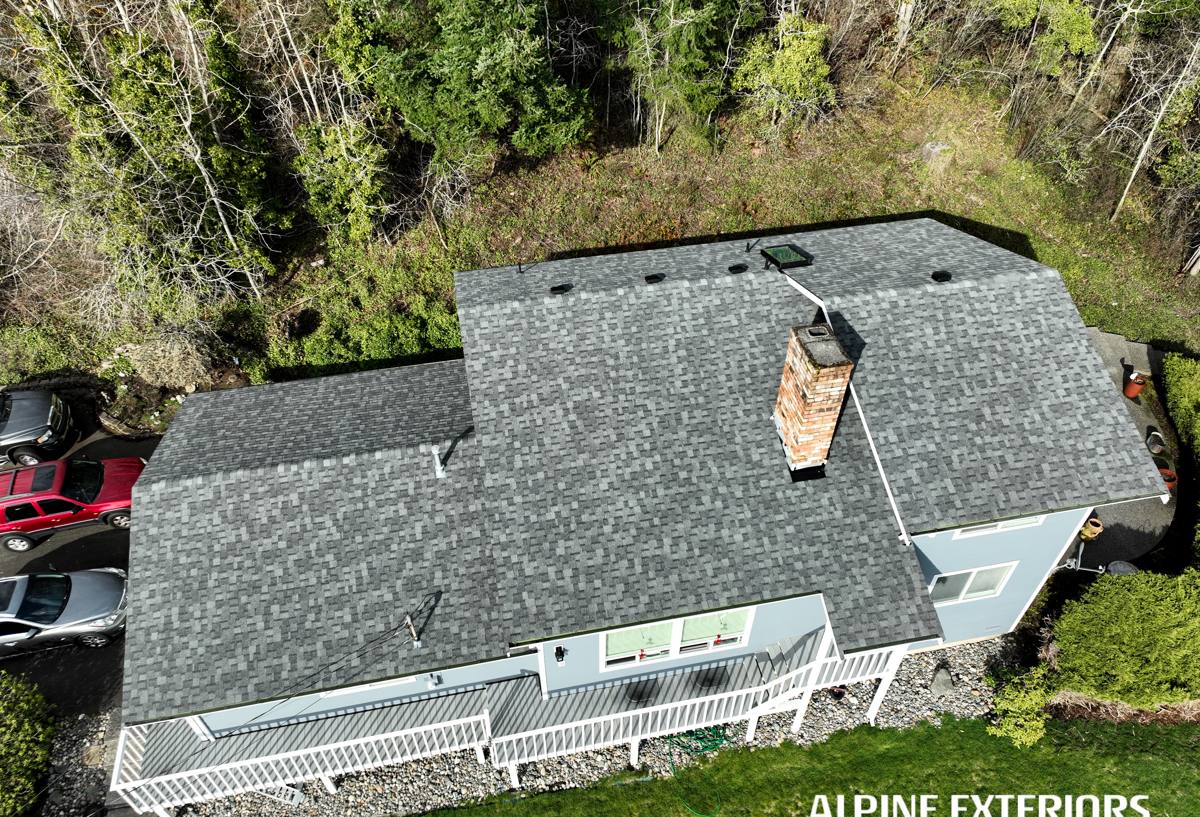
What Ferndale's Weather Actually Does to a Deck
Salt Air and Metal Fatigue
Ferndale isn't right on the open coast, but Birch Bay and the surrounding waterways put enough salt in the air to accelerate corrosion on anything metal — fasteners, joist hangers, railing brackets. Standard hardware store screws and brackets will rust and weaken over a handful of years in this environment, and once a fastener fails below the surface, you don't see it until the board it's holding starts to move.
Driving Rain and Where Water Actually Goes
The issue with rain isn't just how much falls — it's how it moves once it hits the deck. Water that can't shed properly ends up sitting in low spots, pooling against ledger boards, or trickling down into joist framing where it has nowhere to evaporate. Composite boards themselves shrug this off, but the wood or engineered lumber framing underneath a lot of composite decks is still vulnerable if drainage and flashing aren't handled correctly.
Moss, Algae, and the Shaded North Side
Whatcom County's long wet season, combined with the tree cover common on Ferndale lots, means moss and algae get a real head start on any deck surface that stays damp and shaded. Uncapped or older-generation composite boards can develop a fuzzy green film in those conditions. It's mostly a maintenance issue rather than a structural one, but it affects how the deck looks and how slick it gets underfoot — worth planning for at the design stage, not just cleaning up after the fact.
Why Composite Makes Sense Here
Composite decking — a blend of wood fiber and recycled plastic, usually with a protective cap layer — solves the biggest wood-deck headache in this climate: rot. It doesn't take on water the way real lumber does, so it isn't feeding fungal growth from the inside the way a wood deck can. It also resists splintering, doesn't need annual staining or sealing, and holds its color better over years of grey, wet Pacific Northwest winters.
That said, composite isn't maintenance-free, and it isn't the right fit for every part of every job. Railings, stair stringers, and fascia details sometimes still call for other materials depending on the design. We'll tell you honestly where composite is the better call and where it isn't, rather than pushing one material for every square foot of the project.
What a Correct Composite Deck Build Involves
The board itself gets most of the attention, but it's maybe a third of what determines how long a deck lasts here. The rest is in the parts you don't see once it's finished.
Substructure and Framing
We frame with lumber rated for ground contact or exterior use where it matters, and we don't skip joist tape or flashing tape over the framing — it's a small material cost that keeps water off exposed wood and dramatically slows corrosion at every fastener penetration. Joist spacing gets set to the composite manufacturer's spec, not standard wood-deck spacing, because composite boards flex differently under load than solid lumber.
Ledger Attachment and Water Management
Where the deck attaches to the house is the single most common failure point on decks in this region, composite or not. Proper flashing at the ledger board keeps water from working its way behind the siding and into the wall assembly — this is where a lot of corner-cutting shows up years later as hidden rot that has nothing to do with the decking material itself.
Fasteners and Hardware
Given the salt air here, we use corrosion-resistant fasteners and hardware rated for coastal or treated-lumber exposure, not standard interior-grade hardware. Hidden fastener systems, where the boards clip in without face screws, also reduce the number of penetration points where water and salt can work into the board over time.
Drainage and Airflow Underneath
Low decks with poor ventilation underneath trap moisture against the framing — that's where you'll see the earliest signs of trouble. We grade and gap for drainage and make sure there's enough airflow under the deck for the framing to actually dry out between rain events, which in Whatcom County can mean a lot of consecutive wet days.
Composite Board Options: What the Trade-offs Actually Are
| Factor | Capped Composite | Uncapped Composite |
|---|---|---|
| Moisture resistance | Best — cap layer sheds water and resists staining | Good, but core can absorb some moisture over time |
| Moss/algae resistance | Strong, especially on shaded sides | More prone to surface growth in shaded, damp spots |
| Upfront cost | Higher | Lower |
| Long-term maintenance | Occasional wash-down | More frequent cleaning to control moss/algae |
| Fade resistance | Generally better UV and color retention | More variable between brands |
For most Ferndale properties, especially anything with tree cover or a north-facing section, the cap layer earns its cost difference back in reduced cleaning and better long-term appearance. We'll walk you through actual product lines and current pricing during your estimate rather than quoting broad numbers that don't reflect what's on the market right now.
Our Process for a Ferndale Composite Deck Project
- On-site assessment — we look at sun/shade exposure, drainage slope, proximity to trees or water, and the condition of any existing structure.
- Design and material selection — board profile, color, and railing system chosen based on how the deck will actually be used and how much shade/moisture exposure it gets.
- Permitting — we handle what Whatcom County or the local jurisdiction requires for the project, so you're not chasing paperwork.
- Demo and framing — old structure removed if applicable, new framing built to spec with proper flashing and tape.
- Decking installation — boards installed per manufacturer spec, with attention to expansion gaps, fastening method, and drainage.
- Railings, stairs, and finish details — completed and inspected for fit and function.
- Final walkthrough — we go over care and cleaning specific to the product installed, so you know what upkeep actually looks like here.
Maintaining a Composite Deck in This Climate
- Rinse or sweep debris off the deck regularly, especially in fall when leaves and needles collect and trap moisture against the boards.
- Wash shaded or low-airflow sections more often — these are where moss and algae get a foothold first.
- Keep gutters and downspouts near the deck clear so runoff isn't dumping directly onto the surface or framing below.
- Check railing posts and stair connections yearly for movement — hardware is the first thing salt air affects, even when the boards themselves look fine.
- Trim back overhanging branches where practical to cut down on shade and debris buildup.
- Avoid pressure-washing at close range or high pressure, which can damage the cap layer on some composite products.
Why Hire a Crew That Already Works in Ferndale
A lot of what determines whether a composite deck holds up here isn't the product — it's whether the crew building it understands what Whatcom County weather actually does to a structure over time. That means knowing to flash a ledger board properly for months of driving rain, choosing hardware that won't corrode in salt air off Birch Bay, and designing drainage and airflow with a genuine moss season in mind, not a generic install spec written for a drier climate.
We work on homes throughout this area regularly, and that local pattern-recognition matters — we've seen where decks fail here and we build to avoid those specific failure points, not textbook ones from somewhere else.
Get a Straightforward Estimate
If you're considering a new composite deck or replacing an aging wood deck in Ferndale, we're happy to take a look and give you an honest read on what your property needs — no pressure, no upsell on material you don't need. Fill out the form below to schedule a free estimate.