 Birch Bay Roofing
 Building Decks for Ferndale's Coastal Climate
Ferndale sits close enough to the Birch Bay shoreline and the Strait of Georgia that homes here deal with a different set of conditions than decks built further inland in Whatcom County. Salt-laden air corrodes hardware faster, driving rain off the water pushes moisture into places a dry-climate deck design never has to account for, and the long gray stretch from fall through spring gives moss and algae months to take hold on any surface that doesn't shed water well. A deck built without those three factors in mind can look fine the first summer and start showing problems — soft spots, rust streaks, slick green boards — within a couple of wet seasons.
We build decks for homeowners in and around Ferndale regularly, and most of what separates a deck that lasts fifteen-plus years from one that needs major repair by year five comes down to decisions made before the first board goes down: material selection, framing details, and how water is directed off and out from under the structure.
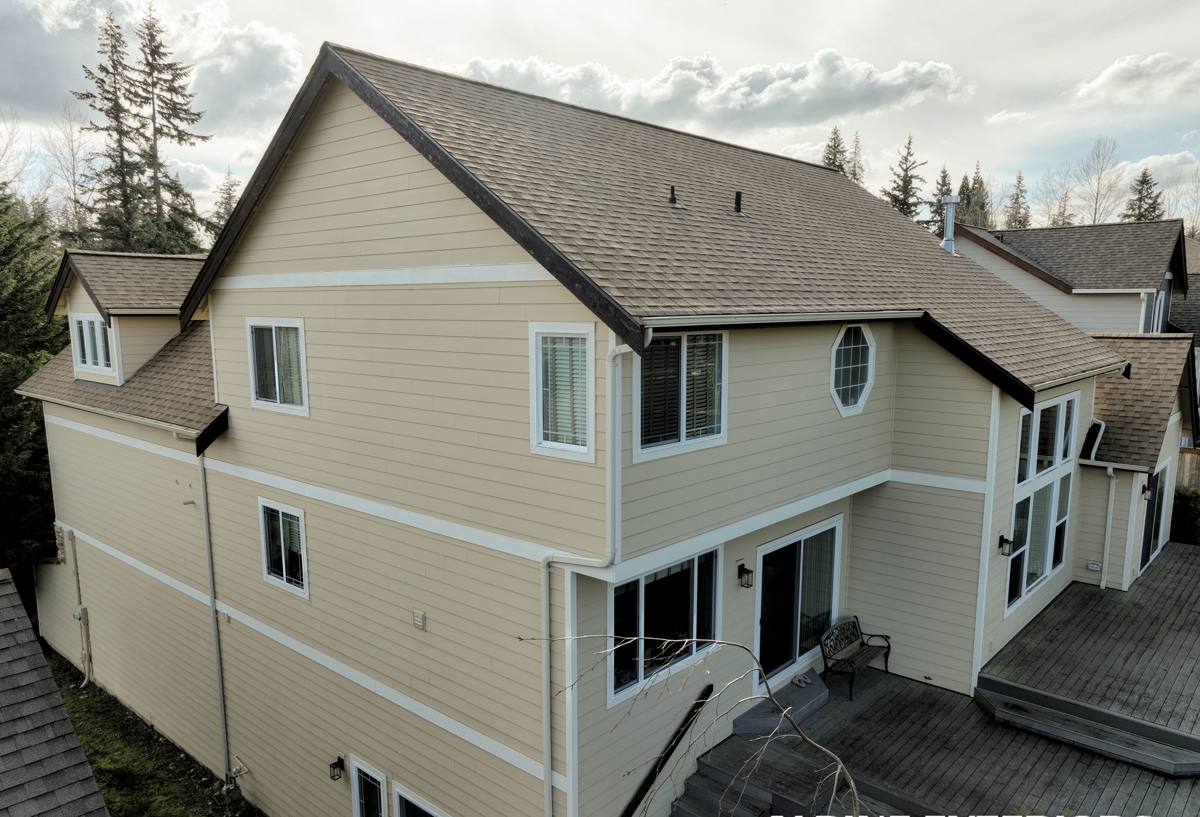
What Local Weather Actually Does to a Deck Over Time
Salt Air and Metal Hardware
Proximity to Birch Bay means airborne salt is a real factor, even a few miles inland. Standard electro-galvanized screws, nails, and joist hangers corrode noticeably faster in this environment than they would in a dry inland climate. Once fasteners start rusting, they lose holding strength long before the wood around them shows any obvious damage — which is part of why hardware failure is often invisible until something actually moves underfoot.
Driving Rain and Hidden Moisture
Whatcom County gets a lot of rain, and a fair amount of it comes in sideways during winter storms. That matters most at the points where a deck meets the house — the ledger board connection, rim joist flashing, and any post base that sits low to grade. Water that gets behind flashing or pools against a ledger board doesn't dry out quickly in our climate; it just sits there through the wet months, which is exactly the condition rot fungus needs.
Moss and the Long Gray Season
Moss and algae need shade, moisture, and time — and Ferndale's fall-through-spring stretch provides all three. Decking that doesn't drain and dry between rain events builds up moss on the surface and, worse, trapped organic debris between boards that holds moisture against the wood underneath. This is as much a maintenance issue as a design issue, but the design — board spacing, airflow underneath, sun exposure — determines how much maintenance a deck actually needs.
Choosing Decking Material for This Environment
There's no single "right" decking material for every project — it depends on budget, how the deck will be used, and how much upkeep the homeowner actually wants to do. Here's how the common options hold up specifically against salt air, rain, and moss:
| Material | Moisture/Rot Resistance | Moss/Algae Behavior | Maintenance | Typical Lifespan |
|---|---|---|---|---|
| Pressure-treated pine | Good if properly sealed and maintained | Prone to moss buildup without regular cleaning | Annual cleaning, resealing every 1-2 years | 10-15 years |
| Cedar | Naturally rot-resistant, but surface needs upkeep | Moderate; grays and can host moss if not sealed | Periodic cleaning and oil/sealant | 15-20 years |
| Composite decking | Excellent — doesn't absorb water like wood | Still needs periodic washing; surface texture affects grip when wet | Occasional washing, no sealing/staining | 25-30+ years |
| Tropical hardwood (ipe, etc.) | Very good, naturally dense | Low, but can be slick when wet if not textured | Periodic oiling to maintain color | 25+ years |
In a salt-air, high-rain climate, composite and quality hardwoods generally give homeowners the best return on lower maintenance, but pressure-treated and cedar remain solid, budget-conscious choices as long as the homeowner is realistic about the cleaning and resealing schedule that comes with them. We'll walk through the actual trade-offs for your project and budget rather than push one product line — what matters more than the decking surface itself is what's underneath it.
Framing and Substructure: Where Decks Actually Fail First
Most deck failures we get called out for don't start with the decking boards — they start with the framing, flashing, and connections that homeowners never see. This is the part of the job that determines whether a deck is safe and long-lasting, regardless of how nice the surface material looks.
Ledger Board Attachment
The ledger board — where the deck bolts into the house — is the single most critical structural connection and also the most common point of hidden rot. Proper flashing that directs water away from this joint, rather than trapping it against the house rim joist, is non-negotiable in a climate that sees as much driving rain as ours does.
Joist Hangers and Fastener Coatings
Given the salt-air exposure around Birch Bay and Ferndale, we use corrosion-resistant hardware rated for treated lumber and coastal-adjacent conditions rather than standard-grade galvanized fasteners. It costs more up front and makes no visible difference on install day — but it's the difference between hardware that's still solid at year twenty and hardware that's rusting through at year eight.
Post Bases and Grade Clearance
Posts set too close to grade, or without a proper base that lifts wood off standing water, are a common shortcut on older or lower-budget builds. We keep structural wood elevated and drained so it isn't sitting in the kind of chronic dampness this region produces every winter.
How We Build a Deck
- On-site assessment of the house connection point, grade, drainage path, and sun/shade exposure
- Material and layout discussion based on budget, usage, and maintenance preference
- Permit and code review specific to Whatcom County requirements
- Framing with corrosion-resistant hardware and properly flashed ledger connection
- Decking installation with attention to board spacing for drainage and airflow underneath
- Final walkthrough covering the maintenance schedule appropriate to the material chosen
We don't skip the flashing and hardware details to hit a lower bid number — those are the parts of the job that actually determine how the deck performs through its first several wet seasons and beyond.
Permits and Local Code Considerations
Deck permitting in Whatcom County generally depends on the deck's height, size, and attachment to the structure — ledger-attached decks and anything above a certain height off grade typically require a permit and inspection. Requirements can also vary depending on whether a property falls under county jurisdiction or Ferndale's own municipal code. We handle the permit process as part of the job rather than leaving homeowners to sort out which jurisdiction and requirements apply.
Maintaining a Deck in This Climate
Whatever material you choose, a deck in the Ferndale/Birch Bay area needs a maintenance rhythm built around our wet season rather than a generic once-a-year checklist. A few habits go a long way toward preventing the moss buildup and moisture damage that shorten a deck's life here:
- Sweep leaves and debris out from between boards regularly through fall — trapped organic matter holds moisture and feeds moss
- Rinse or lightly scrub the surface each spring before moss and algae get established for the season
- Check the ledger board flashing and any visible hardware annually for rust streaks or gaps
- Reseal or restain wood decking on the schedule appropriate to the product — don't wait until it's visibly gray and dry
- Keep gutters and downspouts near the deck clear so roof runoff isn't dumping extra water onto or under the structure
- Trim back vegetation that's shading the deck surface and slowing how quickly it dries after rain
Why a Crew That Already Works in Ferndale Matters
A deck built to a generic national spec sheet isn't necessarily built for Whatcom County weather. Knowing how much rain a Ferndale winter actually drives sideways, how fast salt air corrodes unprotected hardware near Birch Bay, and how quickly moss establishes itself on shaded decking in this region isn't something you get from a manufacturer's install manual — it comes from building and maintaining decks in these exact conditions, season after season. That local experience shows up in the small decisions: how much slope we build into the framing for drainage, which fastener coatings we consider standard rather than upgrade, and how we orient a deck relative to sun and shade wherever the site allows it.
Get a Straight Answer on Your Deck Project
If you're planning a new deck or replacing an aging one in Ferndale, we're happy to take a look and give you an honest assessment of what your site needs — no pressure, no inflated scope. Reach out for a free estimate using the form below.