 Birch Bay Roofing
 New Roof Installation in Ferndale: Built for This Coastline, Not a Generic Climate
Ferndale sits close enough to the water that homes here take a different kind of weathering than roofs twenty miles inland. Salt-laden air off the Strait works into fasteners and metal components year-round. Driving rain, pushed sideways by wind off the water, tests every lap, seam, and flashing detail instead of just falling straight down onto shingles. And a long, overcast moss season keeps roof surfaces damp for weeks at a stretch, which is exactly the environment moss and algae need to take hold. A new roof installed for Ferndale needs to be specified and built with all three of these things in mind from day one — not treated as an afterthought once the shingles are on.
This page covers what a new roof installation actually involves for a Ferndale home, the materials and details that hold up best in this specific climate, and how our process works from first look to final walkthrough.
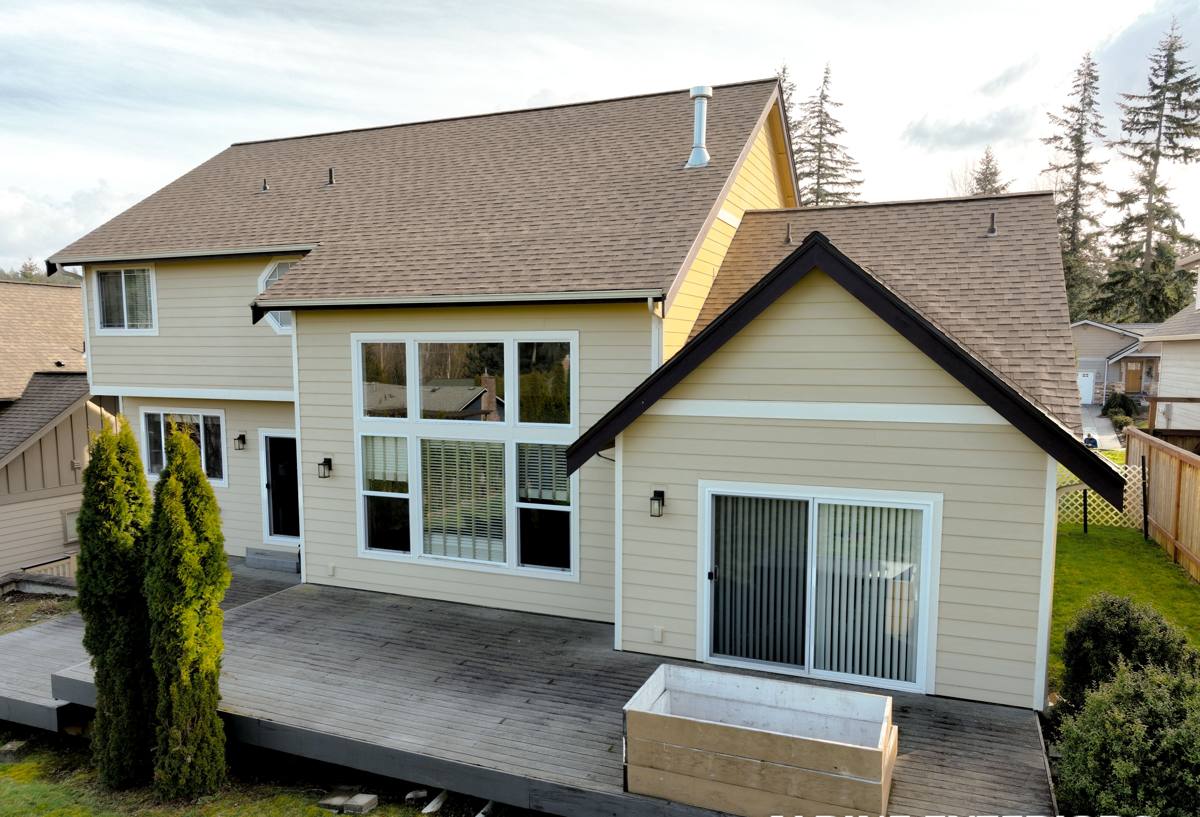
What Salt Air, Driving Rain, and Moss Actually Do to a Roof
Salt Air and Corrosion
Airborne salt accelerates corrosion on exposed metal — nail heads, flashing, vent stacks, and fastener systems on metal roofing. A roof built with the wrong-grade fasteners or unprotected metal trim can show rust streaking and pitting years before a roof built with corrosion-resistant materials in the same neighborhood.
Driving Rain and Wind-Driven Water
Wind off the water doesn't let rain fall straight down — it pushes water sideways and up under shingle tabs, around chimney and skylight flashing, and into any gap in the underlayment. A roof that would perform fine in a calmer inland climate can leak here simply because the flashing and underlayment weren't detailed for wind-driven water in the first place.
Moss and Sustained Shade or Moisture
Whatcom County's damp, overcast stretches give moss and algae exactly what they need: consistent moisture and limited direct sun, especially on north-facing slopes and roof sections shaded by trees. Left unchecked, moss holds moisture against the roof surface, lifts shingle edges, and shortens the life of the roof covering well before its rated lifespan is up.
Signs a Ferndale Home Needs Replacement, Not Another Repair
Not every roof problem calls for a full tear-off. But there's a point where repeated patching costs more over time than doing the job right once. Signs worth a real inspection before you decide which way to go:
- Shingles that are cupping, curling, or losing granules in patches rather than isolated spots
- Moss growth that returns within a season or two of cleaning, especially on shaded slopes
- Soft or spongy spots in the roof deck when walked, or sagging visible from the ground
- Daylight visible through the roof deck from the attic, or water staining on attic sheathing
- Flashing around chimneys, skylights, or vent penetrations that's rusted, lifted, or was never properly stepped
- A roof approaching or past 20-25 years old (for asphalt shingle) with multiple past repairs already on record
- Granules collecting in gutters in noticeably increasing amounts year over year
If a roof is showing two or more of these at once, a repair is usually a temporary fix on a system that's already failing broadly rather than in one isolated spot.
What a Correct New Roof Installation Actually Involves
A new roof is more than stripping old shingles and nailing down new ones. The parts that actually determine how the roof performs in this climate are mostly things you won't see once the job is finished:
Tear-Off and Deck Inspection
Full tear-off to bare deck lets us actually see the plywood or OSB underneath — soft spots, delamination, or rot from a slow leak that was never visible from inside. Covering over a compromised deck with new shingles just hides the problem until it fails from underneath.
Moisture Barrier and Underlayment
Given how much wind-driven rain this area sees, underlayment choice matters more here than in a drier climate. Self-adhered ice-and-water shield at eaves, valleys, and roof penetrations gives a sealed layer that ordinary felt can't match in wind-driven conditions, even though this region doesn't deal with true ice-dam freeze-thaw the way colder climates do.
Flashing Details
Step flashing at walls and chimneys, properly layered valley flashing, and correctly sealed penetrations for vents and skylights are where most roof leaks actually originate — not in the open field of shingles. These details take more time to do correctly, and it shows in how the roof performs during a real coastal storm rather than just a light rain.
Ventilation
Balanced intake and exhaust ventilation keeps the attic space at a consistent temperature and moisture level. Poor ventilation traps humid air against the underside of the roof deck, which contributes to premature deck rot and gives moss and mildew another moisture source from below, not just from above.
Choosing a Roofing Material for a Ferndale Coastal Climate
There isn't one "best" roofing material for every home — it depends on budget, roof pitch, house style, and how much long-term maintenance you're willing to keep up with. Here's how the common options compare specifically against salt air, wind-driven rain, and moss exposure:
| Material | Salt Air Durability | Wind-Driven Rain Performance | Moss Resistance | Typical Lifespan |
|---|---|---|---|---|
| Architectural asphalt shingle | Good with corrosion-resistant fasteners | Good with proper underlayment/flashing | Moderate — benefits from periodic cleaning | 25-30 years |
| Standing seam metal | Very good with coated, marine-rated fasteners | Excellent — few seams for water to find | Very good — sheds moisture quickly | 40-50+ years |
| Synthetic/composite shingle | Good — resists corrosion by design | Good with proper underlayment | Moderate to good depending on product | 30-40 years |
| Standard 3-tab asphalt | Fair — shorter service life overall | Fair — more seams, less wind resistance | Lower — flatter profile holds moisture longer | 15-20 years |
For most Ferndale homes, architectural asphalt shingle with a properly detailed underlayment system is the practical middle ground — it balances upfront cost against real durability in this climate. Metal roofing costs more up front but asks the least of you in ongoing maintenance over the decades that follow.
Our New Roof Installation Process
The steps are straightforward, but the details inside each one are where the quality difference actually shows up:
- On-site assessment. We inspect the existing roof, deck condition where accessible, ventilation setup, and any problem areas like valleys, chimneys, or shaded slopes prone to moss.
- Material and system selection. We walk through material options against your budget and the specifics of your roof — pitch, exposure, shading, and how long you plan to be in the home.
- Tear-off and deck repair. Old roofing comes off down to the deck; any damaged sheathing is replaced before anything new goes down.
- Underlayment and flashing installation. Ice-and-water shield at vulnerable areas, synthetic underlayment across the field, and properly layered flashing at every penetration and transition.
- Roof covering installation. Shingles, metal panels, or composite material installed to manufacturer specification, with attention to nailing pattern and exposure for wind resistance.
- Ventilation and final details. Intake and exhaust vents confirmed balanced, all penetrations sealed, ridge and hip details finished.
- Cleanup and walkthrough. Site cleared of debris and nails, and we walk the finished roof and paperwork with you before calling the job done.
Why a Crew That Already Works Ferndale Makes a Difference
Roofing crews who work regularly across Whatcom County's coastal communities already know which slopes on a Ferndale roof tend to hold moss longest, how much wind-driven rain a given exposure actually sees, and which flashing details matter most given the local weather pattern. That's not something you get from a crew that mostly works dry inland roofs and treats every job with the same generic spec.
It also matters for accountability. A local crew is easy to reach if a question comes up after the job, and has a reputation in the area worth protecting — which tends to show up in the quality of the work itself, not just in what gets promised beforehand.
What Affects the Cost of a New Roof
Every roof is different, so exact pricing depends on a real on-site look. In general, the factors that move the number most are:
- Roof size (total squares) and pitch — steeper roofs take longer and cost more to work safely
- Number of layers currently on the roof and whether full tear-off is needed
- Deck condition and how much sheathing repair is required
- Material choice — asphalt, synthetic, and metal sit at different price points
- Roof complexity — valleys, dormers, chimneys, and skylights all add labor and flashing work
- Ventilation upgrades needed to bring an older attic system up to a proper balance
As a broad range, a straightforward asphalt shingle replacement on an average home typically runs from the mid four figures into the low five figures, with metal roofing costing more up front. An accurate number always comes from seeing the actual roof.
Keeping a New Roof Performing Through Ferndale's Climate
A correctly installed roof still benefits from basic upkeep in this climate. Keep gutters and valleys clear of needles and debris so water has a clear path off the roof. Have moss-prone slopes checked and gently cleaned periodically rather than left to build up. And after any major windstorm off the water, a quick visual check for lifted shingles or displaced flashing catches small issues before they become deck damage. A well-built roof handles this climate well on its own — a little seasonal attention just keeps it performing at its best for the long run.
If your roof is showing its age or you're planning ahead for a replacement, we're happy to take a look and walk you through your options. Reach out for a free, no-pressure estimate using the form below.