 Birch Bay Roofing
 Why Ferndale's Climate Puts Extra Demands on Window Installation
Ferndale sits close enough to the water that homes here deal with the same weather pattern as the rest of coastal Whatcom County: salt-laden air moving in off the bay, long stretches of driving rain in the fall and winter, and a moss season that can run most of the year in shaded yards. None of that is unique to roofs. It all lands on window openings too — the caulking, the flashing, the sill, and the frame material itself take a steady beating year after year.
A window that's a fine choice in a dry inland climate can struggle here. Wood sills swell and rot faster when they stay damp for weeks at a time. Aluminum hardware corrodes quicker in salt air. Cheap sealants shrink and crack under repeated wet-dry cycling, which opens the door to slow leaks that don't show up until there's already damage behind the wall. Correct window installation in this area isn't about buying a fancier window — it's about detailing the install so water has nowhere to go but back outside.
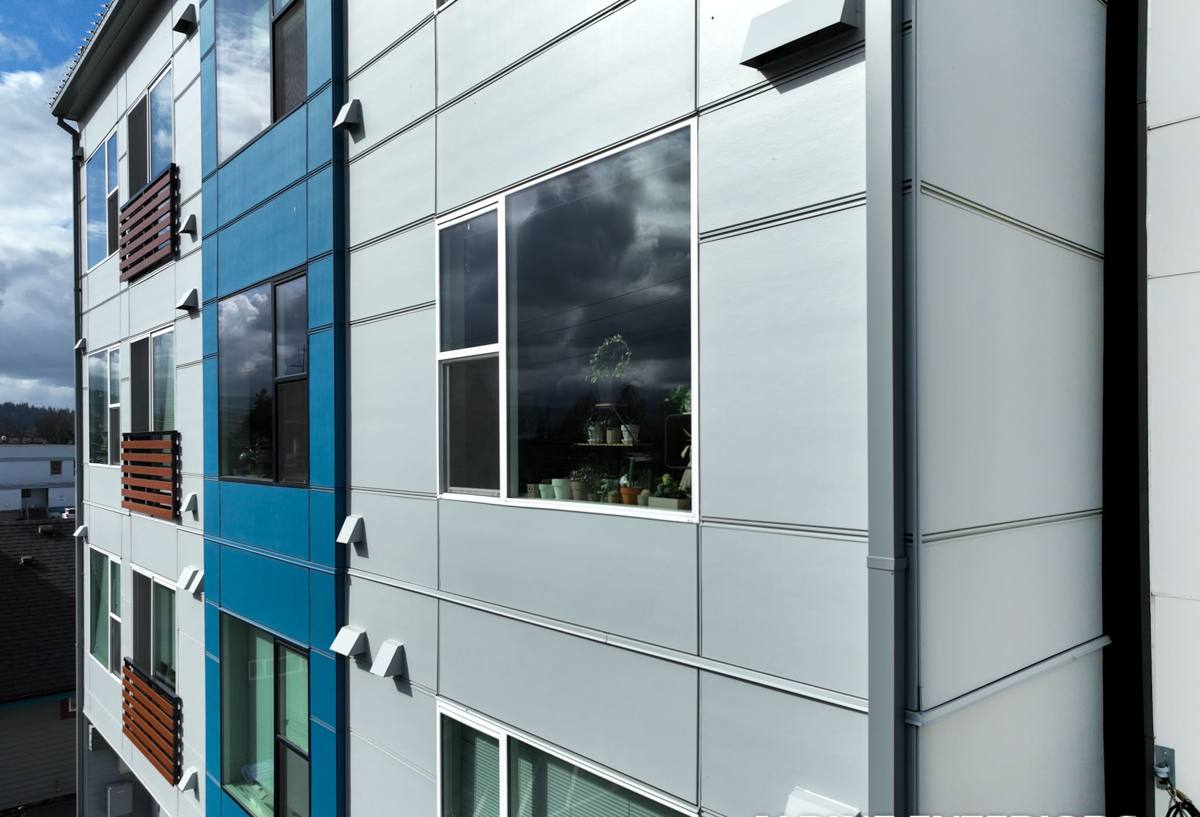
Signs It's Time to Replace or Properly Reinstall Your Windows
Homeowners often live with a failing window for years because the problem shows up gradually. Here's what we look for during an inspection, and what you can check yourself:
- Fogging or a milky haze between the panes of a double-pane window (a sign the seal has failed)
- Soft, discolored, or spongy wood at the sill or lower frame corners
- Noticeable draft near the frame when it's windy outside
- Windows that are hard to open, close, or lock, or that have started to sag in the frame
- Visible gaps, cracked caulking, or peeling paint around the exterior trim
- Condensation forming on the inside of the glass regularly, even in mild weather
- A noticeable jump in heating costs without any other explanation
Any one of these on its own isn't necessarily an emergency. A few of them together, especially on the side of the house that takes the most wind and rain, usually means it's worth having someone take a real look before winter.
What a Correct Window Installation Actually Involves
Removing the Old Window and Inspecting the Opening
Pulling the old unit is when we find out what's really going on behind the trim. Sometimes the opening is in good shape and it's a straightforward swap. Other times there's rot in the framing or sheathing that has to be repaired before a new window goes in — installing a good window into a compromised opening just hides the problem for a few more years instead of fixing it.
Sill Pans and Flashing
This is the part that matters most in a climate like ours and is also the part most likely to get skipped on a rushed job. A sill pan creates a sloped, waterproof pocket under the window that directs any water that gets past the frame back outside instead of into the wall cavity. Flashing tape and building paper need to be layered correctly — sequenced so water always sheds downward and outward, never trapped behind a layer above it. Get this wrong and you may not see the consequences for a year or two, by which time there's hidden rot.
Air Sealing and Insulation
The gap between the window frame and the rough opening needs to be sealed and insulated properly — not stuffed full of fiberglass, which does little to stop air movement, and not left to expand overfilled with foam, which can bow the frame and cause the window to bind. A low-expansion foam or backer rod and sealant combination, applied correctly, keeps drafts out without distorting the unit.
Interior and Exterior Finish Work
Once the window is set, plumb, level, and square, the exterior trim and caulking get finished with attention to how water will move across that wall during a real storm, not just how it looks on a dry day. Inside, trim is reset cleanly and any disturbed drywall or paint is finished to match.
Choosing Window Materials for a Damp, Salt-Tinged Climate
There's no single "best" window material for every home — it depends on your budget, the house's style, and how much upkeep you want to take on. Here's how the common options compare for a coastal Whatcom County property:
| Frame Material | Moisture & Salt Air Resistance | Maintenance | Typical Lifespan |
|---|---|---|---|
| Vinyl | Good — won't rot or corrode, holds up well to salt air | Low — occasional cleaning | 20-30+ years |
| Fiberglass | Very good — dimensionally stable, resists moisture swelling | Low | 30-40+ years |
| Aluminum | Fair — durable but prone to corrosion and condensation near salt air over time | Moderate | 20-30 years |
| Wood | Poor to fair without diligent upkeep — attractive but absorbs moisture | High — regular painting/sealing | Varies widely with maintenance |
| Wood-clad (wood interior, clad exterior) | Good — cladding protects the exposed face | Low to moderate | 25-35 years |
We're not tied to pushing any one material. Solid wood windows can be beautiful and are still a reasonable choice for a covered porch or protected elevation, but on a wall that takes direct wind-driven rain off the water, we'll generally steer a homeowner toward vinyl, fiberglass, or a well-detailed wood-clad unit — not because wood is a bad product, but because it demands upkeep that a lot of busy households can't keep up with in this climate. That's a maintenance conversation, not a knock on anyone's preference.
Glass and Performance Ratings That Matter Here
For this area, we pay closer attention to a few specific ratings rather than just going by price point:
- U-factor — measures how well the window resists heat loss; lower is better for our heating-dominated climate
- Condensation Resistance rating — a higher number means the glass and frame are less likely to fog or sweat during our cold, damp mornings
- Air Leakage rating — lower numbers mean a tighter seal against wind-driven rain and drafts
Double-pane windows with a low-E coating and argon gas fill are the standard baseline for most Ferndale homes and perform well for the price. Triple-pane adds meaningfully better insulation and condensation resistance, which some homeowners want on north-facing or particularly exposed walls, but it comes at a real cost premium that isn't necessary on every elevation of every house.
Our Installation Process
- On-site visit to inspect existing windows, openings, and any signs of moisture damage
- Honest assessment of what needs full replacement versus what can be repaired
- Accurate measurement and material recommendation based on the wall's exposure to wind and rain
- Written estimate with no pressure to decide on the spot
- Removal of old units, opening inspection, and any necessary framing repair
- Installation with proper sill pan, flashing sequence, air sealing, and finish work
- Final walkthrough and cleanup before we leave
Why It Matters to Hire a Crew That Already Works in Ferndale
A lot of window problems in this region trace back to an installer who was used to a drier climate, or who treated flashing and sill detailing as optional extra steps instead of the core of the job. A crew that regularly works Ferndale and the surrounding Birch Bay area has already seen what happens when those details get skipped — the rotted sheathing, the stained drywall a year later, the window that won't latch because the frame shifted. That experience shapes how we detail every install, not just the ones where something's already gone wrong.
Working locally also means we're familiar with the kind of exposure different parts of a Ferndale property typically get — which walls take the brunt of storms coming off the water and which are more sheltered — and we factor that into material and detailing recommendations rather than treating every wall the same.
Timing Your Project Around the Whatcom County Weather Window
Window installation can be done in the wet months if it has to be — we take precautions to keep the opening protected during the swap — but late spring through early fall is genuinely easier on everyone. Drier conditions mean sealants and finishes cure the way they're supposed to, and there's less risk of moisture getting into an open wall cavity mid-project. If you're planning ahead, scheduling before the fall rains set in is the more comfortable route, but we'll work with what your home and your timeline require.
Cost Factors to Expect
Every project is different, so we won't quote a number without seeing the house, but a few things reliably move the price:
- Frame material chosen (vinyl typically costs less than fiberglass or wood-clad)
- Number of windows and whether it's a full-house replacement or a handful of units
- Whether the rough opening needs framing or sheathing repair once the old window comes out
- Glass upgrades such as triple-pane or specialty coatings
- Window size and configuration — large or custom-shaped units cost more than standard sizes
We'd rather walk your home and give you real numbers than throw out a broad range that doesn't mean much either way.
If your Ferndale home has windows that are drafty, foggy, or just overdue for a look, we're happy to come take a walk around the property and give you a straightforward, no-pressure estimate. Use the form below to get in touch.