 Birch Bay Roofing
 Ferndale Decks Face a Different Set of Problems
A deck in Ferndale doesn't age the same way a deck does fifty miles inland. Sitting close to Birch Bay and the greater Whatcom County coastline, homes here deal with salt-laden air, long stretches of driving rain off the Strait, and a moss season that can run from October well into April. None of that is dramatic on its own, but stacked together year after year, it's exactly the combination that breaks decks down from the inside before homeowners notice anything wrong from the top.
Salt air accelerates corrosion on anything metal — nails, screws, joist hangers, bolts. Driving rain doesn't just wet the surface of a deck, it drives moisture sideways into end grain, fastener holes, and any seam where two boards meet. And moss doesn't just look bad; it holds water against wood and decking surfaces long after a storm has passed, keeping boards damp for days when they should be drying out in a few hours. We built our deck repair process around this specific combination, not a generic checklist written for a drier climate.
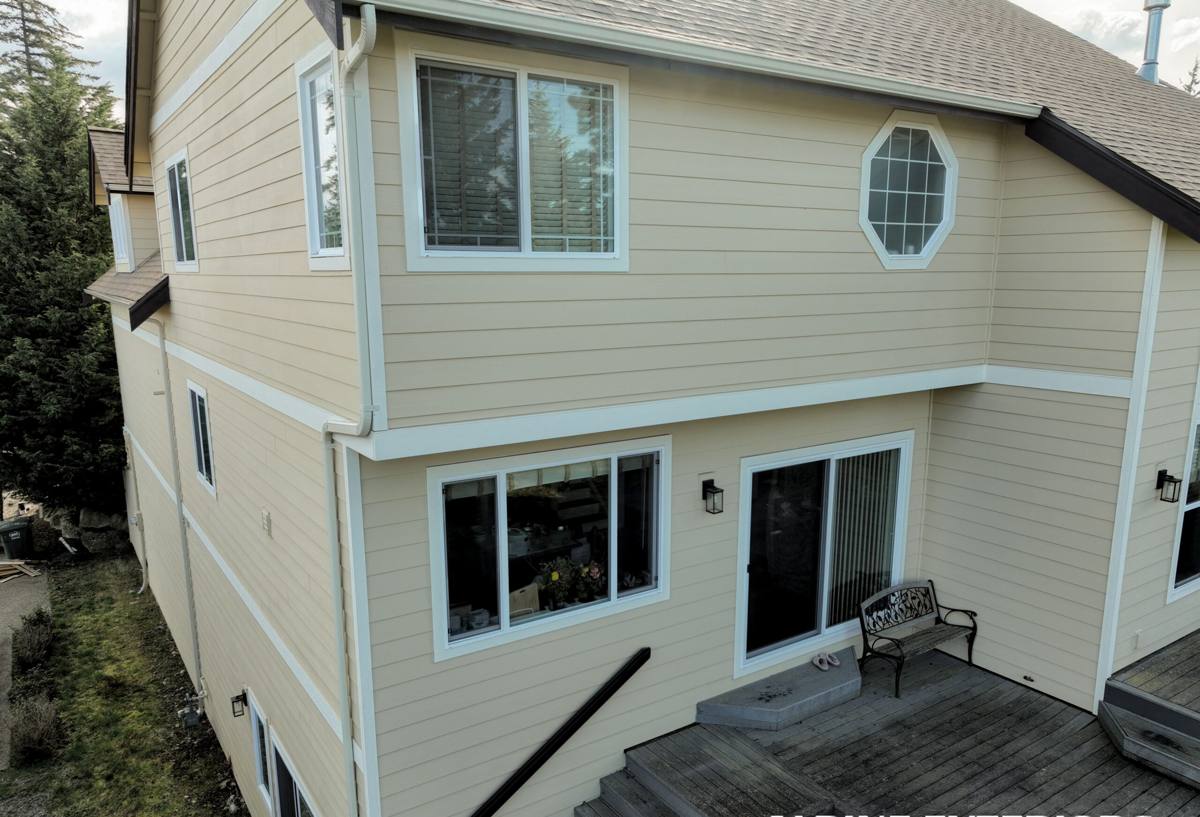
Signs a Ferndale Deck Needs Repair, Not Just Cleaning
Homeowners often assume a tired-looking deck just needs a wash and a new coat of stain. Sometimes that's true. Other times the graying, staining, or soft spots are symptoms of something underneath that a pressure wash won't fix. Here's how to tell the difference.
Cosmetic wear
Gray, weathered wood color, light surface mildew, and faded stain are normal aging. These are maintenance items, not structural concerns, as long as the wood underneath is still firm.
Signs that call for a real inspection
- Boards that flex, bounce, or feel spongy underfoot
- Soft or dark, discolored wood around fastener heads
- Gaps opening up where the ledger board meets the house
- Rust streaking from screws, nails, or joist hangers
- Persistent moss or algae growth in the same spots every year
- Railings that wiggle or posts that feel loose at the base
- Standing water that doesn't drain within a few hours after rain
Any one of these on its own might be minor. Two or three together, especially near the ledger board or support posts, usually means moisture has gotten into the structure and it's worth having someone look underneath, not just at the surface.
What a Correct Deck Repair Actually Involves
A repair that only addresses what's visible from above tends to fail again within a season or two, because it never dealt with why the damage happened in the first place. A repair done right starts with figuring out where water is getting in and staying, not just replacing the board that looks bad.
The ledger connection
The ledger board — where the deck attaches to the house — is the single most important structural connection on most decks, and it's also the most common failure point in a wet climate. Flashing that's missing, cracked, or improperly lapped lets water track behind the ledger and rot both the ledger and the rim joist behind it. We check this connection on every repair, even when the customer's concern is something else entirely, like a wobbly railing or a soft board out near the stairs.
Framing and fasteners
Joists, beams, and posts underneath the visible decking take the brunt of splash-back and standing moisture. Corroded joist hangers and fasteners lose holding strength well before they look obviously rusted through, which is why we test connections by hand rather than relying on a visual check alone.
Surface decking and railings
Once the structure underneath is sound, we address the parts homeowners actually see and use every day — deck boards, stair treads, and railings. Replacement boards get matched as closely as possible in species and thickness so the repair doesn't stand out as a patch.
Repairing by Material
What a repair looks like depends heavily on what the deck is built from. Whatcom County has a mix of older pressure-treated wood decks and newer composite installations, and each one fails — and gets fixed — differently.
| Material | Common failure in this climate | Typical repair approach |
|---|---|---|
| Pressure-treated lumber | Rot at fastener holes, ledger, and board ends where sealer wears thin first | Sister or replace affected framing, swap damaged boards, reseal end grain |
| Cedar decking | Surface graying is cosmetic, but unsealed end cuts absorb moisture and split | Spot-replace split boards, seal cut ends, refinish exposed surfaces |
| Composite decking | Moisture trapped underneath causes hidden joist rot even though the boards look fine | Pull boards to inspect framing, address hidden rot, reinstall or replace boards as needed |
| Metal fasteners and hangers | Corrosion from salt air weakens holding strength over time | Replace with fasteners rated for coastal/treated-lumber use |
Composite decking deserves a specific note here: it's a good product, but it isn't maintenance-free the way it's sometimes marketed. Because the surface doesn't show water damage the way wood does, rot in the framing underneath can go unnoticed for years. We treat every composite repair as a chance to check what's underneath, not just swap a cracked board.
Our Deck Repair Process
- On-site inspection. We check the ledger, framing, fasteners, and surface decking, including areas that aren't visible without probing or lifting boards.
- Honest scope of work. We tell you what's cosmetic, what's structural, and what can reasonably wait, along with a straightforward explanation of why.
- Moisture source correction. We fix the flashing, drainage, or gap issue causing the damage — not just the damage itself — so the repair holds up through another wet season.
- Structural repair. Damaged framing, hangers, or fasteners get sistered or replaced with materials suited to a marine climate.
- Surface and finish work. Decking, stair, and railing repairs are matched to existing materials as closely as possible.
- Walkthrough. We show you what was done and what to watch for going forward.
Problem Areas We See Repeatedly Around Ferndale and Birch Bay
Every region has its own patterns, and after years working decks in this part of Whatcom County, a few show up again and again. Ledger boards on the north or west-facing side of a house, which take the brunt of driving rain off the water, fail earlier than those on more sheltered walls. Stair stringers near ground level stay damp longer because they're closer to soil and vegetation, and they're also where moss tends to establish first. Railing posts anchored with older, non-coated hardware show corrosion sooner than newer installs using fasteners rated for treated lumber and coastal exposure.
None of this means every deck in the area is at risk — plenty of well-built, well-maintained decks hold up for decades here. It just means the failure points aren't random, and knowing where to look first saves time and unnecessary demolition during an inspection.
Maintenance That Extends a Repair's Life
A repair is only as good as the upkeep that follows it. These are the habits that make the biggest difference in a climate like this one.
- Clear moss and debris from decking and stair treads before it has a chance to hold moisture through winter
- Check that gaps between boards stay clear so water can drain instead of pooling
- Inspect the ledger flashing once a year, ideally before the fall rains set in
- Reseal or restain wood decking on the manufacturer's recommended schedule, not just when it looks faded
- Look underneath composite decking periodically, since surface appearance won't reveal framing problems
- Address a soft board or loose railing promptly rather than waiting for it to worsen over a wet winter
Why It Matters to Hire a Crew That Already Works This Area
Deck repair isn't one-size-fits-all, and a contractor who mostly works drier inland regions may not think to check ledger flashing first, or may not recognize how quickly corrosion moves on hardware exposed to salt air. Working consistently in Ferndale and around Birch Bay means we're not guessing at how this climate behaves — we're seeing the same rain patterns, the same moss cycles, and the same wear points on deck after deck, season after season. That familiarity shows up in faster, more accurate diagnosis and in repairs that are built to handle what this specific stretch of Whatcom County throws at them, not a generic set of assumptions.
Get a Straightforward Look at Your Deck
If your deck has a soft spot, a wobbly railing, or just doesn't look or feel like it used to, it's worth getting an honest opinion before the next wet season sets in. We offer free, no-pressure estimates for deck repair in Ferndale and the surrounding Birch Bay area — we'll tell you plainly what needs attention, what can wait, and what it will take to fix it right. Use the form below to get started.