 Birch Bay Roofing
 Siding Replacement for Ferndale-Area Homes Near Birch Bay
Homes in and around Ferndale sit in a stretch of Whatcom County where three things work against exterior siding at the same time: salt-laden air moving in off the Strait of Georgia and Birch Bay, long stretches of driving rain through fall and winter, and a moss and mildew season that can run eight months or more in shaded, north-facing areas. Siding here doesn't fail because homeowners neglected it. It fails because it was never built for this specific combination of exposures. When we replace siding on a Ferndale-area home, we're not just swapping old material for new — we're correcting for a climate that punishes the wrong product choice year after year.
This page focuses specifically on siding replacement for homes in the Ferndale area near Birch Bay: what the local climate actually does to siding, what a correct replacement job involves, how our process works, and why it matters to hire a crew that already knows this ground.
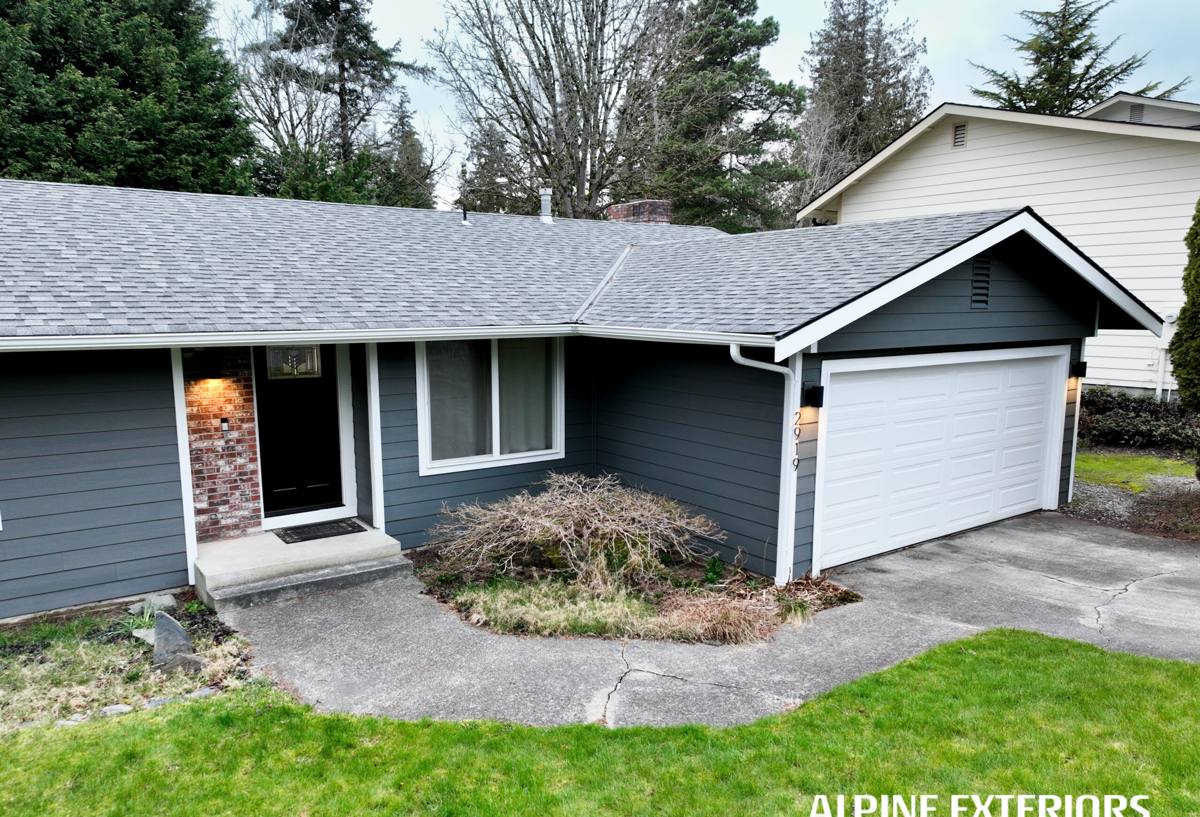
What Ferndale's Climate Does to Siding Over Time
Salt Air and Coastal Moisture
Proximity to Birch Bay and the Strait means airborne salt is a constant, low-level presence on exterior surfaces. Salt accelerates corrosion on fasteners and trim hardware, and it interacts with certain paints and coatings in ways that shorten their service life. Siding that isn't engineered to resist this kind of exposure tends to show chalking, fading, and edge deterioration faster here than it would fifty miles inland.
Driving Rain
Whatcom County storms frequently bring rain sideways, not straight down. That matters enormously for siding performance, because driving rain finds every gap in flashing, every unsealed seam, and every piece of trim that wasn't installed tight. A siding system that looks fine on a calm day can still be taking on moisture behind the wall during a windy November storm — and that moisture damage often isn't visible until it's expensive.
Moss, Mildew, and Shade
Between the tree cover common in Ferndale's residential lots and the region's long damp season, north- and west-facing walls in particular stay wet longer and get less direct sun to dry out. That's an ideal environment for moss and mildew growth on porous or wood-based siding. Once organic growth takes hold, it holds moisture against the surface and accelerates whatever rot or paint failure is already starting underneath.
Why Product Choice Matters More Here Than in Drier Climates
In a dry inland climate, a lot of siding products perform adequately for years regardless of their moisture engineering, because they simply don't face sustained wet exposure. Birch Bay and Ferndale don't offer that margin for error. Every seam, every cut edge, and every fastener choice either holds up to this climate or becomes the starting point for a callback.
This is why our company installs James Hardie fiber cement siding exclusively. We don't offer vinyl, LP SmartSide, primed wood, or cedar as alternatives — not because those products have no legitimate use anywhere, but because we've made a professional judgment that in this specific climate, fiber cement engineered for moisture resistance is the material that consistently holds up without demanding constant homeowner maintenance. Fiber cement is non-combustible, doesn't rot the way wood-based products can, and holds paint and factory finish far longer under sustained damp exposure than vinyl or engineered wood typically does in this environment.
What Correct Fiber Cement Installation Requires in This Climate
- Proper rain-screen or drainage plane behind the siding so any moisture that gets past the surface has somewhere to go
- Correctly lapped and sealed flashing at every window, door, and roofline intersection — the areas driving rain targets first
- Factory-applied ColorPlus finish rather than field-painted cut edges left exposed, since sealed edges resist moisture intrusion far better
- Fastener spacing and type matched to the manufacturer's specification, using corrosion-resistant fasteners appropriate for coastal exposure
- Adequate clearance between the siding's bottom edge and grade, decks, or roofing to avoid constant wicking moisture
- Caulking and sealant only where the manufacturer's install guide calls for it — over-caulking traps moisture just as badly as under-caulking
Signs a Ferndale-Area Home Needs Siding Replacement, Not Just Repair
| Sign | What It Usually Means |
|---|---|
| Soft or spongy spots when pressed | Moisture has reached the sheathing behind the siding — localized repair may not be enough |
| Persistent moss or black streaking that returns after cleaning | The surface is staying wet longer than it should, often due to poor drainage behind the material |
| Paint failure or bubbling across large areas | Moisture is moving through the material itself, not just sitting on the surface |
| Visible gaps, warping, or cupping at seams | The material has expanded and contracted beyond its tolerance — common with wood-based products in wet climates |
| Rising energy bills with no other explanation | Failing siding and its underlying moisture barrier can compromise insulation performance |
Our Process for a Ferndale-Area Siding Replacement
1. On-Site Assessment
We walk the exterior and check not just the siding surface but what's happening at the trim, flashing, and grade lines — the places where Ferndale's rain and salt air do the most damage. We'll also check for moisture intrusion at penetrations like hose bibs, vents, and light fixtures.
2. Tear-Off and Sheathing Check
Old siding comes off and we inspect the sheathing underneath. If there's rot or water damage from years of moisture getting behind failed siding, that gets addressed before anything new goes on — covering damaged sheathing with new siding just hides a problem that will resurface.
3. Weather Barrier and Drainage Plane
We install or verify a proper weather-resistive barrier and drainage plane, which is especially important on the shaded and wind-exposed walls common on Ferndale-area lots.
4. James Hardie Installation to Spec
Siding, trim, and flashing go in following James Hardie's installation requirements and best practices for the Pacific Northwest climate zone — not a generic install, but one accounting for the driving rain and salt exposure specific to this area.
5. Final Walkthrough
We review the finished work with the homeowner, including care and cleaning guidance suited to a climate where moss and mildew are a recurring, not occasional, concern.
Why a Crew That Already Works Ferndale Matters
Siding installation isn't identical everywhere. A crew that mostly works drier inland regions can install a technically competent job that still underperforms here, simply because they're not used to accounting for wind-driven rain angles, salt exposure at trim and fasteners, or the shade patterns that keep certain walls wet longer. A crew that regularly works Whatcom County and the Birch Bay area already has that judgment built in — where to add extra flashing attention, which walls need closer seam inspection, and how the local moss season should shape maintenance advice given to the homeowner.
There's also a practical service advantage: a local crew can respond faster if a warranty question or minor issue comes up after installation, without the delay of scheduling a contractor based hours away.
What Ferndale Homeowners Should Ask Before Hiring
- Is the crew installing to the manufacturer's written specifications for this climate zone, not just a generic install?
- Who is doing the flashing and moisture barrier work — is it subcontracted out, or handled by the same crew doing the siding?
- What does the warranty actually cover, and is it transferable if the home is sold?
- Does the estimate include addressing any rot or sheathing damage found during tear-off, or is that a separate change order?
- Has the crew worked on homes in this specific area before, and do they understand the local exposure conditions?
Cost Factors for Siding Replacement in This Area
| Factor | Why It Affects Cost |
|---|---|
| Home size and wall complexity | More corners, gables, and trim details mean more labor and material cuts |
| Condition of existing sheathing | Rot repair discovered during tear-off adds cost but is essential to a lasting job |
| Siding profile and trim selection | Lap width, trim detailing, and factory finish color all factor into material cost |
| Access and site conditions | Tree cover, slope, and setback distances common on Ferndale-area lots can affect scaffolding and staging needs |
| Flashing and drainage upgrades | Bringing an older home's moisture management up to current standards is a worthwhile investment given this climate |
We're glad to walk through where a specific home's project lands within these factors during an on-site estimate — every home's exposure and existing condition is different.
Get a Straight Answer on Your Ferndale-Area Siding
If your siding is showing moss that won't stay gone, paint that's failing faster than it should, or soft spots you can feel when you press on it, it's worth having a local crew take a look before winter's driving rain finds its way in further. We'll give you an honest read on whether you're looking at repair or full replacement, and what a correctly installed James Hardie system would look like on your home. Reach out for a free, no-pressure estimate using the form below.