 Birch Bay Roofing
 Siding Installation in Ferndale: Built for Whatcom County Weather
Ferndale sits close enough to Birch Bay and the Salish Sea that homes here deal with the same coastal weather pattern the rest of Whatcom County fights every year: salt-laden air rolling in off the water, long stretches of driving rain from fall through spring, and a moss season that seems to start earlier and last longer with each passing decade. Add in the mix of open farmland, tree-lined lots, and newer subdivisions that make up Ferndale's housing stock, and you get a range of exposure conditions on a single street — one side of a house baking in afternoon sun, the other staying damp and shaded for weeks at a time.
Siding here isn't just a cosmetic decision. It's the first line of defense against moisture that wants to work its way behind the cladding, and against the kind of slow biological growth — moss, algae, mildew — that thrives in this climate. A siding installation that isn't detailed correctly for Ferndale's conditions will show problems within a few years: staining, soft spots, cupping, or paint failure. A correct installation, on the other hand, should perform quietly for decades.
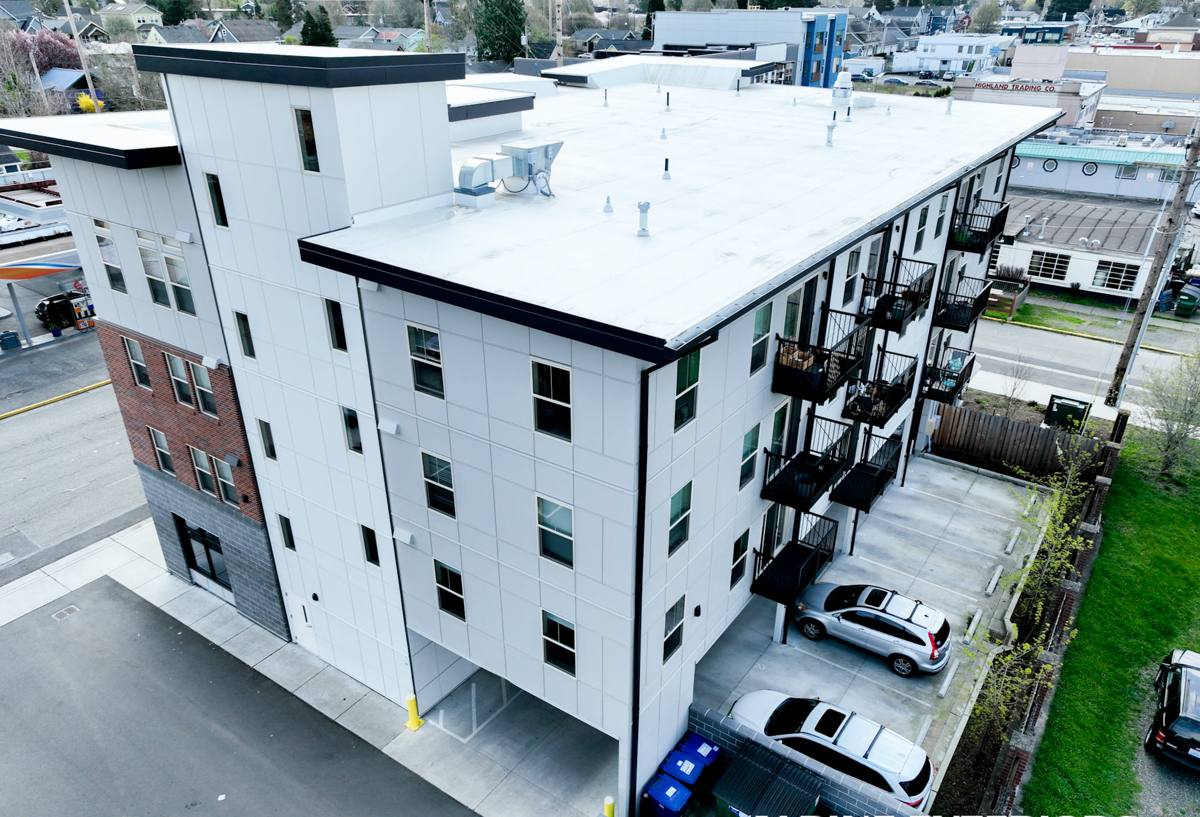
What Ferndale Homes Actually Need From Their Siding
Moisture Management, Not Just a Weather-Resistant Surface
The biggest misconception about siding is that its job is to be "waterproof." No siding product is fully waterproof, and none should be installed as if it were. The real job of a siding system is to manage water that gets past the surface — through a properly built drainage plane, correct flashing, and enough of a gap behind the cladding for moisture to dry out instead of sitting against the wall sheathing. In a climate with as much sustained rain as Whatcom County sees, this is not optional detailing. It's the difference between siding that lasts and siding that rots the wall behind it.
Resistance to Moss, Algae, and Salt Air
Ferndale's proximity to the water means airborne salt is a constant, low-level factor in how exterior materials age. Combined with shaded, damp conditions common on tree-lined lots, this creates ideal conditions for moss and algae to take hold on siding surfaces — especially anything with a porous or wood-based composition. A siding material that resists moisture absorption at the surface level will resist this growth far better than one that soaks it in.
Dimensional Stability Through Wet-Dry Cycling
Whatcom County doesn't get extreme temperature swings, but it does get constant wet-to-dry cycling — soaked for a week, then a few dry sunny days, repeated for months. Materials that swell and shrink with moisture content will eventually show it at the joints and fastener lines: nail pops, buckling, or gaps opening up at seams. Stability under that cycling matters more here than raw strength.
Why We Install Only James Hardie Fiber Cement Siding
We made a decision as a company to install one siding system: James Hardie fiber cement. We don't install vinyl, LP SmartSide, Cemplank, Allura, or wood siding of any kind — primed spruce or cedar included. That's not a marketing angle; it's a standard we hold to because of what we've seen play out on homes in this exact climate over years of installs and repairs.
Fiber cement is cement, sand, and cellulose fiber, engineered to hold its shape and resist moisture absorption far better than wood-based or vinyl products. James Hardie in particular builds region-specific product lines — their HZ5 formulation is engineered for climates like ours, with freeze-thaw and moisture cycling in mind. The factory-applied ColorPlus finish is baked on under controlled conditions, which gives it better adhesion and fade resistance than field-applied paint, and it comes with its own multi-year finish warranty separate from the product warranty on the siding itself.
None of this means other products are without merit — vinyl is inexpensive and low-maintenance in mild climates, and cedar has a look some homeowners genuinely prefer. But for a wet, salt-exposed, moss-prone climate like Ferndale's, we don't think those trade-offs make sense on a 20-to-30-year exterior investment, so we don't install them. Hardie is what we put on homes instead, and it's backed by a transferable warranty that matters if you sell the house before the siding's service life is up.
What a Correct Siding Installation Actually Involves
A siding job is only as good as what's underneath it. Skipping steps here is the single biggest reason siding fails early, regardless of what brand is on the outside.
- Remove old siding and inspect the wall sheathing for rot, soft spots, or prior water damage before anything new goes on
- Repair or replace any compromised sheathing — covering over damage just traps the problem
- Install a code-compliant water-resistive barrier (weather-resistant house wrap or building paper) as the drainage plane
- Flash all windows, doors, and penetrations correctly, with proper shingle-lap sequencing so water sheds outward and down
- Install furring or maintain manufacturer-specified clearances where needed for drainage and ventilation behind the panels
- Fasten Hardie planks per manufacturer specifications — correct nail type, spacing, and depth, since over-driven or under-driven fasteners are a common cause of early failure
- Maintain proper clearance from grade, decks, patios, and roof lines to keep siding out of standing water and splash-back zones
- Caulk and seal joints with products rated for the exposure, not general-purpose caulk that breaks down in a few seasons
- Final inspection of all seams, corners, and trim details before calling the job complete
Our Process, Start to Finish
1. On-Site Assessment
We start with a walk-around of the home, looking at existing siding condition, moisture staining, trim and window flashing, and any areas of the lot — shade, drainage, wind exposure — that affect how the new siding should be detailed.
2. Straightforward Estimate
You get a written estimate that spells out scope, product line, color, and what's included — no vague allowances that turn into change orders once the crew shows up.
3. Tear-Off and Sheathing Inspection
Old siding comes off and we inspect what's underneath before anything new gets installed. This is the step that gets skipped on rushed jobs, and it's the one that matters most.
4. Weather Barrier and Flashing
We install the drainage plane and flash every window, door, and penetration before a single piece of Hardie plank goes up.
5. Hardie Installation to Manufacturer Spec
Panels, fasteners, and joint treatment all follow James Hardie's published installation requirements — this is also what keeps the product warranty valid.
6. Final Walkthrough
We walk the finished job with you, point out what was done and why, and address anything before we consider the job complete.
Comparing Siding Options for a Ferndale Home
| Factor | James Hardie Fiber Cement | Vinyl | Wood / LP SmartSide |
|---|---|---|---|
| Moisture absorption | Low | Not applicable (but can trap moisture behind it) | Higher — needs coatings and maintenance |
| Moss/algae resistance | Strong | Moderate | Weaker on porous surfaces |
| Salt air durability | Strong | Moderate, can become brittle over time | Requires more upkeep near coastal air |
| Finish longevity | Factory ColorPlus finish, separate warranty | Color molded in, can fade/chalk | Field-applied paint, needs recoating |
| Fire resistance | Non-combustible | Combustible | Combustible |
| Typical maintenance | Low — periodic wash and caulk check | Low, but prone to cracking/warping with age | Higher — recoating, sealing, rot checks |
Cost Factors to Understand Before You Get a Quote
Siding pricing depends on more than square footage. A few things that move the number up or down on a Ferndale home:
- Amount of tear-off and disposal required for the existing siding
- Condition of the sheathing underneath — hidden rot repair adds cost, but skipping it costs far more later
- Home's trim complexity — dormers, multiple gables, and detailed corners take more labor than a simple rectangular elevation
- Plank profile and color selection within the Hardie lineup
- Site access — lot slope, landscaping, and setbacks affect scaffolding and material staging
We'd rather walk you through these factors on-site than quote a number over the phone that doesn't hold up once the crew starts working.
Why Hiring a Crew That Already Works Ferndale Matters
Installation quality is what makes or breaks a siding job in this climate, more than the product label. A crew that regularly works Ferndale and the greater Whatcom County area already understands how the local wet-dry cycle behaves against a wall, where moss tends to establish itself first, and how salt air off the bay accelerates wear on fasteners and trim if they're not handled correctly. That familiarity shows up in the small decisions — clearance from grade, flashing sequencing, fastener choice — that a crew unfamiliar with the region might get technically "code compliant" but not actually right for how this weather behaves over 20 years.
It also matters for warranty support. If a manufacturer warranty question comes up five or ten years down the road, you want a contractor who's still local, still reachable, and familiar enough with your job to help you through it — not a crew that came through once from out of the area.
Get a Free, No-Pressure Estimate
If your Ferndale home's siding is showing its age — staining, soft spots, moss buildup, or paint that won't hold anymore — we're happy to come take a look. The estimate is free, there's no pressure to move forward, and you'll get a straight answer about what your home actually needs. Use the form below to get started.