 Birch Bay Roofing
 Semiahmoo Sits in One of the Toughest Siding Environments in Whatcom County
Homes near Semiahmoo face a combination of weather stresses that most siding products were never designed to handle well over the long run. The marine air off the water carries salt that settles on exterior walls and slowly works on fasteners, trim, and any seams that aren't detailed correctly. Add in Whatcom County's wind-driven rain, which doesn't fall straight down but gets pushed sideways into every lap, joint, and penetration, and you have an environment that finds every weak point in a siding system within a few years instead of a few decades.
Then there's moss. The long, mild, wet season that stretches for much of the year keeps exterior surfaces damp for extended stretches, and damp surfaces that stay shaded or north-facing grow moss and algae readily. That's a cosmetic nuisance on a driveway, but on siding it's a moisture-retention problem — organic growth holds water against the surface longer, and prolonged moisture contact is exactly what breaks down wood-based and poorly-sealed siding products from the inside out.
This page is specifically about siding installation for homes in and around Semiahmoo — not a general overview of siding everywhere. The approach we take here is shaped by this particular stretch of coastline, and it's different from how we'd spec a job inland.
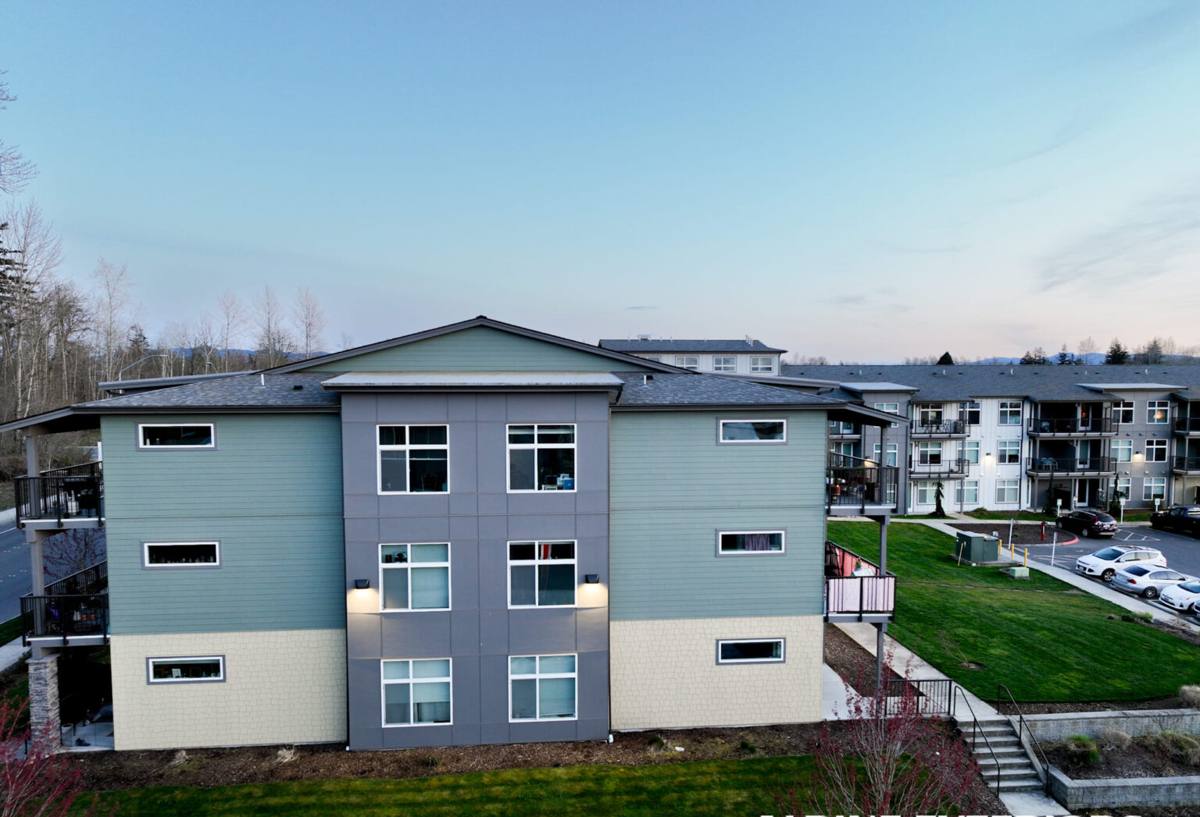
What Salt Air and Driving Rain Actually Do to Siding Over Time
It helps to understand the failure pattern before talking about the fix. Most siding problems on coastal Whatcom County homes don't show up as a dramatic failure — they show up slowly, in places you don't look at every day.
- Fastener corrosion: Salt-laden air accelerates rust on nails, screws, and metal trim that isn't rated for coastal exposure, leading to streaking and eventual loosening.
- Wind-driven water intrusion: Rain pushed sideways by coastal wind finds gaps at butt joints, corner boards, and window trim that would stay dry in a calmer inland setting.
- Prolonged moisture dwell time: Shaded, north-facing, and tree-covered walls near the water dry out slower, extending the window where moisture can do damage and moss can take hold.
- Finish breakdown: UV exposure combined with salt residue degrades field-applied paint faster than a factory-cured finish, meaning more frequent repainting on the wrong product.
- Swelling and softening at cut edges: Any siding with exposed wood fiber at a cut, seam, or fastener hole is vulnerable if that edge isn't properly sealed and maintained — and coastal moisture makes that maintenance schedule less forgiving.
None of this means siding is a lost cause near the water — it means the product choice and the installation detailing both matter more here than they do a few miles inland.
Why We Only Install James Hardie Fiber Cement
We don't install vinyl, LP SmartSide, primed spruce, cedar, or other fiber cement brands. That's a deliberate standard, not a lack of options. Vinyl can warp and become brittle with UV and temperature swings, and its seams and fastener slots are a weak point against wind-driven rain. Wood-based composite sidings and natural wood depend on an intact factory or field coating to keep moisture out — once that coating is compromised at a cut edge or fastener puncture, the substrate underneath is exposed to exactly the kind of prolonged dampness this coastline produces. Cedar is a genuinely attractive natural material, but it demands a maintenance commitment — refinishing, sealing, moss and mildew treatment — that most homeowners underestimate when they choose it.
James Hardie fiber cement is cement, sand, and cellulose fiber — there's no wood substrate to rot and nothing for moisture to swell. It's factory-finished with ColorPlus technology, a baked-on finish that resists fading and holds up to UV and salt exposure far better than field-applied paint. Hardie also makes an HZ5 product line engineered specifically for cold, wet, high-moisture climates like the Pacific Northwest — which is the line we spec for most Semiahmoo homes. It's non-combustible, it carries a strong transferable limited warranty when installed to Hardie's specifications, and it has a long track record in exactly this kind of marine climate.
We're not saying every other product is defective. We're saying that for this specific coastline, with this specific combination of salt, wind-driven rain, and moss season, fiber cement done right is the product we're willing to put our name behind — and installing multiple product lines well takes specialized knowledge for each one, so we chose to go deep on one.
What "HZ5" Actually Means
Hardie's HZ5 designation is a climate engineering classification, not a marketing label. It reflects a formulation and finish system built to perform in regions with more freeze-thaw cycling and sustained moisture than the milder HZ10 zones. Whatcom County's coastal belt — including the Semiahmoo area — falls into the range where HZ5 product is the right call, and using the correct zone-rated product is part of what keeps the manufacturer warranty valid.
What a Correct Siding Installation Involves
Fiber cement siding performs exactly as well as its installation — even the right product fails early if it's hung wrong. Given the coastal exposure here, a handful of details matter more in Semiahmoo than they would somewhere drier and more sheltered.
- Water-resistive barrier, done continuously: A properly lapped and taped weather barrier behind the siding is the actual waterproofing layer — the siding is the cladding, not the seal. Gaps or punctures here are where wind-driven rain gets in.
- Correct fasteners for a marine environment: Hot-dipped galvanized or stainless fasteners, driven per Hardie's fastening schedule, resist the corrosion that salt air accelerates.
- Proper clearances: Hardie specifies minimum clearance from roof lines, decks, and grade — skipping these is one of the most common installation shortcuts, and it's exactly what lets moisture wick into the board edge.
- Sealed and primed cut edges: Every field cut exposes raw fiber cement that needs to be primed and caulked correctly at joints — an uncaulked cut edge on a coastal home won't stay watertight for long.
- Flashing at every penetration: Windows, doors, vents, and hose bibs each need proper flashing integrated with the water-resistive barrier, not just caulk as an afterthought.
- Panel and lap spacing: Correct gapping allows for expansion and drainage rather than trapping water against the wall assembly.
Our Installation Process, Step by Step
1. On-Site Assessment
We walk the exterior, check the condition of the existing wall assembly, look at sun and wind exposure on each elevation, and note any moss, moisture staining, or rot that needs to be addressed before new siding goes on.
2. Removal and Substrate Check
Old siding comes off and we inspect the sheathing underneath. Any soft or water-damaged sheathing gets repaired or replaced — covering damaged substrate with new siding just hides a problem that will resurface.
3. Water-Resistive Barrier and Flashing
We install a continuous, properly lapped weather barrier and flash every window, door, and penetration before a single piece of siding goes up. This step is the one most likely to be rushed on a lower-quality job, and it's the one that matters most in a driving-rain climate.
4. Hardie Panel Installation
Boards or panels go up per Hardie's fastening schedule and clearance requirements, with attention to elevation-specific exposure — the side of the house that takes the worst of the marine wind and rain gets the same care as every other side, not less.
5. Trim, Caulking, and Touch-Up
Corner boards, trim, and joints are sealed with the right sealants, and any factory-finish touch-up is done with Hardie's matched touch-up product so color stays consistent.
6. Final Walkthrough
We walk the finished job with the homeowner, point out anything worth knowing for maintenance, and confirm everything meets the installation standard the warranty depends on.
Choosing the Right Hardie Line and Finish
Hardie makes several distinct product lines, and the right one depends on the home's existing look and the homeowner's priorities.
| Hardie Line | Look | Best For |
|---|---|---|
| HardiePlank Lap | Traditional horizontal lap, several width and texture options | Most single-family homes seeking a classic exterior |
| HardieShingle | Staggered or straight-edge shingle profile | Craftsman or cottage-style homes |
| HardiePanel | Vertical panel with battens | Modern exteriors or accent sections |
| HardieTrim | Fiber cement trim boards | Corner boards, window and door surrounds, fascia |
All of these are available in ColorPlus factory finishes, which matters most on a home that gets direct salt spray or long sun exposure — the factory finish simply outlasts field-applied paint in this climate.
What Drives the Cost of a Siding Installation
Every home is different, but the same handful of factors determine where a project lands within a broad range. We won't quote a number without seeing the house, but this is what actually moves the price.
| Factor | Why It Matters |
|---|---|
| Substrate condition | Rot or water damage found during tear-off adds repair scope before new siding can go on |
| Home size and wall complexity | More corners, dormers, and cutouts mean more labor and material waste |
| Product line and profile | Lap, shingle, and panel products carry different material and labor costs |
| Trim scope | Full trim replacement adds cost but keeps the whole exterior on one consistent, durable material |
| Access and site conditions | Slopes, landscaping, and setback affect staging and scaffolding needs |
Signs Your Current Siding Is Due for Replacement
- Visible moss or algae growth that returns shortly after cleaning
- Soft spots, bubbling, or warping anywhere on the wall surface
- Paint that's peeling or chalking faster than a normal repaint cycle
- Gaps opening up at seams, corners, or trim joints
- Rust streaking below fasteners or metal trim
- Musty smell or visible staining on interior walls that share an exterior wall
- Siding that flexes or feels spongy when pressed
If you're seeing more than one of these, it's worth having the wall assembly looked at — not just the visible siding — before deciding on a repair versus a full replacement.
Why Hiring a Crew That Already Works This Coastline Matters
Semiahmoo and the surrounding Birch Bay-area coastline isn't a generic siding job. A crew that's used to inland conditions can install a technically correct system that still underperforms here, simply because the clearance, flashing, and fastener decisions that are "fine" fifteen miles inland aren't tight enough for direct salt exposure and sideways rain. Working this area regularly means knowing which elevations on a given lot type take the worst of it, recognizing early moss and moisture patterns before they become structural problems, and having the Hardie installation details dialed in for marine exposure specifically — not just installed per the general manual.
It also means we're not guessing at what Whatcom County's coastal weather does to a wall assembly over five, ten, or twenty years. We've seen it, and the way we detail every installation reflects that.
If your Semiahmoo-area home needs new siding, or you want an honest opinion on whether repair or full replacement makes more sense, we're happy to take a look. Estimates are free, there's no pressure, and we'll tell you plainly what we see — use the form below to get started.