 Birch Bay Roofing
 Metal Roofing Built for Semiahmoo's Coastal Conditions
Homes around Semiahmoo sit close enough to the water that the roof is doing a different job than a roof twenty miles inland. Salt-laden air, wind-driven rain, and a moss season that can run most of the year all work on a roof at the same time. Metal roofing holds up well against that combination when it's specified and installed correctly for this exact environment — but "metal roofing" covers a wide range of products and installation quality, and not every system or crew is set up to handle a marine climate the way this one demands.
This page is about one thing: metal roofing on Semiahmoo-area homes, what the local climate actually requires, and how we approach the job so it holds up rather than becoming a maintenance headache in five or ten years.
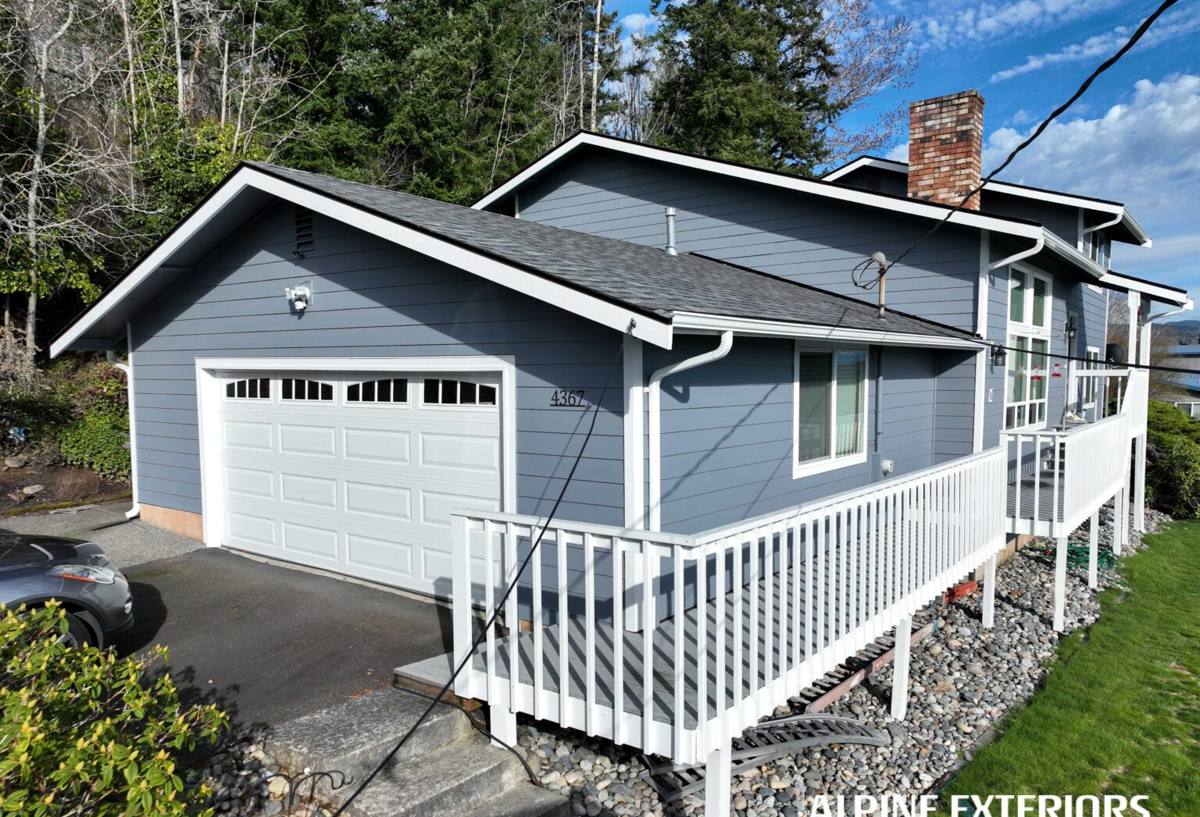
What Salt Air, Driving Rain, and Moss Actually Do to a Roof
Each of these factors causes a different kind of wear, and a roof near the water deals with all three at once.
Salt Air
Airborne salt is corrosive to unprotected or poorly coated metal, and it accelerates corrosion at cut edges, fastener heads, and any spot where a protective coating has been scratched or worn through during installation. It doesn't take direct ocean spray to matter — persistent marine air moving inland off Semiahmoo Bay and the Strait of Georgia is enough over years to expose the difference between a coating system built for coastal exposure and one that wasn't.
Driving Rain
Wind off the water doesn't just drop rain straight down — it pushes it sideways and up under laps, flashing, and fastener penetrations. A roof detail that sheds water fine in a calm rain can leak in a wind-driven storm if the underlayment, flashing laps, and panel overlaps weren't built with that wind direction in mind.
Moss and Persistent Moisture
Whatcom County's wet season runs long, and shaded, north-facing, or tree-covered roof sections stay damp for extended stretches. On asphalt shingles that means moss roots into the granule surface and holds moisture against the deck. Metal doesn't give moss the same foothold, but debris, needles, and organic buildup can still collect in valleys and at panel laps if a roof isn't detailed to shed that material and dry out between rains.
Why Metal Roofing Is a Strong Fit for This Area
Metal roofing isn't the right choice for every home or every budget, but for Semiahmoo's climate it offers real advantages over other roofing types:
- A hard, continuous surface that gives moss and moisture very little to hold onto compared to a shingle mat
- Steep water-shedding profiles that move driving rain off the roof quickly instead of letting it sit
- Coating and finish systems specifically rated for marine and coastal exposure, when the correct product is specified
- Long service life that reduces how often the roof is opened up and re-flashed — every penetration is a future leak point, so fewer roof replacements over a home's life is a real durability advantage
- Better wind performance than many other roofing materials when panels and fasteners are correctly engineered for the exposure
None of that happens automatically just because the material is metal. It happens because the system, the coating, and the installation details were chosen for this specific climate.
Choosing the Right System: Standing Seam vs. Exposed Fastener
The two main categories of metal roofing differ in how the panels attach to the roof, and that difference matters more in a coastal wind-and-rain environment than it does in a milder inland setting.
| Factor | Standing Seam | Exposed Fastener |
|---|---|---|
| How panels attach | Concealed clips under raised seams — no exposed screws in the field of the roof | Screws driven through the panel face, typically with a rubber washer |
| Coastal durability | Fewer penetration points means fewer places for salt air and moisture to attack over time | Every fastener is a potential weak point as washers age and gaskets harden |
| Maintenance | Very low — no fasteners to re-tighten or reseal | Washers and fasteners typically need inspection and occasional replacement over the roof's life |
| Upfront cost | Higher material and labor cost | Lower upfront cost |
| Best fit | Homes with direct or near-direct water exposure, or owners who want the lowest long-term maintenance | Budget-conscious projects, outbuildings, or less exposed sites |
We install both systems. Our job is to tell you honestly which one fits your specific home, exposure, and budget rather than defaulting to whichever is easier to install.
A Note on Coatings and Fasteners
Two homes with the same panel profile can perform very differently near saltwater depending on the coating system and fastener hardware used. We specify coatings and fasteners rated for coastal or marine exposure on Semiahmoo-area jobs — this typically means corrosion-resistant fastener alloys and finish systems built to hold their protective properties longer under salt air, rather than standard-grade hardware that's fine inland but wears faster here. This is a standard we hold on every coastal install, not an upsell.
Where Coastal Metal Roofs Actually Fail — and How We Prevent It
When a metal roof underperforms near the water, it's almost never the panel material itself. It's usually one of these:
- Underlayment gaps or wrong material — the underlayment is the roof's backup layer when wind drives rain past the panel laps; it needs to be a high-quality synthetic or self-adhered membrane at vulnerable areas, not a minimal-cost afterthought
- Under-detailed flashing — valleys, wall transitions, chimneys, and vent penetrations are where most leaks originate on any roof; in wind-driven rain these details need extra lap and sealant attention that a rushed install skips
- Mismatched or standard-grade fasteners — using inland-spec hardware on a coastal job shortens the roof's effective life even if the panels themselves are rated for decades
- Poor ventilation — trapped moisture in the attic condenses against the underside of the deck and causes rot and corrosion from the inside out, independent of how good the exterior surface is
- Cut edges left unsealed — any spot where a panel is field-cut exposes bare metal; if it isn't sealed or coated, that's where corrosion starts first
Every one of these is a workmanship issue, not a material limitation. It's why the crew installing your roof matters as much as the panel you choose.
Our Process for a Semiahmoo Metal Roofing Project
1. On-Site Assessment
We look at your roof's exposure — how much direct wind and weather it takes off the water, how much tree cover and shade it gets, the current deck and flashing condition, and any existing moisture or ventilation problems — before recommending a system.
2. Straightforward Proposal
You get a written scope covering panel profile, gauge, coating, fastener type, underlayment, and flashing approach, along with a clear price. No vague line items.
3. Deck and Underlayment Prep
Any soft or damaged decking is addressed before panels go on — covering it up doesn't fix it. Underlayment and ice-and-water-style membrane go down at valleys, eaves, and other vulnerable areas before any metal is installed.
4. Panel Installation
Panels, clips or fasteners, and flashing are installed to the manufacturer's coastal-exposure specifications, with particular attention to laps, terminations, and any field-cut edges.
5. Final Walkthrough
We walk the finished roof with you, cover basic care, and make sure you know what a normal-looking roof detail looks like versus something worth calling us about down the road.
What Metal Roofing Costs Depend On
There's no single price per square foot that means much without context. These are the factors that actually move the number on a Semiahmoo project:
| Factor | Why It Matters |
|---|---|
| Panel system (exposed fastener vs. standing seam) | Standing seam costs more in material and labor but needs less long-term maintenance |
| Roof complexity | Valleys, dormers, and multiple roof planes take more flashing and labor than a simple gable |
| Coating and fastener grade | Coastal-rated finishes and hardware cost more upfront than standard-grade equivalents |
| Tear-off vs. overlay | Removing old roofing and inspecting the deck adds cost but is usually the right call on an older roof |
| Deck condition | Rot or soft decking found during tear-off requires repair before panels go on |
| Ventilation upgrades | Adding or correcting attic ventilation protects the new roof from the inside and may add to scope |
We'll walk through which of these apply to your home during the estimate so you're pricing an actual scope, not a guess.
Maintenance: What a Semiahmoo Homeowner Should Actually Do
Metal roofing is low-maintenance, not no-maintenance. A short seasonal routine keeps it performing the way it's supposed to in this climate:
- Clear needles, leaves, and debris from valleys and low-slope sections a couple of times a year, especially after fall wind events
- Do a visual check of flashing at chimneys, vents, and wall transitions after major windstorms
- Keep gutters and downspouts clear so water isn't backing up against eave flashing
- Trim back overhanging branches that keep sections of the roof shaded and damp longer than the rest
- Have a professional look at any fastener, panel, or flashing area that looks disturbed rather than waiting for an active leak
Why Hiring a Crew That Already Works This Area Matters
A roofing crew that mostly works inland can install a technically correct roof and still get the coastal details wrong — because those details aren't part of their everyday routine. Choosing coating grades for salt exposure, detailing flashing for wind-driven rain instead of straight-down rain, and specifying fasteners that hold up near the water aren't things you learn from a spec sheet; they're things you learn from installing roofs in exactly this environment over and over.
We work throughout Birch Bay, Semiahmoo, and the surrounding Whatcom County coastline, and we build every metal roofing job around the conditions this specific area puts on a roof — not a generic inland install.
If you're weighing metal roofing for your Semiahmoo home, we're happy to take a look and give you a straightforward, no-pressure estimate using the form below.