 Birch Bay Roofing
 Semiahmoo's Climate Is Hard on Ordinary Siding
Homes near the water in Semiahmoo take a different kind of beating than homes further inland in Whatcom County. Salt-laden air off the bay works into seams and fastener heads. Driving rain off the Strait pushes moisture sideways into laps and butt joints, not just straight down. And the long, damp moss season that runs from fall through spring keeps north-facing walls and shaded elevations wet for months at a time. Siding that isn't specifically engineered for this combination — salt exposure, wind-driven rain, and sustained moisture — tends to show it early, in the form of swelling, staining, paint failure, or soft spots at the bottom courses.
We install fiber cement siding on homes in this area because it's the one exterior cladding material that's built to shrug off all three of those stressors at once, provided it's installed correctly. That last part matters as much as the product choice. A lot of the siding failures we get called out to inspect in coastal Whatcom County neighborhoods aren't material failures at all — they're installation failures. Wrong fasteners, missing flashing, caulked joints that should have been left to breathe. We'll walk through both sides of that here: what the material needs to do, and what a correct installation actually looks like.
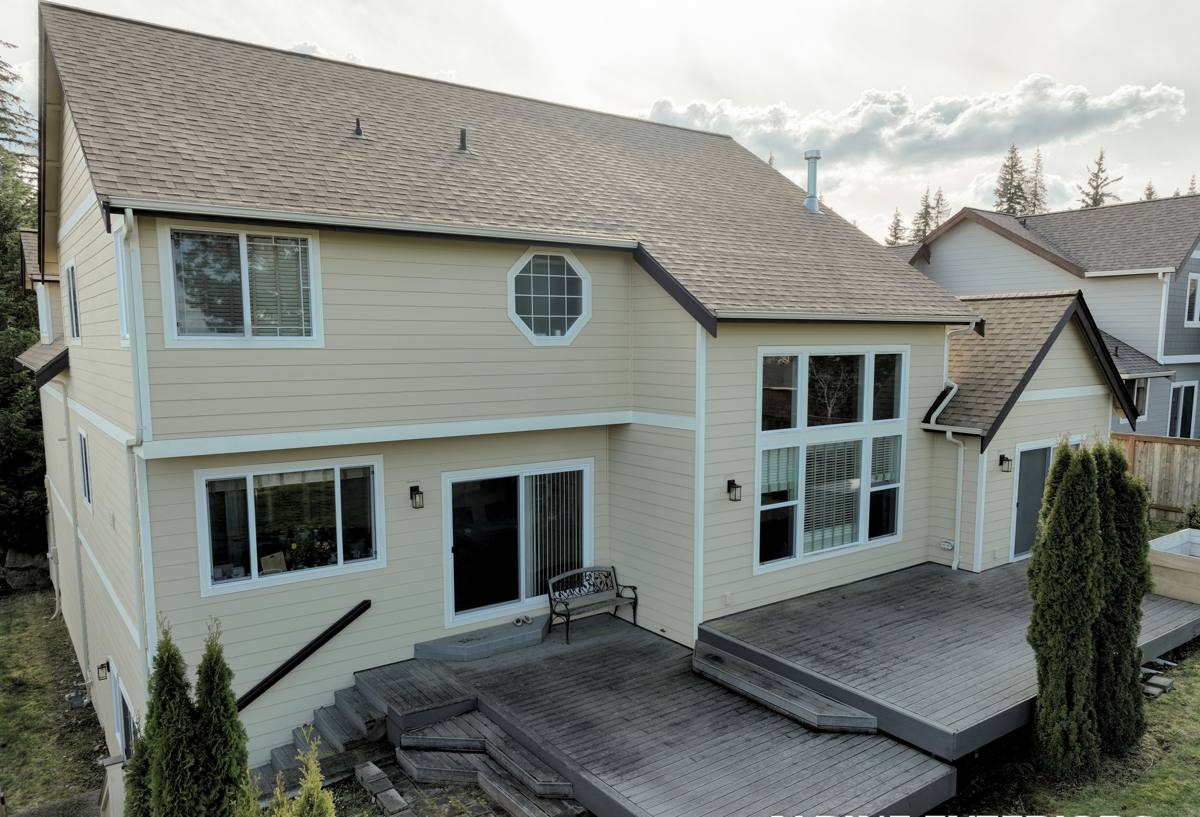
What Salt Air and Moss Season Actually Do to a Wall
Salt Exposure
Airborne salt is corrosive to metal fasteners, flashing, and trim before it's ever a problem for the siding itself. Untreated or under-rated fasteners near the water will corrode faster than they would a few miles inland, and a corroding fastener eventually loses its grip or streaks rust down the face of the siding. This is why fastener selection isn't a minor detail on a Semiahmoo project — it's one of the first things we specify differently than we would on an inland job.
Driving Rain
Wind off open water doesn't just fall — it pushes rain horizontally into a wall, forcing water into laps, corners, and penetrations that would stay dry in a calmer setting. Siding systems that rely on caulk alone to keep water out, rather than proper lap geometry and flashing, tend to fail first in exactly this kind of exposure.
Moss and Sustained Moisture
Whatcom County's wet season is long, and shaded or north-facing walls near the water can stay damp for extended stretches. Moss and algae growth on a wall surface isn't just cosmetic — it holds moisture against the cladding longer than a clean, dry surface would, which accelerates any underlying problem a wall already has.
What Correct Fiber Cement Installation Involves
Fiber cement siding is only as good as the assembly behind it. A correct installation on a Semiahmoo home includes:
Weather-Resistive Barrier and Flashing
A continuous weather-resistive barrier, properly lapped and taped, sits behind the siding. Flashing gets installed at every window, door, and penetration, and at horizontal transitions like porch roofs and bump-outs — the exact spots where wind-driven rain concentrates. This is the layer that actually keeps water out of the wall assembly; the siding is the second line of defense, not the first.
Fastening and Clearances
Fasteners need to be corrosion-resistant and driven to the manufacturer's specified depth — not overdriven, which cracks the board's fiber cement face and creates a water entry point. Bottom courses need proper clearance above grade, decks, and roof lines so the siding never sits in standing water or gets splashback off a hard surface.
Joint Treatment
Butt joints get flashed or backed, not just caulked and left. Caulk is a maintenance item that will eventually fail; a properly flashed joint keeps working even after the caulk does. This distinction matters more in a driving-rain environment than almost anywhere else in the installation.
Why We Install Only James Hardie Fiber Cement
We don't install vinyl, LP SmartSide, Cemplank, Allura, or unfinished wood siding like primed spruce or cedar. That's a deliberate standard, not a lack of options. Each of those products has genuine strengths, but each also has a trade-off — moisture sensitivity, field-applied finishes that need ongoing maintenance, or a track record that hasn't held up as well in wet coastal conditions — that we're not willing to put our name behind on a home that has to survive Semiahmoo's exposure.
HZ5 Engineering for Wet, Coastal Climates
James Hardie engineers its siding in regional formulations, and the HZ5 line is built specifically for climates with heavy moisture exposure — which describes this stretch of the Washington coast well. Fiber cement itself is non-combustible and doesn't absorb water the way wood-based products can, so it won't swell, rot, or delaminate the way an organic-fiber or wood substrate can under sustained dampness.
ColorPlus Factory Finish
Most of the siding we install uses Hardie's ColorPlus factory-applied finish rather than field-applied paint. A factory finish is baked on under controlled conditions and backed by its own finish warranty — it holds color and resists fading and moisture intrusion at the surface far better than paint applied on-site after installation, which is especially valuable on a wall that's going to see this much salt air and rain over its lifetime.
Warranty That Transfers
Hardie's product warranty is transferable to a subsequent homeowner, which matters for resale — a documented, professionally installed fiber cement exterior is something a buyer's inspector will recognize and value.
How Fiber Cement Compares to Other Siding Options
| Material | Moisture Performance in Wet/Salt Exposure | Finish Durability | Long-Term Maintenance |
|---|---|---|---|
| James Hardie fiber cement | Non-combustible, doesn't absorb and swell like wood-based products | Factory ColorPlus finish, warrantied | Periodic caulk/flashing checks; no repainting cycle if factory-finished |
| Vinyl | Doesn't rot, but can warp or crack in temperature swings and impact | Color is through-body but fades over time; can't be repainted easily | Low, but limited repair options if damaged |
| LP SmartSide (engineered wood) | Wood-based substrate; sensitive to sustained moisture exposure at cut edges and joints | Factory finish available but wood substrate still a moisture consideration | Edge sealing and joint maintenance is important |
| Cedar / primed wood | Absorbs moisture; needs consistent upkeep in a wet climate | Field-applied paint or stain, wears down faster near salt air | Ongoing repainting, sealing, and inspection for rot |
Our Process for a Semiahmoo Siding Project
- On-site assessment. We look at existing siding condition, moisture damage, sheathing, and how the home is exposed to wind and rain off the water.
- Tear-off and sheathing inspection. Old siding comes off and we inspect the sheathing underneath for rot or soft spots before anything new goes up — this is often where hidden problems show up.
- Weather barrier and flashing installation. New house wrap and flashing get installed at every penetration and transition before a single piece of siding is hung.
- Hardie siding installation. Fastened, lapped, and clearance-checked to manufacturer specification, with attention to the coastal-specific details covered above.
- Trim, joints, and final detailing. Corners, joints, and penetrations get finished and sealed correctly rather than caulked over as a shortcut.
- Walkthrough. We go over the finished work with the homeowner before we consider the job done.
Signs a Semiahmoo Home May Need New Siding
- Persistent moss or algae growth that returns quickly after cleaning, especially on shaded or north-facing walls
- Paint that's peeling, bubbling, or chalking faster than expected
- Soft or spongy spots when pressed near the bottom courses or below windows
- Visible gaps, warping, or separation at joints and corners
- Rust streaking below fastener heads or trim
- Rising energy bills that may point to a compromised weather barrier behind the siding
Cost Factors for Fiber Cement Siding Projects
| Factor | Why It Affects Cost |
|---|---|
| Home size and wall complexity | More corners, penetrations, and trim details mean more labor and flashing work |
| Existing sheathing condition | Rot or damage found during tear-off requires repair before new siding can go on |
| Siding profile and finish | Lap width, texture, and ColorPlus color selection affect material pricing |
| Site access | Water-adjacent lots with steep grades or limited access can affect equipment and staging time |
| Tear-off vs. new construction | Removing and disposing of old siding adds labor compared to new-build installation |
We give a firm, written number after an in-person assessment rather than a phone estimate — every home's exposure and condition is different, and a coastal Semiahmoo lot needs a closer look than a quote based on square footage alone.
Why Hiring a Crew That Already Works Near the Water Matters
Installing fiber cement correctly in a driving-rain, salt-air environment takes different judgment than installing it on a sheltered inland lot. Flashing details, fastener selection, and joint treatment all need to account for wind exposure that a crew unfamiliar with this stretch of Whatcom County coastline might not weigh correctly. A crew that regularly works homes exposed to this climate has already seen where generic installation shortcuts fail here, and builds around them from the start rather than learning it on your wall.
If you're weighing a siding replacement or repair on a Semiahmoo home, we're happy to take a look and give you a straight, no-pressure estimate — no obligation, just an honest read on what your siding needs. The estimate form below is the easiest way to get started.