 Birch Bay Roofing
 Siding Replacement in Semiahmoo: What's Different Here
Semiahmoo sits right at the edge of the water, and that changes what siding replacement actually means for a home here compared to a house a few miles inland. Wind off the bay carries salt, moisture sits longer against north- and west-facing walls, and the growing season for moss and algae runs longer than it does even a short drive east. A siding job done to a generic standard doesn't hold up the same way in this exposure. A siding job done to fit the exposure does.
We work on homes throughout the Birch Bay area and into Whatcom County, and Semiahmoo is one of the more demanding stretches we cover. That's not a knock on the neighborhood — it's simply a waterfront environment, and waterfront environments are hard on exterior building materials. The right response isn't over-building or over-promising. It's picking a siding system engineered for this kind of exposure and installing it the way the manufacturer actually specifies, every time, not just when it's convenient.
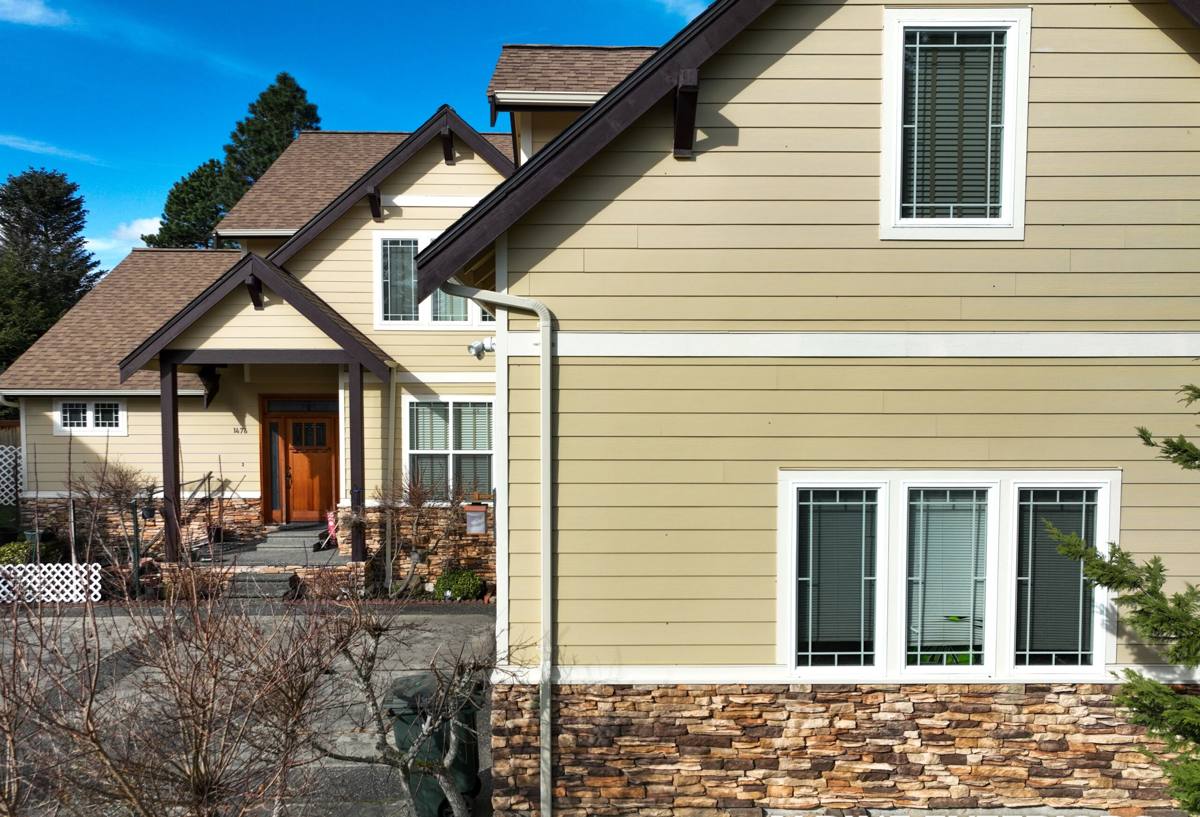
What Salt Air, Driving Rain, and Moss Do to Siding Over Time
Three forces do most of the damage to siding on a Semiahmoo home, and they work together rather than separately.
Salt Air
Airborne salt is corrosive to fasteners and hardware, and it accelerates the breakdown of coatings and caulks that aren't formulated to handle it. Over years, siding that looked fine on the surface can have failing fasteners or degraded sealant behind it, especially at trim joints and corners facing the water.
Driving Rain
Wind-driven rain doesn't just run down a wall — it gets pushed sideways and upward into laps, seams, and penetrations that would stay dry in calmer weather. Siding and flashing details that are "good enough" inland can let water in on a home exposed to Semiahmoo's wind patterns.
Moss and Algae
Long damp seasons and shaded, moisture-holding wall areas are exactly what moss and algae need to establish. Beyond the cosmetic issue, sustained organic growth holds moisture against the siding surface, which shortens the life of anything that isn't dimensionally stable and moisture-resistant by nature.
None of these three problems is dramatic on its own in year one. The damage shows up cumulatively — five, ten, fifteen years in — as soft spots, failed paint, swollen edges, or siding that no longer sheds water the way it should.
Signs It's Time to Replace, Not Patch
Homeowners in Semiahmoo often ask whether a problem area can just be patched. Sometimes it can. But certain signs mean the siding system itself has reached the end of its useful life and patching is only delaying a full replacement.
- Soft, spongy, or crumbling siding when pressed, especially near the bottom courses or around windows
- Paint that keeps failing in the same spots within a year or two of repainting
- Visible gaps, warping, or buckling in siding panels or lap boards
- Persistent moss or algae staining that returns quickly after cleaning
- Rot or discoloration at butt joints, corners, or anywhere trim meets siding
- Rising energy bills that point to a wall assembly no longer sealing the way it should
If you're seeing two or more of these on the water-facing sides of the house, it's worth a full inspection rather than another round of caulk and paint.
What a Correct Siding Replacement Involves
Siding replacement is not just removing old boards and nailing up new ones. On an exposure like Semiahmoo, the parts you don't see matter as much as the finished look.
Tear-Off and Sheathing Inspection
Once old siding comes off, the sheathing underneath gets inspected for rot, soft spots, or prior water damage — problems that are invisible until the wall is opened up. Any compromised sheathing gets repaired or replaced before anything new goes on. Skipping this step is one of the most common ways a siding job fails early.
Water-Resistive Barrier and Flashing
A correctly lapped weather-resistive barrier, properly integrated window and door flashing, and correct kick-out flashing at rooflines are what actually keep driving rain out of the wall assembly. Siding is the visible layer; the drainage plane behind it is what does the real work in a wind-driven-rain climate.
Fastening and Clearances
Fastener type, spacing, and penetration depth all affect how well siding holds up to salt air and wind loads. Ground clearance and gaps at grade, decks, and roof lines also matter — tight-to-grade or tight-to-roof installations trap moisture and are a common source of early rot, regardless of the material used.
Finish and Detailing
Caulking, trim, and touch-up painting at cut edges are the last line of defense against moisture intrusion. This is where corners get cut on lower-cost jobs, and it's exactly where problems show up first on a home exposed to bay winds.
Why We Install Only James Hardie Fiber Cement
We don't install vinyl, LP SmartSide, Cemplank, Allura, primed spruce, or cedar. That's a deliberate standard, not a lack of options. Each of those products has real strengths, but each also has a trade-off that shows up faster in an exposure like Semiahmoo's: vinyl can warp and become brittle with UV and temperature swings; wood-based and engineered-wood products depend heavily on maintenance and coating upkeep to resist moisture; cedar needs ongoing sealing and staining to hold up against sustained dampness and organic growth. On a waterfront property, those maintenance burdens compound quickly.
James Hardie fiber cement is non-combustible, dimensionally stable in wet-dry cycling, and doesn't feed moss and algae growth the way wood-based products can. Hardie's ColorPlus factory-applied finish is baked on under controlled conditions and backed by its own finish warranty — a meaningful difference from field-applied paint that has to hold up against salt air from day one. Hardie also engineers specific product lines, including HZ5 formulations, for harsher climate zones, which is the kind of climate-specific engineering a coastal Whatcom County home benefits from.
We stand behind Hardie because it's the product we've seen perform, not because it's the easiest thing to sell. When it's installed correctly — proper clearances, correct fastening, correct flashing — it's the siding system we're comfortable putting our name on in this environment.
Comparing Siding Options for Semiahmoo Homes
| Material | Moisture Behavior Near the Bay | Maintenance Burden | Why We Don't Install It |
|---|---|---|---|
| Vinyl | Can warp/distort with heat and wind exposure | Low, but limited lifespan in harsh exposure | Dimensional instability, fading, and impact damage over time |
| LP SmartSide / engineered wood | Moisture-sensitive at cut edges and joints | Moderate to high — coating upkeep is critical | Depends on flawless field sealing to resist moisture long-term |
| Cedar | Absorbs moisture; prone to moss/algae | High — regular staining/sealing required | Ongoing upkeep needed to prevent rot in a damp climate |
| Primed spruce | Poor moisture resistance once primer is compromised | High | Short real-world lifespan in coastal exposure |
| James Hardie fiber cement | Dimensionally stable, resists moisture-driven damage | Low — factory finish reduces repainting cycles | Our standard — engineered for climates like this one |
Cost Factors in a Semiahmoo Siding Project
Every siding replacement is priced around the same core factors, but a few carry more weight on a Semiahmoo home specifically.
| Factor | Why It Matters Here |
|---|---|
| Sheathing condition | Water-exposed walls are more likely to need repair before new siding goes on |
| Wall height and access | Waterfront lots often have taller walls or tighter access, affecting labor and equipment needs |
| Trim and detail work | More corners, windows, and flashing details mean more labor-intensive finish work |
| Existing moisture damage | Rot repair adds cost but is far cheaper to address now than after new siding is installed over it |
| Product selection | Hardie's plank, panel, and shingle lines vary in material and labor cost |
We give you a real number after we've actually looked at the walls — not a phone-quote guess — because the sheathing condition alone can shift a project's scope significantly.
Our Process From Estimate to Cleanup
- On-site inspection of existing siding, trim, and visible problem areas
- Written estimate outlining scope, product selection, and any sheathing repair allowance
- Tear-off and sheathing inspection, with photos of anything found before it's covered up
- Weather barrier, flashing, and trim installation to correct spec
- James Hardie siding installation with correct fastening and clearances
- Final caulking, touch-up, and a walk-through before we consider the job done
- Full site cleanup, including magnetic sweep for stray fasteners
Checklist: What to Ask Before You Hire a Siding Contractor
- Do they inspect and address sheathing damage before installing new siding, or install over it?
- Are they installing to the manufacturer's actual fastening and clearance specs, or their own shortcuts?
- Do they carry manufacturer certification or training on the specific product they're installing?
- Will you get a written scope that separates siding, trim, flashing, and any repair work?
- Do they have current insurance and, where applicable, proper licensing for exterior work in Washington?
- Have they worked on homes in the same exposure — waterfront, wind-driven rain, heavy moss seasons?
Why a Crew That Already Works Semiahmoo Matters
A siding crew that's already worked this stretch of Whatcom County knows what to expect before they pull the first board: where moisture tends to hide, which details fail first in wind-driven rain, and how much clearance really needs to be built in near grade and rooflines. That's not something you can shortcut by reading a spec sheet once. It comes from doing the work here, repeatedly, and paying attention to what holds up and what doesn't.
If your Semiahmoo home's siding is showing its age — or you just want an honest read on whether it's a repair or a replacement — we're happy to come take a look. The estimate is free, there's no pressure, and you'll get a straight answer about what your home actually needs.