 Birch Bay Roofing
 Why Decks Wear Out Faster Near Semiahmoo
Semiahmoo sits right on the water, and that changes what a deck goes through year to year compared to a home even a few miles inland. Salt-laden air off the bay accelerates corrosion on fasteners, hardware, and any metal connectors that weren't rated for coastal exposure. Add in Whatcom County's long stretch of driving rain each fall and winter, plus a moss season that can run from October through April, and you've got three separate forces working against a deck at once: corrosion, moisture intrusion, and organic growth that traps water against the wood.
Most decks in this area don't fail because the homeowner did anything wrong. They fail because they were built with general-purpose materials and standard fastener specs that hold up fine in a drier, inland climate but wear out well ahead of schedule a few hundred feet from the water. A deck replacement done right for Semiahmoo starts with acknowledging that this is a marine-adjacent job, not a standard suburban deck job.
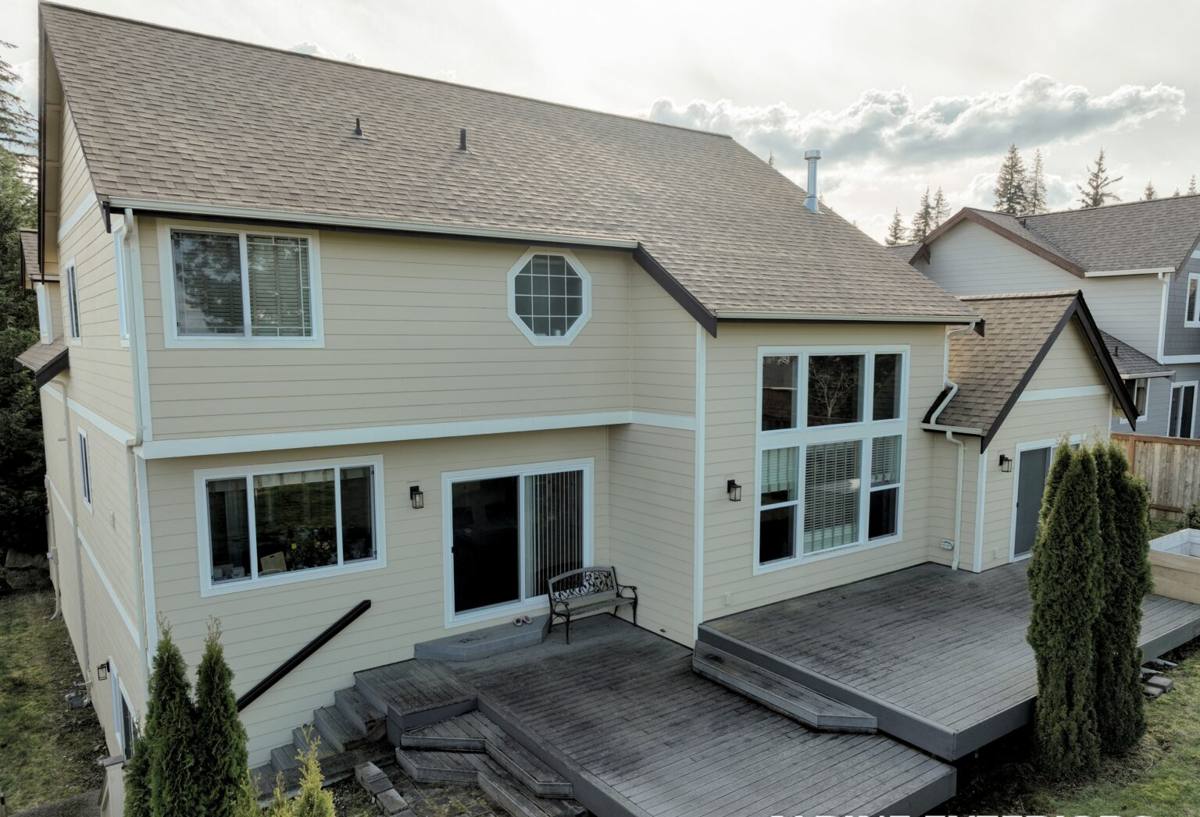
Signs a Semiahmoo Deck Needs Replacement, Not Just Repair
Not every tired-looking deck needs to come out. But there's a point where patching boards or re-staining stops being worth it, and pushing past that point usually means throwing good money after bad. Here's what tells us a full replacement is the honest recommendation:
- Soft, spongy spots in the decking that go beyond a board or two
- Rust streaking or crumbling around joist hangers, ledger bolts, or post bases
- Persistent moss or algae growth that comes back within weeks of cleaning
- Gaps or movement at the ledger board where the deck meets the house
- Visible rot in support posts, beams, or joists (not just surface boards)
- A structure that predates current code for ledger attachment and railing spacing
If the problem is contained to the surface boards and the framing underneath is sound, resurfacing can make sense. But once corrosion or rot has reached the structural members, patching is a short-term fix that ages badly in this climate. We'll tell you straight which category your deck falls into — we don't have any reason to sell a full replacement when a repair will genuinely hold up.
What Driving Rain and Moss Actually Do to a Deck
Driving rain doesn't just fall on a deck, it gets pushed sideways and underneath it, especially on elevated decks with open undersides facing the prevailing weather. That moisture ends up on the underside of joists and the top of beams, areas that rarely get sun exposure to dry out between storms. Moss makes it worse by holding that moisture against the wood surface for months at a stretch instead of letting it shed. Over enough seasons, that combination breaks down wood fiber and corrodes fasteners from angles a homeowner never sees during a casual walk-around.
What a Correct Deck Replacement Involves
A deck replacement that's actually built for this environment goes well beyond swapping old boards for new ones. The parts nobody sees are what determine whether the deck lasts 10 years or 25.
Structural Framing
Joists, beams, and posts need to be sized correctly for the span and load, and treated lumber rated for ground contact where it's called for. We check post bases for standing water risk and set them to drain rather than pool.
Ledger Attachment
The ledger board — where the deck ties into the house — is the single most common failure point on decks nationally, and it's a bigger concern here because of how much moisture the wall assembly behind it sees. Proper flashing between the ledger and the house siding is not optional; it's the difference between a deck that sheds water away from your home and one that slowly feeds moisture into your wall framing.
Fasteners and Hardware
This is where salt air does the most damage. We use stainless steel or heavy hot-dip galvanized fasteners and connectors rated for coastal/marine exposure, not the standard-duty hardware that's adequate inland but corrodes visibly within a few years this close to the water.
Decking Surface
Board spacing, ventilation underneath, and drainage all matter as much as the material choice itself. A tightly spaced deck with poor airflow underneath will grow moss and hold moisture no matter what you build it out of.
Choosing a Decking Material for Salt Air
There's no single "best" decking material — every option is a tradeoff between upfront cost, maintenance, and how it behaves in a wet, salty, moss-prone climate. Here's how the common choices actually compare for a Semiahmoo property:
| Material | Salt Air / Moisture Behavior | Maintenance | Typical Lifespan |
|---|---|---|---|
| Pressure-treated wood | Prone to moss growth and surface checking without regular upkeep | Annual cleaning and re-staining/sealing | 10-15 years |
| Cedar | Naturally moisture-resistant but still needs sealing near the water | Sealing every 1-2 years, moss removal | 15-20 years |
| Composite decking | Handles moisture well; some early-generation boards can still support surface moss without cleaning | Periodic washing, no staining/sealing | 20-30 years |
| PVC/capped composite | Best moisture and salt resistance of common options; fully non-organic surface resists moss growth | Occasional washing | 25-30+ years |
We install all of these depending on the homeowner's budget and priorities. Where we hold a firm line is on fastener and framing quality underneath — we'd rather build a wood deck with marine-grade hardware and correct flashing than a composite deck with corner-cutting on the structure, because the structure is what determines whether the deck is safe and square in ten years.
Our Deck Replacement Process
- On-site assessment — we inspect the existing deck, ledger connection, and framing to confirm what's actually failing and whether replacement is warranted
- Removal — old decking, railing, and framing (as needed) are removed and hauled away
- Structural inspection and repair — posts, footings, and beams are checked; anything undersized or compromised gets addressed before new decking goes on
- Ledger flashing and attachment — proper flashing is installed at the house connection, a step that's easy to shortcut and expensive to fix later
- Framing and fastening — corrosion-resistant hardware throughout, spaced and sized to code
- Decking and railing installation — your chosen material installed with attention to drainage and airflow underneath
- Final walkthrough — we go over the finished deck with you, including what maintenance it will and won't need
What Deck Replacement Typically Costs
Every deck is different, but the biggest cost swings come from a handful of factors. This isn't a quote — just an honest picture of what moves the number up or down.
| Factor | Why It Matters |
|---|---|
| Deck size and shape | More square footage and complex angles mean more material and labor |
| Height and structural complexity | Elevated decks need stronger framing, footings, and often stairs or additional railing |
| Decking material | Composite and PVC cost more upfront than wood but reduce long-term maintenance spend |
| Ledger and flashing condition | If the ledger connection or nearby siding has hidden water damage, that repair adds to the scope |
| Access | Tight side-yard access or waterfront-facing sites can affect equipment and labor time |
Maintenance That Actually Matters in This Climate
A new deck in Semiahmoo isn't maintenance-free no matter what material you choose, but the right upkeep is straightforward. Keep gaps between boards clear of debris so water and moss spores don't sit trapped. Rinse or lightly scrub surfaces before moss gets a foothold rather than after, since established moss is far harder to remove without damaging the surface. If you have a wood deck, plan on sealing or staining on the schedule the material calls for — skipping a cycle in this climate shows up fast. And keep an eye on the underside once a year if you can access it; that's where moisture problems start long before they're visible from the top.
Why Hiring a Crew That Already Works Semiahmoo Matters
A lot of deck problems we get called out to fix started with a contractor who did solid work inland but didn't adjust their materials or fastener specs for a waterfront property. Standard-duty hardware, standard flashing details, and standard maintenance advice all fall short here. We work throughout Birch Bay and the surrounding Whatcom County coastline, so we're not guessing at what salt air and moss season do to a deck over time — we see it on every job and build accordingly from the start.
That local experience also means we know what to check that a homeowner might not think to ask about: whether the existing ledger flashing is doing its job, whether previous repairs used the right-grade hardware, and whether the framing underneath is still sound even if the surface boards look fine. Getting those details right the first time is what separates a deck that needs replacing again in eight years from one that goes twenty-five.
If your deck is showing its age or you're just not sure whether it needs repair or full replacement, we're happy to take a look and give you a straight answer. Reach out for a free, no-pressure estimate using the form below.