 Birch Bay Roofing
 Decks in Lynden Face a Different Set of Problems Than Decks Inland
Lynden sits in Whatcom County's marine climate zone, close enough to Birch Bay and the Salish Sea that salt-laden air, wind-driven rain, and a long wet season all show up in how a deck ages here. A deck built to a generic national spec — the kind you'd get from a big-box design template — tends to look fine for the first year or two, then start showing problems that are specific to this part of Washington: black streaking on the north side, soft spots around post bases, fasteners bleeding rust through the boards, and a moss carpet that returns every fall no matter how many times you power-wash it off.
None of that is inevitable. It's a function of material choice, framing details, and fastener selection that either account for this climate or don't. This page is about what a custom deck built specifically for Lynden conditions actually requires, and what our process looks like from first call to finished project.
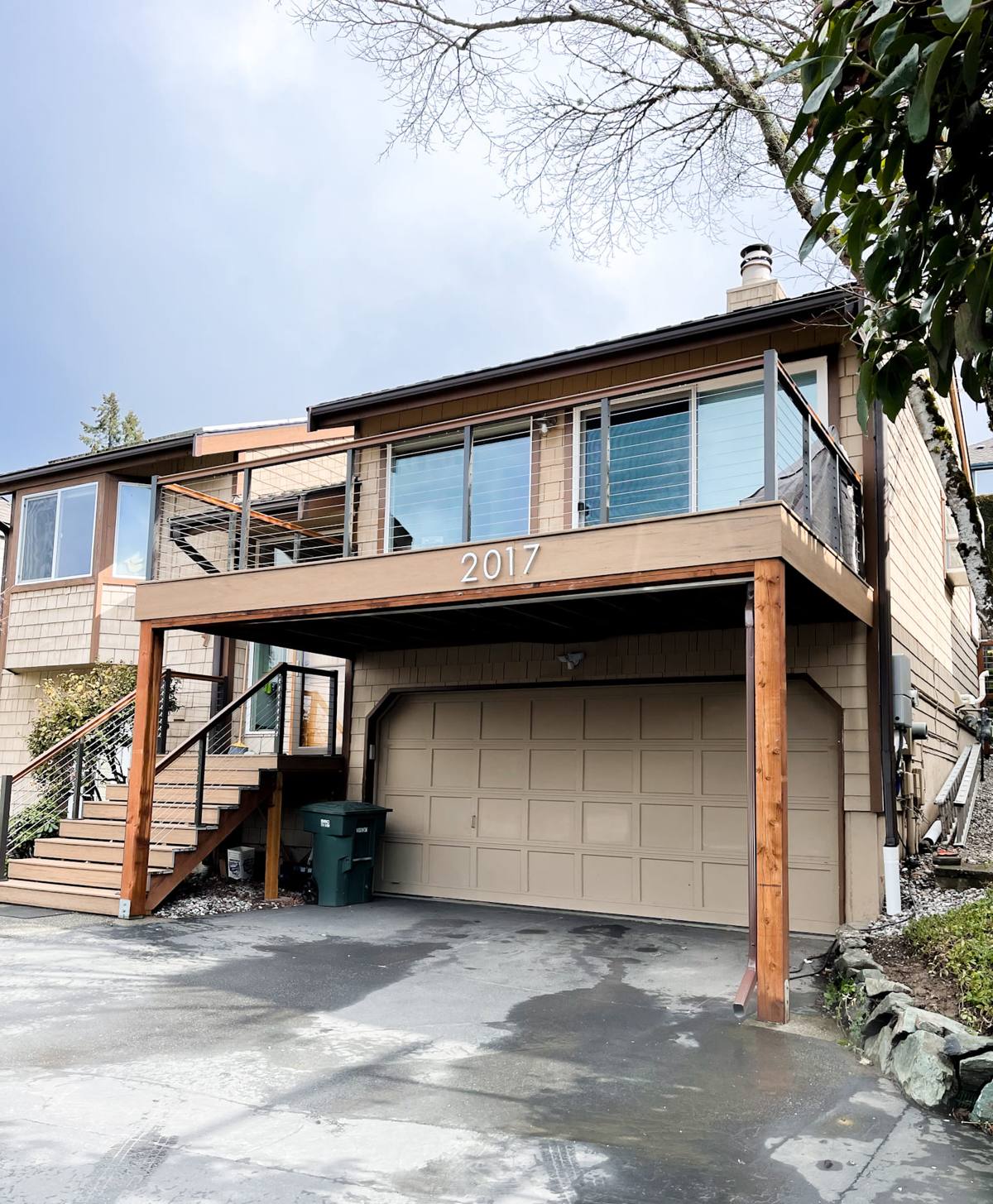
What the Local Climate Actually Does to a Deck
Salt Air
Proximity to Birch Bay and the broader Puget Sound means the air carries more salt than most inland Washington towns see. Salt accelerates corrosion in any fastener, bracket, or hidden connector that isn't rated for it. Standard galvanized screws and joist hangers can start showing rust bleed within a couple of seasons in this environment — long before the wood itself is a problem.
Driving Rain
Fall and winter storms here don't just rain straight down — wind pushes water sideways, up under railings, and into any gap that isn't properly flashed or sloped. Ledger boards, stair stringers, and the top of support posts are the spots that take the worst of it, and they're also the spots most often built wrong on cut-rate jobs.
Moss and Prolonged Dampness
Whatcom County's long wet season means horizontal wood surfaces stay damp for weeks at a stretch, especially in shaded yards or under mature trees. That's exactly the environment moss and algae need to establish. Once moss gets a foothold in the grain of a board or the gap between deck boards, it holds moisture against the wood constantly, which is how rot gets started even on decking that's supposedly rot-resistant.
What Lynden Homeowners Should Actually Ask For
Given the conditions above, a deck built correctly for this area should be planned around three things: drainage, corrosion resistance, and a decking surface that doesn't trap moisture. That sounds simple, but it changes real decisions — how the ledger is flashed, what grade of fastener goes into the frame, how much of a gap is left between boards, and whether the space under the deck is left to collect standing water or graded and vented properly.
- Ledger board flashed with a proper drip cap and membrane, not just caulked at the house connection
- Stainless steel or coated structural fasteners and joist hangers rated for coastal/high-moisture exposure
- Board spacing set for drainage and airflow, not just tight-fit appearance
- Post bases set on proper footings above grade, not buried or resting directly on soil
- Under-deck grading that sheds water away from the house rather than pooling beneath it
- A decking material chosen for this specific yard's sun/shade and drainage conditions, not just budget
Choosing a Decking Material for This Climate
There's no single "best" decking material — the right call depends on budget, how much upkeep you want to commit to, and how shaded or exposed the deck site is. Here's how the common options actually perform under Whatcom County conditions:
| Material | Upfront Cost | Maintenance Needed | Performance in Salt Air / Wet Climate | Typical Lifespan |
|---|---|---|---|---|
| Pressure-treated wood | Lowest | Annual cleaning, periodic sealing | Good if sealed regularly; prone to moss and graying without upkeep | 15-20 years with maintenance |
| Cedar | Moderate | Regular sealing/staining to preserve color and resist moisture | Naturally moisture-resistant but still needs upkeep in this climate | 15-25 years with maintenance |
| Composite decking | Higher | Occasional washing, no sealing/staining | Strong resistance to moisture and moss buildup if installed with proper board gapping | 25-30+ years |
| PVC/synthetic decking | Highest | Minimal — periodic washing only | Best moisture and rot resistance; least food source for moss | 30+ years |
We install all of these depending on what a homeowner wants, but we're upfront about trade-offs. Composite and PVC cost more up front and some homeowners prefer the look and feel of real wood — that's a legitimate choice as long as you go in knowing it needs sealing on a schedule, not "as needed."
What a Correctly Built Deck Involves, Step by Step
Footings and Framing
Everything starts below the decking boards. Footings need to be sized and set to local frost depth and soil conditions, posts need proper post-base hardware keeping wood off concrete and out of standing water, and joist spacing needs to match the decking material's span rating — composite and PVC often require tighter joist spacing than solid wood.
Ledger Attachment
Where the deck ties into the house is the single most common source of hidden rot on decks in this region. It needs proper flashing, a moisture barrier behind it, and structural bolts — not just lag screws into siding.
Fasteners and Hardware
Given the salt air here, we use fasteners and connectors rated for coastal or high-corrosion environments rather than standard galvanized hardware. It costs a bit more up front and saves you from rust-streaked decking and failing hangers years down the road.
Railings and Stairs
Built to current code for height and baluster spacing, with the same attention to flashing and fastener quality on stair stringers, since stairs catch runoff from the whole deck surface.
Our Process
- Site visit and estimate — we look at your yard's sun exposure, drainage, soil, and how the deck will tie into the house before recommending materials.
- Design and material selection — we walk through the cost, maintenance, and durability trade-offs so you're choosing with full information, not guessing.
- Permitting — we handle the permit application and inspections required for the project.
- Build — footings and framing first, then decking, then railings and stairs, with attention to flashing and fastener grade at every connection point.
- Final walkthrough — we go over the finished deck with you, including what maintenance it will actually need going forward.
Maintaining a Deck Through Whatcom County's Seasons
Even a well-built deck needs some seasonal attention in this climate. The goal isn't constant upkeep — it's a few simple habits that keep moss and moisture from getting a foothold.
- Sweep debris out of board gaps before fall rains start, so leaves and needles don't hold moisture against the wood
- Rinse off moss and algae growth as soon as you see it rather than letting it establish over winter
- Check sealant/stain condition on wood decking each spring and reapply on schedule, not just when it looks worn
- Keep gutters and downspouts near the deck clear so overflow isn't dumping extra water onto the structure
- Look under the deck once a year for standing water or soft framing, especially around post bases
Why Hire a Crew That Already Works in Lynden
A deck built by a crew unfamiliar with this specific climate often looks fine on completion day and starts showing problems within a season or two — the wrong fastener grade, decking laid without enough drainage gap, or a ledger flashed like it's going on a house three states away with a drier climate. Working regularly in Lynden and the surrounding Whatcom County area means we've seen firsthand which details matter here: which fasteners actually hold up against salt air, how much board spacing keeps moss from taking hold, and how to grade under a deck so it doesn't turn into a damp crawlspace nine months out of the year. That's not something you can fully learn from a spec sheet — it comes from building and repairing decks in these specific conditions.
Repair, Rebuild, or New Build
Not every project starts from bare ground. We also evaluate existing decks that are showing rot, soft spots, or hardware failure to determine whether targeted repair makes sense or whether the framing has degraded enough that a rebuild is the more honest recommendation. We'll tell you straight which category your deck falls into rather than defaulting to the more expensive option.
If you're planning a new deck or dealing with a Lynden-area deck that's showing its age, we're glad to take a look and give you a straightforward, no-pressure estimate — just fill out the form below.