 Birch Bay Roofing
 Why Bellingham Decks Wear Out Faster Than the Manual Says
A deck in Bellingham lives a harder life than the same deck built in a dry inland climate. Between the salt-laden air moving in off the water, driving rain that comes sideways more often than straight down, and a moss season that can stretch from October into May, every seam, fastener, and board edge on an exposed deck is under constant pressure. Most of the repair calls we run in the Bellingham and Birch Bay area aren't from decks that were built badly — they're from decks that were built for a different climate than the one they're actually sitting in.
That distinction matters because it changes what "repair" should mean. Patching a soft board without addressing why it went soft just buys you a year or two before the next call. A repair done right accounts for the specific way Whatcom County weather attacks a structure, not just the symptom sitting in front of you.
Salt Air and Metal Fatigue
Bellingham's proximity to the water means airborne salt reaches decks that never get directly rained on — under eaves, on covered porches, tucked against the house. Salt accelerates corrosion in ordinary steel fasteners, joist hangers, and structural screws. Once a fastener starts rusting, it swells slightly, which can crack the wood fibers around it and let moisture track deeper into the board or framing member. A deck that looks fine on the surface can have compromised connections underneath simply because the original build used standard coated hardware instead of stainless or hot-dip galvanized fasteners rated for coastal exposure.
Moss, Algae, and the Long Wet Season
Whatcom County's wet season is long, and shaded or north-facing decks in particular hold moisture for days after a storm passes. Moss and algae growth on decking isn't just a slip hazard — it holds water against the wood surface and blocks it from drying between rain events, which is exactly the condition that leads to rot in the board itself and in ledger boards, joists, and posts below. By the time moss is visible, the wood underneath has often been damp far longer than it looks.
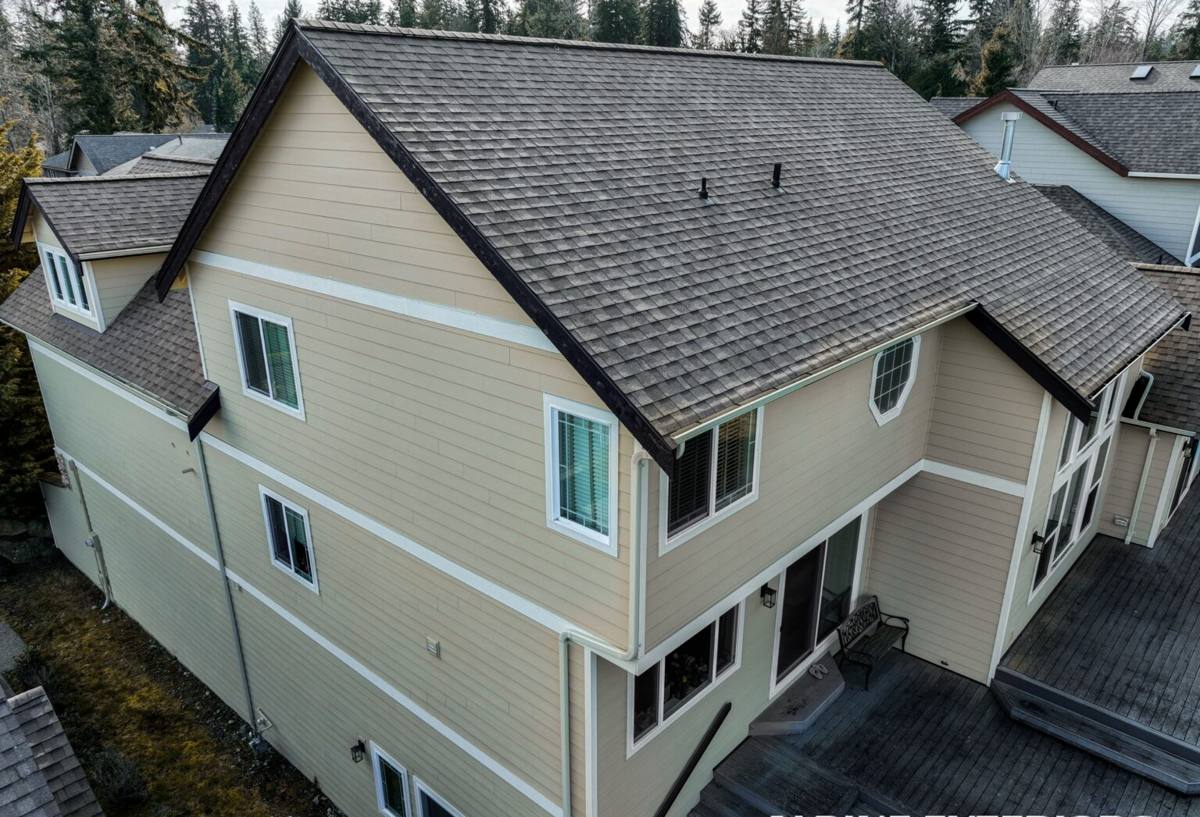
Signs Your Deck Needs Repair — Not a Full Rebuild
Not every problem deck needs to be torn out. A lot of what we see is fixable if it's caught before it spreads into the framing. Here's what we check for on every inspection:
- Soft, spongy, or springy spots when you walk across the decking
- Boards that have cupped, split lengthwise, or pulled away from fasteners
- Rust stains streaking down from screws or nail heads
- Persistent moss or dark staining in the same spots after every rain
- A ledger board (where the deck attaches to the house) that shows gaps, water staining, or soft wood at the flashing line
- Railings or posts that wobble or flex under hand pressure
- Stair stringers or treads that feel uneven or bounce underfoot
- Visible gaps or movement where posts meet footings
If the damage is limited to the decking surface and a few fasteners, a repair makes sense. If it's reached the ledger, the joists, or the posts and footings, the conversation changes — and we'll tell you honestly which category you're in rather than defaulting to the bigger job.
What a Correct Deck Repair Actually Involves
Structural Components Come First
Before we touch a single decking board, we check the parts you can't see from the top: the ledger board attachment, joist condition, post-to-footing connections, and whether the original flashing (if any) is doing its job. A deck that's structurally sound underneath but has a few tired boards on top is a very different repair than one where the framing has been absorbing water for years. Replacing decking over compromised framing just hides the real problem under new material.
The Decking Surface and Fasteners
Once we've confirmed the structure is sound — or repaired it if it isn't — we address the decking itself: replacing individual damaged boards, re-fastening loose ones, and swapping out any corroded hardware for stainless steel or hot-dip galvanized fasteners suited to a coastal climate. Mixing new fasteners with old, rusting ones is a false economy; the old ones will keep failing on their own schedule.
Railings and Code Compliance
Railings take abuse from hands, weather, and time, and they're also a safety and code item. A repair on an older deck is a natural point to confirm railing height, baluster spacing, and post attachment meet current building code — especially if the original railing was installed before current standards or has been repaired piecemeal over the years.
Repair vs. Replace: What Actually Drives the Decision
Homeowners often assume any visible damage means a full rebuild. In practice, the decision comes down to a handful of factors:
| Factor | Favors Repair | Favors Replacement |
|---|---|---|
| Framing condition | Joists, posts, and ledger are solid | Rot has reached structural framing |
| Extent of damage | Isolated boards or fasteners | Damage spread across most of the deck |
| Age of the deck | Newer deck, isolated failure | Original materials near or past typical service life |
| Ledger/flashing condition | Flashing intact, no water tracking into the house | Water has been entering behind siding at the ledger |
| Code compliance | Minor railing or spacing fixes needed | Structural connections don't meet current code and can't be reasonably retrofitted |
We walk every deck with this list in mind and give you a straight answer — including telling you when repair is the right call even if a rebuild would be the bigger job for us.
Materials We Use — and Why
For decking replacement boards, we'll match your existing material where that makes sense, or talk through composite versus wood if you're open to it. Composite decking costs more up front but holds up better against moss staining and doesn't need refinishing, which matters in a climate where a deck rarely gets a long stretch of dry weather to paint or stain in. Wood decking costs less initially but needs more regular maintenance — cleaning, sealing, and periodic refinishing — to keep moisture out of the grain.
For anything structural — ledger boards, joists, posts — we use pressure-treated lumber rated for ground contact where it's called for, and we don't cut corners on flashing at the ledger. That single detail, done wrong, is behind more hidden rot than almost anything else we find. For fasteners and hardware, we use stainless steel or hot-dip galvanized rated for coastal exposure, not standard-coated screws that will start rusting within a season or two of salt air exposure.
Our Deck Repair Process
- On-site inspection. We check decking, fasteners, railings, ledger, joists, posts, and footings — not just the spot you called about.
- Honest scope. We tell you what's actually failing, what's still sound, and whether repair or replacement fits your situation and budget.
- Written estimate. Clear line items so you know what you're paying for and why.
- Repair work. Structural issues addressed first, then decking, fasteners, and railings, using materials suited to this climate.
- Final walkthrough. We check the deck is solid, safe, and code-compliant before we call it done.
Why a Crew That Already Works Bellingham and Birch Bay Matters
A contractor who works this specific stretch of Whatcom County has already seen how salt air, rain patterns, and moss behave on decks in this area — which fasteners hold up, which ledger details fail first, which shaded spots need extra attention. That's not something you get from a crew that mostly works inland or in a drier region and treats a Bellingham deck like any other repair job. Local experience means fewer surprises during the work and a repair that's built to hold up against the conditions it'll actually face, not generic conditions from a manual.
Keeping a Repaired Deck in Good Shape
A repair is only as good as the upkeep that follows it. A few habits go a long way in this climate:
- Sweep leaves and debris off the deck regularly, especially in fall — trapped debris holds moisture against boards
- Remove moss as soon as it appears rather than letting it establish through a wet season
- Check fasteners and railings once a year for rust or looseness
- Reseal or refinish wood decking on the schedule the product calls for — don't stretch it out because the weather's been dry for a week
- Keep gutters and downspouts near the deck clear so runoff isn't draining onto or under it
If you're noticing soft spots, rust streaks, persistent moss, or a railing that doesn't feel as solid as it used to, we're happy to take a look and give you a clear, no-pressure assessment of what your deck actually needs. Fill out the form below for a free estimate.