 Birch Bay Roofing
 Deck Replacement Built for Lynden's Climate, Not Just Its Curb Appeal
A deck in Lynden lives a harder life than most homeowners realize. Between the long, wet stretch from fall through spring, the moss that creeps into anything shaded or north-facing, and the marine-influenced air that moves in off the water and settles over Whatcom County, a deck out here is under near-constant moisture pressure for most of the year. That's very different from decks built in drier inland climates, and it's why a deck replacement done right in Lynden looks different from a generic "tear out and rebuild" job.
We work throughout the Birch Bay and Lynden area, and the pattern we see on tear-outs is consistent: decks don't usually fail because the homeowner neglected them. They fail because the structure underneath — the ledger board, the joists, the framing connections — was never detailed to shed water the way this climate demands. The surface boards get replaced once or twice over the years while the framing quietly rots underneath. By the time it's visibly a problem, the fix is bigger than it needed to be.
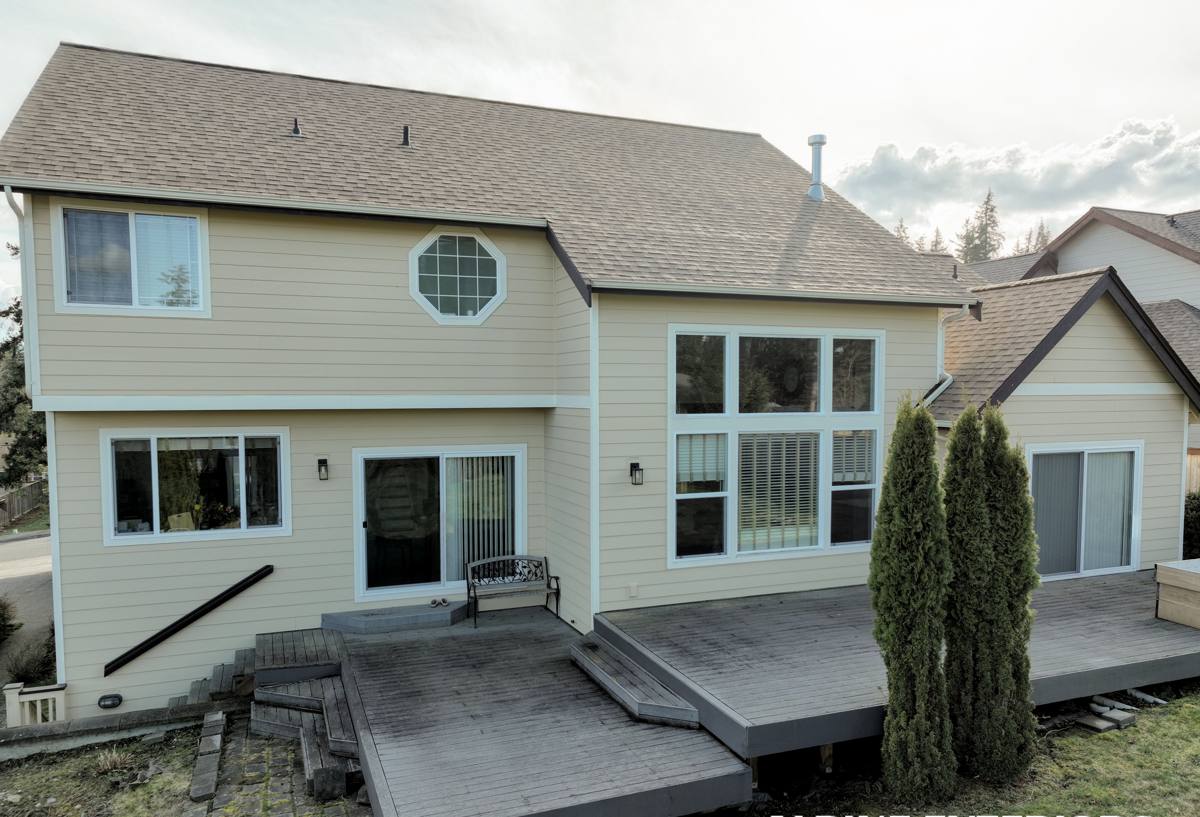
What a Correct Deck Replacement Actually Involves
Replacing a deck isn't just swapping old boards for new ones. A proper replacement addresses the whole system, from the ground up, with an eye toward how water moves through and around the structure over the next 15-20+ years.
Structural Framing First
The framing is where most long-term problems start. If your existing deck attaches to the house with a ledger board, that connection needs proper flashing to keep water from tracking behind the siding and into the rim joist — a common source of hidden rot we find on tear-outs. Joists, beams, and posts need to be sized correctly for the span and load, and any wood-to-wood or wood-to-concrete contact point is a spot where moisture can get trapped if it isn't detailed properly.
Footings and Post Bases
In our soil and rainfall conditions, footings need adequate depth and post bases that keep the post end grain up off concrete and standing water. Post bases that sit directly on a slab or in a footing without an air gap are one of the fastest ways to rot a structurally sound post from the bottom up.
Decking Material
Whether you go with a quality pressure-treated wood, cedar, or composite decking, the material choice affects your maintenance schedule, not just the up-front cost. We'll walk through the honest trade-offs for your specific deck rather than pushing one product for every job.
Fasteners and Hardware
Everything below the decking surface should be corrosion-resistant hardware rated for treated lumber and exterior use. This matters more here than in a dry climate — standard fasteners that would hold up fine somewhere with less rain and humidity can corrode and weaken well before the wood around them fails.
Why Whatcom County Weather Shortens the Life of a Poorly Built Deck
Lynden sits in a part of Whatcom County that gets a genuinely long wet season, and even on days without rain, the air carries enough moisture that wood surfaces rarely get a full, fast dry-out. A few specific ways this plays out on decks:
- Moss and algae growth: Shaded areas, north-facing sides of the house, and spots under trees stay damp longer, giving moss a head start. Moss holds moisture against the deck surface and structure, accelerating decay in exactly the spots that are hardest to inspect.
- Slow drying cycles: A board that gets soaked in a storm may not fully dry before the next rain arrives. Over years, that constant damp-dry cycling is harder on wood fiber and fasteners than occasional heavy rain in a drier climate.
- Ledger board vulnerability: Where a deck attaches to the house, poor flashing lets water get behind the band board and into the house framing — a problem that's invisible from the deck surface until it's advanced.
- Coastal air influence: Being within reach of Birch Bay's marine air means metal hardware, fasteners, and railing components see more corrosion pressure over time than the same materials would inland.
None of this means a deck can't last a long time here — it means the building details matter more than they would in a milder, drier region, and cutting corners on flashing, fasteners, or footings shows up as a problem years earlier than it would elsewhere.
Signs Your Lynden Deck Needs Replacement, Not Just Repair
Not every aging deck needs a full replacement. But there's a point where patching individual boards stops being cost-effective and starts masking a bigger structural issue. Here's what we look for during an inspection:
- Soft, spongy, or spring-back decking when you walk across it
- Visible rot or dark staining at the ledger board where the deck meets the house
- Wobble or movement in the railing posts
- Persistent moss or algae that returns quickly after cleaning
- Rust streaking from fasteners or visible corrosion on hardware
- Posts that feel soft or show decay near the base, at ground or footing level
- A deck more than 20-25 years old that's never had the framing inspected
If you're only seeing one or two of these, a repair might genuinely be the right call, and we'll tell you that honestly during an estimate. Deck replacement makes sense when the framing itself is compromised, or when the cost of repeated repairs starts approaching what a full rebuild would cost.
Comparing Decking Materials for a Lynden Rebuild
There's no single "best" material for every deck — it depends on your budget, how much upkeep you want to do, and how the deck is exposed to sun, shade, and moisture. Here's an honest breakdown of the common options we install:
| Material | Upfront Cost | Maintenance | Moisture Behavior in This Climate |
|---|---|---|---|
| Pressure-Treated Lumber | Lowest | Needs re-staining/sealing every 2-3 years | Performs well if properly sealed and detailed; vulnerable if maintenance lapses |
| Cedar | Moderate | Needs regular sealing to maintain color and resist moisture | Naturally moisture-resistant but still benefits from a protective finish here |
| Composite Decking | Higher | Occasional cleaning; no staining or sealing | Doesn't rot, but requires correct ventilation underneath to avoid trapped moisture and mold on the underside |
Whichever surface material you choose, the framing underneath should be treated lumber rated for ground contact where applicable, with the flashing and hardware details we covered above. The decking surface is the part you see; the framing is the part that determines how long the deck actually lasts.
Our Deck Replacement Process
We keep the process straightforward and try to minimize surprises once the work is underway.
1. On-Site Inspection and Estimate
We come out, look at the existing deck's condition — framing, ledger connection, footings, and surface — and give you a straightforward assessment of what's salvageable and what isn't. This is also where we talk through material options based on your budget and how you use the space.
2. Permitting
Deck work often requires a permit depending on size, height, and attachment to the house. We handle the permitting process so you're not left navigating that on your own.
3. Demolition and Disposal
We remove the old deck down to the framing (or further, if the framing needs replacing too) and haul away the debris.
4. Structural Rebuild
New or reinforced footings, properly flashed ledger connection, correctly sized joists and beams, and corrosion-resistant hardware throughout.
5. Decking, Railing, and Finish Work
Installation of your chosen decking material, railing system, and any stairs, with attention to fastener spacing and ventilation underneath the deck surface.
6. Final Walkthrough
We walk the finished deck with you, point out any maintenance recommendations specific to your material choice, and make sure you're clear on what upkeep (if any) is needed going forward.
Why Local Experience in the Lynden and Birch Bay Area Matters
A deck built to a generic national code minimum can still fail early in a climate like ours if it isn't detailed for the specific moisture and rain patterns of Whatcom County. Crews who work this area regularly know which details matter most here — ledger flashing, post base drainage, hardware corrosion resistance, and where moss and shade tend to cause the earliest problems on a given lot. That's knowledge that comes from doing the work locally and seeing what actually fails on tear-outs, not from a manufacturer's spec sheet alone.
We also know the practical side of working in this area: permitting expectations, typical soil conditions for footings, and how to schedule work around our wetter months so the project isn't fighting the weather the whole way through.
Maintaining Your New Deck
Whatever material you choose, a little regular attention goes a long way in this climate:
- Sweep debris and standing leaves off the deck surface regularly, especially in fall
- Clean moss and algae promptly rather than letting it establish
- Check and re-seal wood decking on the manufacturer's recommended schedule
- Inspect the ledger board area annually for signs of water intrusion
- Keep gutters and downspouts near the deck clear so runoff isn't draining directly onto it
- Check railing posts periodically for movement or softness at the base
If you're weighing whether your current Lynden-area deck needs a repair or a full replacement, or you're ready to plan a rebuild before another wet season sets in, we're happy to take a look and give you a straightforward, no-pressure estimate using the form below.