 Birch Bay Roofing
 Deck Repair Built for Point Roberts Conditions
Point Roberts sits on its own peninsula, surrounded on three sides by water, which means homes there catch wind, salt spray, and rain in a way that inland Whatcom County properties simply don't. A deck built and finished the same way you'd finish one in a sheltered yard ten miles inland is not going to hold up the same way out here. We repair decks in Point Roberts regularly, and the failure patterns we see are consistent enough that we can usually tell what's wrong with a deck before we even get up close to it.
This page is about deck repair specifically for Point Roberts homes — what breaks down out here, what a correct repair actually involves, and how we approach the job so it holds up against the next few winters, not just the next inspection.
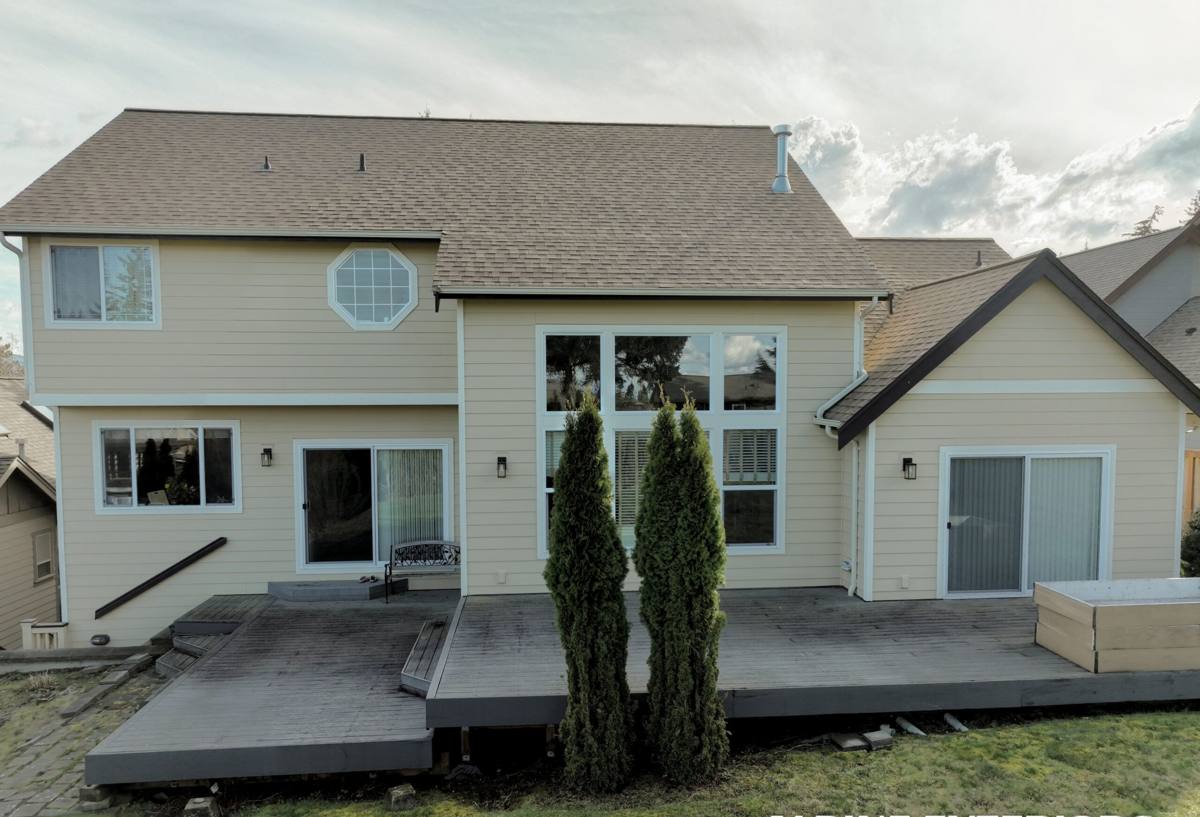
Why Point Roberts Decks Wear Out Faster
Three things work against wood and fasteners on a Point Roberts deck, often at the same time:
Salt Air
Proximity to saltwater accelerates corrosion in fasteners, brackets, and any exposed metal hardware. Nails and screws that would last for decades in a dry inland climate can start rusting and weakening within a few years here. Once a fastener corrodes, it loses grip strength — that's how you end up with boards that feel loose or slightly springy even though the wood underneath still looks fine.
Driving Rain
Wind-driven rain doesn't just fall on a deck, it gets pushed sideways into ledger boards, under railings, and into any gap or seam that isn't properly flashed or sealed. Water that gets behind a ledger board or into a joist end is the single biggest cause of hidden structural rot we find on decks in this area.
Long Moss Season
Point Roberts gets enough shade, moisture, and mild temperatures for moss and algae to establish on deck surfaces for a large part of the year. Beyond looking bad, moss holds moisture against the wood surface constantly, which softens the top layer of decking boards and makes painted or stained surfaces slick and dangerous underfoot.
None of these three issues are dramatic on their own. Together, over several years, they're what turns a solid deck into one with soft spots, rust streaks, and a railing that wiggles more than it should.
The Deck Problems We See Most Often Out Here
- Rot at the ledger board where the deck attaches to the house, usually from missing or failed flashing
- Rusted or corroded fasteners causing boards and railings to loosen
- Soft, spongy decking boards, especially in shaded or low-airflow areas
- Moss and algae buildup making the surface slippery
- Joist ends that have rotted from water pooling underneath the deck
- Railing posts that have loosened at the base connection
- Stair stringers showing rot or checking at ground contact points
- Peeling or failed stain and sealant leaving wood unprotected
Most homeowners notice the surface-level symptoms first — a squeaky board, a slippery patch, a railing that moves. The underlying cause is usually moisture that's been working on the structure for longer than the visible symptom suggests.
What a Correct Deck Repair Actually Involves
A repair that just swaps out the board you can see and calls it done often misses the reason that board failed in the first place. Our approach starts with figuring out the cause, not just the symptom.
Structural Inspection First
Before any repair work starts, we check the ledger board connection, the condition of the joists and beams underneath, post bases, and any area where two pieces of framing meet. This is where rot hides longest because it's out of sight and out of the weather that would otherwise dry it out.
Moisture and Rot Assessment
We probe suspect areas to find the actual boundary of rot damage rather than guessing. Wood that looks fine on the surface but is soft underneath needs to come out — patching over compromised wood just delays a bigger repair later.
Flashing and Water Management
If the ledger board flashing is missing, damaged, or was never installed correctly, we address that as part of the repair. Flashing is what keeps rain from getting behind the ledger and into the house rim joist — skipping it means the same rot comes back in a few years regardless of what else was fixed.
Hardware Upgrades
Where we find corroded fasteners, we replace them with hardware rated for the exposure, not just whatever matches what's already there. Given the salt air, that usually means stainless steel or heavy hot-dip galvanized fasteners and connectors rather than standard coated deck screws.
Board Replacement and Refinishing
Damaged boards get replaced and matched as closely as reasonable to the surrounding decking. Once structural and surface repairs are done, we clean and re-seal or refinish the deck so the repaired areas and the surrounding wood are protected the same way going forward.
Repair or Replace? How We Help You Decide
Not every deck with problems needs to be torn out and rebuilt. The right call usually comes down to how much of the structure is affected versus how much is cosmetic.
| Factor | Leans Toward Repair | Leans Toward Replacement |
|---|---|---|
| Ledger board condition | Solid, properly flashed | Rotted or improperly flashed |
| Joists and beams | Sound, isolated soft spots | Widespread rot or sagging |
| Surface boards | Scattered bad boards | Most boards cupped, splitting, or soft |
| Fasteners and hardware | Localized corrosion | Rust throughout the structure |
| Deck age | Under 15-20 years, built to code | Older, undersized, or non-compliant framing |
We'll tell you honestly which side of this table your deck falls on. There's no benefit to us talking you into a full rebuild when a targeted repair will hold up fine, and there's no benefit to patching a deck whose framing is genuinely failing.
Our Repair Process
- On-site inspection — we walk the full deck, check underneath, and probe any areas that show signs of moisture damage.
- Written scope and estimate — you get a clear breakdown of what needs to be repaired and why, before any work starts.
- Demo of damaged material — only the wood and hardware that's actually compromised comes out.
- Structural and flashing repair — framing, ledger flashing, and connections are corrected first.
- Board and hardware replacement — new decking and corrosion-resistant fasteners go in.
- Clean, seal, or finish — the repaired deck is treated so it's protected against the next wet season.
Materials We Use and Why
Given the salt air and rain exposure in Point Roberts, we're selective about what goes into a repair:
Fasteners
Standard coated deck screws corrode faster near saltwater. We favor stainless steel or heavy-duty galvanized hardware for structural connections, since replacing rusted fasteners a second time in a few years costs more than doing it right the first time.
Decking Material
Whether we're replacing individual boards or a larger section, we match to the existing decking where practical, or discuss composite options with you if the homeowner wants a lower-maintenance surface going forward. Both wood and composite decking have real trade-offs in this climate — wood needs regular re-sealing to resist moisture and moss, while composite avoids that upkeep but comes with a higher upfront cost and its own cleaning needs to keep algae from taking hold on the surface texture.
Sealants and Finishes
A repair is only as good as the protection on top of it. We use exterior-grade sealants and finishes suited to marine-adjacent exposure, applied to both the repaired sections and, where it makes sense, the surrounding deck so everything weathers evenly.
Maintenance Checklist for Point Roberts Homeowners
Between professional inspections, a few habits go a long way toward catching problems before they become expensive:
- Sweep debris and standing water off the deck surface regularly, especially in fall
- Check for moss or algae buildup and clean it off before it spreads
- Look underneath the deck once or twice a year for signs of water pooling or soft framing
- Check railings and stair posts for any give or movement
- Inspect the ledger board area near the house for staining or gaps in flashing
- Re-seal or re-stain wood decking on the manufacturer's recommended schedule, not just when it looks faded
- Keep gutters and downspouts near the deck clear so runoff isn't draining directly onto it
Why It Matters to Hire a Crew That Already Works in Point Roberts
Point Roberts is a peninsula with its own access logistics, and a crew that already works the area knows how to plan a job here without the delays that catch out contractors coming from further afield. Beyond logistics, familiarity with how decks actually fail in this specific exposure — the salt air corrosion, the moss patterns, the way driving rain finds its way into ledger boards — means we're not guessing at what to look for. We've seen the same failure points repeat across enough decks in Whatcom County's coastal communities to know where to check first and what's worth fixing properly versus what's cosmetic.
A repair crew unfamiliar with this climate might use standard hardware that corrodes again in a few years, or miss flashing issues because they're used to drier inland conditions. That's the difference between a repair that lasts and one you're paying for again sooner than you should be.
Get a Straight Answer on Your Deck
If your deck in Point Roberts has soft boards, loose railings, rust stains, or a moss problem that keeps coming back, we're happy to take a look and give you an honest read on what's actually going on — repair or replacement, no pressure either way. Use the form below to request a free estimate.