 Birch Bay Roofing
 Roof Repair Built for Sandy Point's Waterfront Exposure
Sandy Point sits right up against the water, and that location shapes everything about how a roof ages here. Homes in this community take a different kind of beating than roofs even a few miles inland in Birch Bay or elsewhere in Whatcom County. Salt-laden air off the water accelerates corrosion on metal flashing, fasteners, and gutter systems. Wind-driven rain finds its way into gaps that would stay dry on a calmer site. And the shaded, moisture-heavy stretches of the year keep moss and algae established on north-facing slopes for months at a time. A roof repair here needs to account for all three, not just patch the visible problem and move on.
We work on homes throughout Sandy Point and the surrounding Birch Bay area, and we've built our repair approach specifically around what this exposure does to a roof over time. That means looking past the leak itself to the conditions that caused it, and fixing the repair so it holds up to the next wet season, not just the next dry spell.
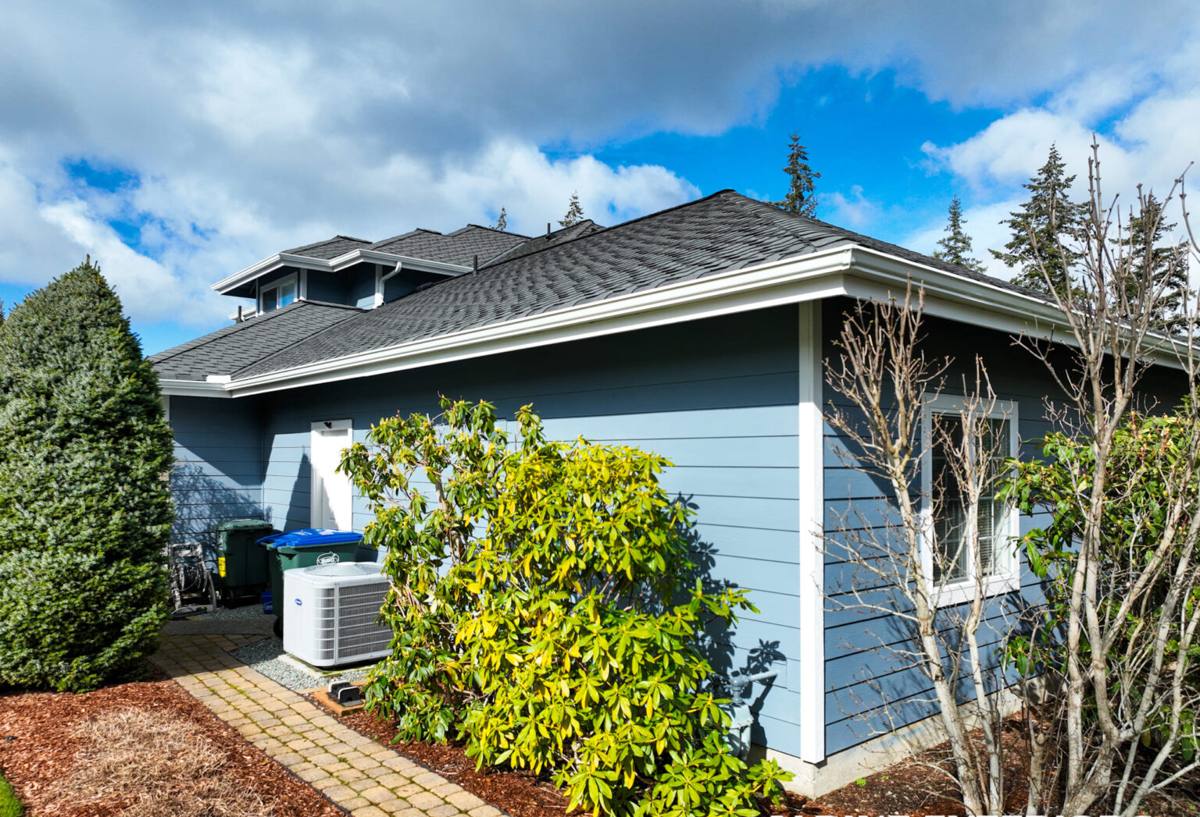
What Salt Air, Wind-Driven Rain, and Moss Actually Do to a Roof
Salt Air and Corrosion
Airborne salt accelerates the breakdown of exposed metal. Nail heads, flashing seams, gutter hangers, and vent caps corrode faster near the water than they would on an inland roof of the same age. Once a fastener starts to corrode, it loses holding strength, and that's often the real reason a shingle lifts or a flashing edge starts letting water through — the metal failed before the shingle did.
Driving Rain and Wind Exposure
Open waterfront exposure means rain doesn't just fall straight down — it gets pushed sideways under wind loads that inland roofs rarely see. That changes where leaks show up. Water can work its way under shingle tabs, around chimney and skylight flashing, and through vent penetrations that would be fine in calmer conditions. A repair that only addresses vertical water flow can miss the actual entry point entirely.
Moss, Algae, and Prolonged Moisture
Shaded roof sections and north-facing slopes near the water hold moisture longer, and that's exactly what moss needs to take hold. Moss doesn't just look bad — it lifts shingle edges as it grows, holds water against the roof surface, and works its way under the shingle mat over time. Left unaddressed, moss growth turns small, isolated leaks into widespread moisture damage across an entire slope.
Signs a Sandy Point Roof Needs Repair
- Water stains on ceilings or interior walls, especially after a windy rainstorm rather than a calm one
- Visible moss patches, particularly on shaded or north-facing sections of the roof
- Lifted, curled, or missing shingle tabs along roof edges and around penetrations
- Rust streaking below metal flashing, vent caps, or gutter hangers
- Granules collecting in gutters or at downspout outlets
- Soft or spongy decking felt underfoot in the attic near valleys or chimneys
- Daylight visible through the roof deck when viewed from inside the attic
What a Correct Repair Actually Involves
A proper roof repair on a Sandy Point home starts with finding the real source of the leak, which is not always where the water stain shows up indoors. Water travels along decking and rafters before it drips, so a leak over a bedroom closet might trace back to a flashing failure several feet away near a chimney or valley.
Assessment First
We inspect the roof surface, the flashing at every penetration, the decking condition where accessible, and the attic side for signs of moisture travel. On a waterfront property, we pay particular attention to corrosion at fasteners and flashing seams, since that's often the root cause even when the visible symptom is a lifted shingle.
Matching Materials to the Exposure
Repairs here should use corrosion-resistant flashing and fasteners rather than standard-grade materials, given the salt air. We also factor in wind exposure when re-securing shingles and sealing edges, since a repair that would hold on a sheltered inland roof can fail here if it's not sealed and fastened for wind-driven rain specifically.
Addressing Moss as Part of the Repair
If moss contributed to the damage, removing it and treating the affected area is part of the repair, not a separate add-on. Leaving moss in place after a patch just guarantees the same failure returns in a season or two.
Decking Repair When Needed
If water has been getting in for a while, the plywood or OSB decking underneath may be soft or delaminated. Shingles laid over damaged decking won't hold properly, so any section of compromised decking gets replaced before new roofing material goes down.
Repair vs. Replacement: How We Help You Decide
Not every roof issue at Sandy Point calls for a full replacement, and not every leak is a quick fix. The right call depends on the roof's age, how widespread the damage is, and how many prior repairs it's already had.
| Factor | Favors Repair | Favors Replacement |
|---|---|---|
| Roof age | Under 15 years, or well-maintained mid-life roof | Nearing or past expected lifespan for its material |
| Damage extent | Isolated to one section, flashing point, or penetration | Widespread granule loss, multiple leak points, moss coverage |
| Decking condition | Solid, dry decking in affected area | Soft, delaminated, or rotted decking over large areas |
| Repair history | First or second repair on this roof | Repeated repairs to the same areas over recent years |
| Underlying material | Shingles still bonded and flexible | Brittle, cracking, or curling across most of the roof |
We'll give you an honest read on which side of that table your roof falls on. If a repair will genuinely hold, we'll say so. If the roof is past the point where patching makes sense, we'll explain why rather than sell a repair that won't last.
Why We Don't Cut Corners on Fasteners and Flashing Here
On a standard inland roof, standard-grade galvanized fasteners and flashing hold up fine for years. On a waterfront property like those in Sandy Point, that same hardware can start showing corrosion well ahead of schedule. Our standard for repair work in this area is to use flashing and fastener grades suited to salt air exposure, even when it costs a bit more up front than the minimum spec. The trade-off is straightforward: slightly higher material cost now versus a repair that corrodes and fails again in a few years. We'd rather do it once.
Our Repair Process
- Inspection and diagnosis — we identify the actual source of the leak or damage, not just the visible symptom
- Written assessment — you get a clear explanation of what's wrong, what's causing it, and what fixing it properly involves
- Repair scope and estimate — a straightforward quote before any work begins, with repair vs. replacement clearly explained if that's a live question
- Material prep — matching shingles, corrosion-resistant flashing, and fasteners suited to the exposure at this site
- The repair itself — removing damaged material, replacing decking if needed, treating moss where present, and properly flashing and sealing the area
- Final check — confirming the repair area, surrounding shingles, and flashing are all sound before we consider the job done
Why Hire a Crew That Already Works Sandy Point
A roofer who works this specific stretch of coastline regularly knows what to check first — where corrosion tends to start, which slopes hold moisture longest, and how wind exposure off the water changes where leaks actually originate. That local familiarity means fewer surprises and a repair that's built for the conditions your roof actually faces, not generic best practices pulled from an inland job. We're based in Birch Bay and work throughout Whatcom County, so Sandy Point isn't an unfamiliar stop for us — it's part of our regular service area, and we understand the toll this particular coastline takes on a roof.
Maintenance That Extends the Life of a Repair
- Clear gutters and downspouts each fall so water isn't backing up under roof edges through winter
- Have moss treated or removed before it spreads across a full slope, not after
- Check flashing around chimneys, skylights, and vents annually for early corrosion signs
- Trim back overhanging branches that keep shaded roof sections damp longer than they need to be
- Address small leaks promptly — waiting typically turns a flashing fix into a decking repair
A repair done right, paired with basic seasonal upkeep, holds up far longer against this coastline's climate than a rushed patch job ever will.
If you're dealing with a leak, visible moss, or storm damage on a Sandy Point roof, we're happy to take a look and give you a straightforward, no-pressure assessment. Fill out the form below for a free estimate, and we'll tell you honestly what your roof needs.