 Birch Bay Roofing
 Siding Built for Lynden's Stretch of Whatcom County Weather
Lynden sits a short drive inland from our home base in Birch Bay, but it shares the same weather system that wears down siding all along this part of Whatcom County. Winters bring months of driving rain off the water, humidity that never really lets up, and a moss and mildew season that can run more than half the year on north-facing walls and anything shaded by trees. Salt-laden air moves further inland than most homeowners expect, and combined with the rain, it accelerates corrosion on fasteners, trim, and lower-grade siding materials alike.
None of that is unusual for this region — it's just the baseline. The problem is that a lot of siding gets installed as if the house were going up in a dry climate, with shortcuts on flashing, house wrap, and fastening that don't show up as failures for a few years. By the time a homeowner notices soft spots, peeling paint, or streaking, the damage is already behind the siding, not just on it. A correct installation in Lynden has to assume wet, and build in a way to shed water instead of trap it.
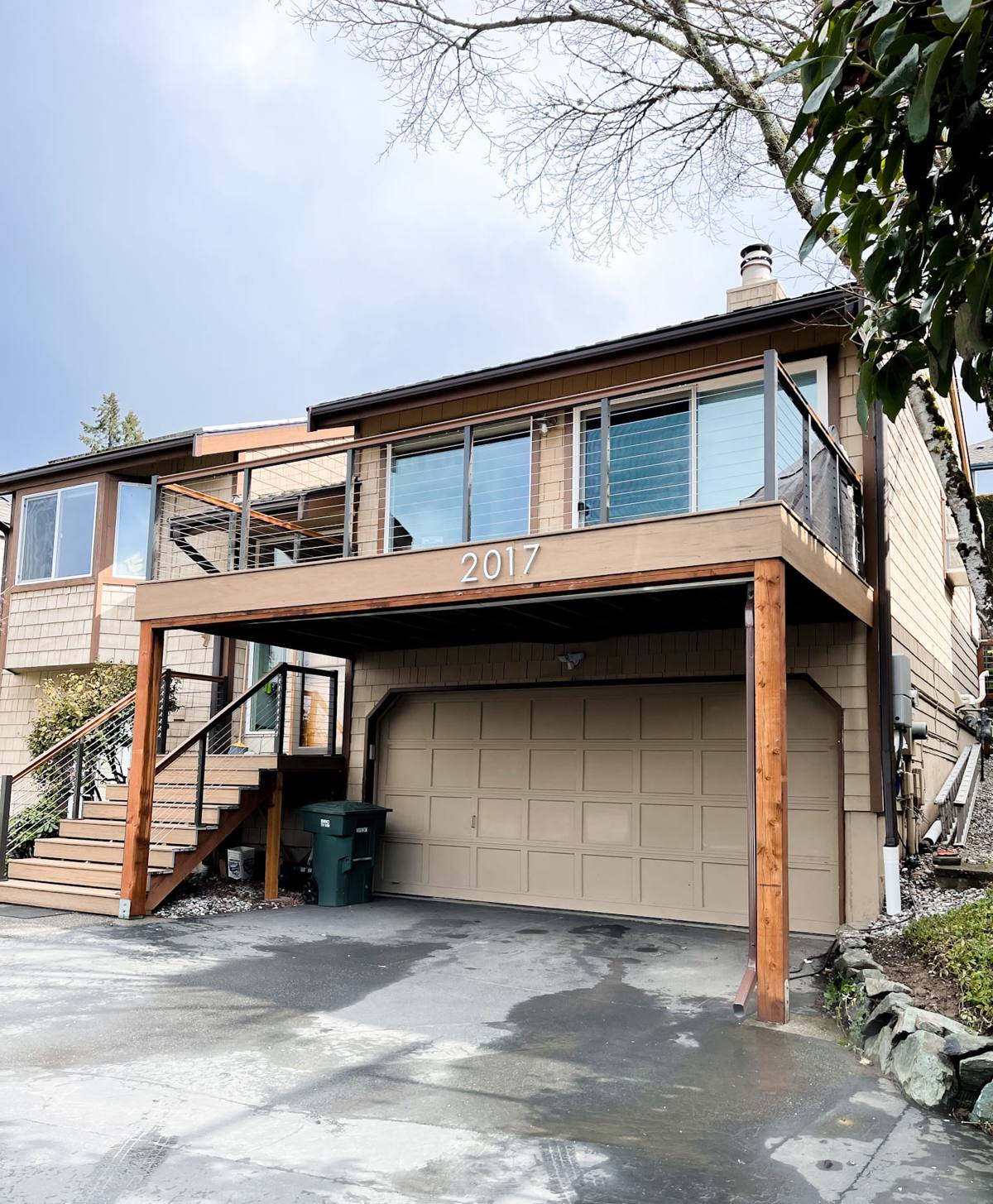
What a Correct Siding Installation Actually Involves
Siding is a system, not a single product nailed to the wall. The visible panel is the last piece installed and the first thing anyone sees, but it's the layers underneath — and the details most homeowners never think to ask about — that determine whether the job holds up through twenty Whatcom County winters or starts failing in five.
Water Management Comes First
- Housewrap or weather-resistant barrier installed continuously, with all seams properly lapped and taped
- Flashing at every window, door, and horizontal trim break, installed so water is directed out and down, never trapped behind the siding
- A drainage plane or rainscreen gap where conditions call for it, so any moisture that does get behind the panel has somewhere to go
- Proper caulking at penetrations — but never used as a substitute for flashing, which is a common shortcut that fails within a few years
Fastening and Fit
Fiber cement siding has specific fastening requirements — nail type, placement, and spacing all matter, and they're not the same as what works for vinyl or wood. Panels need correct clearance from the ground, roofline, and any hardscaping so they're never sitting in standing water or snow buildup. Butt joints and corners need to be sealed and detailed correctly, not just butted together and caulked over.
Finish Work
Cut edges on fiber cement siding need to be sealed and primed before installation, and any field-cut edges touched up before the panel goes up. This is one of the most commonly skipped steps on rushed jobs, and it's exactly where moss, mildew, and moisture intrusion get started first.
Why We Install Only James Hardie Fiber Cement
We get asked fairly often why we don't offer vinyl, LP SmartSide, cedar, or other fiber cement brands. It's a reasonable question, and the honest answer is that we made a standardization decision based on what holds up in this climate with the least long-term risk to the homeowner.
Vinyl siding is affordable and low-maintenance in the sense that it doesn't need painting, but it's a thin material that can warp in temperature swings, crack on impact in cold weather, and it's not fire-resistant — a real consideration during wildfire smoke seasons that now affect Western Washington. Engineered wood products like LP SmartSide perform well when the installation and maintenance schedule are followed exactly, but they're wood-based, and wood-based siding is more sensitive to moisture intrusion than fiber cement — a real liability in a region where driving rain and prolonged dampness are the norm, not the exception. Cedar and primed spruce are beautiful materials, but they demand an ongoing maintenance commitment — refinishing, caulking, moisture monitoring — that most homeowners underestimate when they choose it.
James Hardie fiber cement is non-combustible, dimensionally stable in wet-dry cycling, and comes with a factory-applied ColorPlus finish that's baked on rather than field-painted — which means better adhesion and a finish that resists the fading and peeling that painted wood and some vinyl products show after a few Pacific Northwest winters. It's not the cheapest option on day one, and it's not forgiving of a sloppy installation, but installed correctly it's the product we're comfortable standing behind on homes in this climate.
Built for This Climate: The HZ5 Product Line
James Hardie engineers its siding by climate zone, and homes in Western Washington fall into the HZ5 line, engineered specifically for wetter, more humid regions. That's a meaningful distinction — a fiber cement product engineered for a dry Southwest climate isn't the same product, moisture-wise, as one engineered for a marine climate with year-round rain exposure. For Lynden and the rest of Whatcom County, that regional engineering is part of why the product performs the way it does, not just a marketing detail.
James Hardie also backs its siding with a strong transferable limited warranty on the substrate and a separate finish warranty on ColorPlus products — worth understanding in detail before you sign a contract, since warranty terms and what voids them vary by product line and installation method.
Comparing Siding Options for a Whatcom County Home
| Factor | James Hardie Fiber Cement | Vinyl | Engineered Wood (LP SmartSide) | Cedar / Primed Spruce |
|---|---|---|---|---|
| Moisture resistance | High — cement-based, doesn't rot | High, but can trap moisture behind panels if installed wrong | Moderate — wood-based, needs sealed edges maintained | Low to moderate — requires consistent upkeep |
| Fire resistance | Non-combustible | Not fire-resistant, can melt/deform | Combustible, treated but still wood | Combustible |
| Maintenance | Low — factory finish, occasional wash | Low, but cracks/fades over time | Moderate — caulking, edge sealing on a schedule | High — refinishing every few years |
| Typical lifespan (installed to spec) | 30+ years | 20-30 years | 20-30 years | 15-25 years with upkeep |
| Upfront cost | Higher | Lowest | Moderate | Moderate to high |
These are general performance patterns, not guarantees — every material's real-world lifespan depends heavily on installation quality, which is the variable that matters most regardless of which product a homeowner chooses.
Our Process for a Lynden Siding Installation
- On-site assessment — we walk the home, check the current siding and sheathing condition, and look for existing moisture damage before quoting anything
- Tear-off and sheathing inspection — old siding comes off and we inspect the sheathing underneath; any rot or water damage gets addressed before new siding goes on, not covered up
- Water barrier and flashing installation — housewrap, flashing, and drainage detailing installed to spec at every window, door, and trim transition
- James Hardie panel installation — correct fastening, spacing, and sealed cut edges throughout
- Trim, caulking, and final inspection — walk-through with the homeowner before we consider the job finished
Why a Local Crew Matters for This Job
Siding installation is detail work, and the details that matter most in Lynden are specific to this climate — how much flashing overlap is enough for driving rain, where moss actually forms on a Whatcom County roofline, how far salt air realistically travels inland and what it does to fasteners over a decade. A crew that works this area regularly has already made the adjustments that come from experience with local weather rather than a generic install spec. That also means faster response if a question comes up after the job is done — we're not driving in from out of the area to service a warranty call.
What to Check Before You Hire Anyone for Siding Work
- Ask specifically what moisture barrier and flashing details they use — a vague answer is a warning sign
- Confirm they're a licensed, insured contractor in Washington State
- Ask whether they manufacturer-certified to install the specific product they're proposing
- Get the warranty terms in writing — both the manufacturer's product warranty and the contractor's labor warranty
- Ask how they handle sheathing repair if rot is found during tear-off, and whether that's included or billed separately
- Look for a company with an actual local track record, not just a service-area listing
Get an Estimate
If your Lynden home's siding is showing its age — moss buildup, soft spots, peeling paint, or just years of exposure to Whatcom County weather — we're happy to take a look and walk you through what a correct James Hardie installation would involve for your home. Reach out for a free, no-pressure estimate using the form below.