 Birch Bay Roofing
 Why Bellingham Homes Need Siding That Can Take a Punch
Bellingham sits close enough to the water that salt-laden air is a constant factor, and far enough into the Pacific Northwest weather pattern that homes see months of driving rain every year. Add in the shaded, damp conditions that let moss and algae take hold on north-facing walls, and you have a climate that is genuinely hard on exterior siding. Whatcom County homeowners don't need a siding product that merely looks good on install day — they need one that still looks good and performs correctly five, ten, and twenty years later.
That combination of salt exposure, sustained moisture, and moss pressure is exactly why we standardized on James Hardie fiber cement siding and why we don't install anything else. This page walks through what correct fiber cement siding work looks like for a Bellingham home, not a generic siding job dropped into a template.
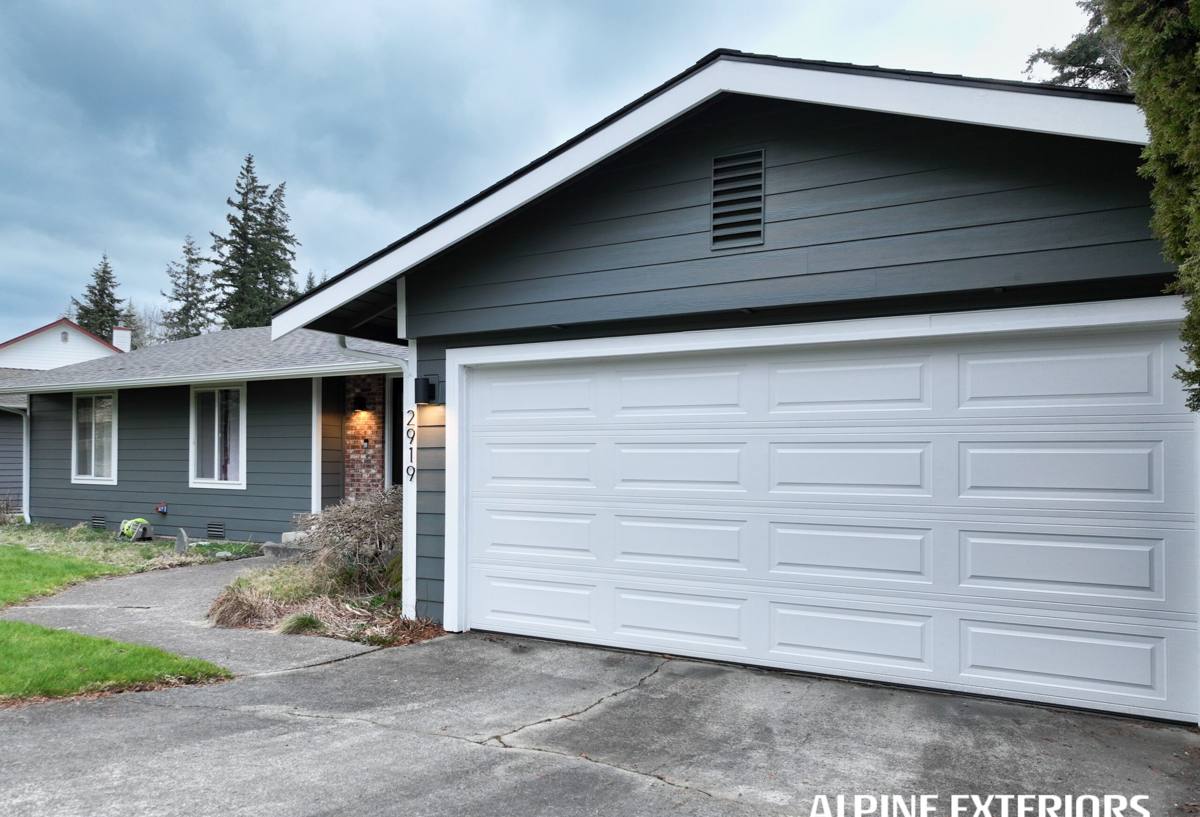
What Bellingham's Climate Actually Does to Siding
Salt Air and Coastal Moisture
Even homes set back from the water pick up salt-bearing moisture carried on marine air. Over time, that moisture accelerates corrosion of exposed fasteners and trim metal, and it speeds up the breakdown of coatings that aren't formulated to handle it. Siding with a weak factory finish will chalk, fade, or peel faster in this environment than the same product installed somewhere drier and further inland.
Driving Rain and Wind-Driven Moisture
Bellingham's rain doesn't just fall straight down — wind off the bay and through the lowlands regularly pushes it sideways into wall assemblies. That means water finds its way behind poorly lapped siding, undersized flashing, and gaps at butt joints. The siding material matters, but the water management behind it — house wrap, flashing, proper laps, drainage gaps — matters just as much.
Long Moss and Algae Season
Shaded walls, damp ground, and mild temperatures give moss and algae a long growing window here compared to drier climates. Porous or absorbent siding materials hold moisture at the surface longer, which gives organic growth more time to establish. Siding that sheds water quickly and doesn't wick moisture into its core resists this far better.
Why We Install Only James Hardie Fiber Cement
We get asked regularly why we don't offer vinyl, LP SmartSide, or other fiber cement brands. The honest answer: for the conditions Bellingham homes actually face, James Hardie is the product we trust to hold up correctly over the long term, and we don't want our name on installations we're not confident in.
- Non-combustible core — fiber cement doesn't feed a fire the way wood-based products can, which matters for insurance and safety alike.
- ColorPlus factory finish — baked-on, UV-cured color designed to resist fading and chalking better than field-applied paint, which matters in a salt-air environment.
- HZ5 engineered formulation — Hardie's HZ5 product line is engineered for the wetter, freeze-thaw-adjacent Pacific Northwest climate zone rather than a one-size-fits-all formulation.
- Dimensional stability — fiber cement expands and contracts far less than wood or engineered wood siding, which means fewer cracked caulk lines and fewer gaps opening up over time.
- Strong transferable warranty — a real, well-documented manufacturer warranty backing both the material and the finish, which holds up when a home changes hands.
None of this means other products are without merit — vinyl is inexpensive and low-maintenance in mild climates, and engineered wood has a warmer look some homeowners prefer. But for the specific stresses Bellingham throws at a wall assembly, Hardie is what we're willing to stand behind.
What a Correct Fiber Cement Installation Involves
Fiber cement siding is only as good as the installation behind it. A rushed or undersized job can undercut even the best material. On a proper install, our crew handles:
Water Management First
Before a single piece of siding goes up, we confirm the house wrap or weather-resistant barrier is intact and properly lapped, flashing is installed at every window, door, and penetration, and a drainage plane exists so any moisture that gets behind the siding has somewhere to go besides the sheathing.
Fastening and Clearances to Spec
James Hardie's installation instructions specify fastener type, spacing, and minimum clearances from grade, roofing, and decks. Skipping these details is one of the most common ways fiber cement installations fail early — not because the material was wrong, but because it wasn't installed to the manufacturer's standard.
Caulking and Joint Treatment
Butt joints, corners, and trim intersections need to be sealed correctly with compatible sealants. In a climate with this much driving rain, a poorly sealed joint is a direct path for water intrusion.
Painting and Field-Cut Edge Sealing
Any field cuts expose raw fiber cement edges that need to be sealed and back-primed or coated per Hardie's guidance, protecting the cut edge from moisture absorption — a detail that's easy to skip and costly to skip in a wet climate.
Our Process, Start to Finish
- On-site assessment — we look at your current siding, existing moisture damage, trim condition, and any problem areas specific to your home's exposure.
- Product and color selection — we walk through Hardie's plank, shingle, and panel options along with ColorPlus color choices suited to your home.
- Detailed written estimate — scope, materials, and timeline laid out clearly before any work begins.
- Tear-off and substrate inspection — we don't cover up rot or hidden moisture damage; anything found gets addressed before new siding goes on.
- Weather barrier and flashing install — the water management layer, done to spec, not shortcut.
- Hardie siding installation — fastened, spaced, and sealed per manufacturer requirements.
- Final walkthrough — we go over the completed work with you before calling the job done.
Why a Crew That Already Works Bellingham Matters
Siding work isn't just about the product — it's about judgment calls made on site. A crew that regularly works in Bellingham and greater Whatcom County already knows which wall orientations take the worst of the driving rain, which older homes tend to have hidden moisture damage behind original siding, and how much clearance to leave near grade given how wet the ground stays for much of the year. That local pattern recognition shows up in fewer surprises during tear-off and a install that's built for the conditions your home actually faces, not a generic checklist.
Comparing Siding Options for a Bellingham Home
| Factor | James Hardie Fiber Cement | Vinyl | Engineered Wood (e.g. LP SmartSide) |
|---|---|---|---|
| Moisture resistance | High when installed to spec; engineered core resists water damage | Won't absorb water, but can trap moisture behind it if installed poorly | Wood-based core is more vulnerable to moisture intrusion over time |
| Salt air / coastal durability | Factory finish holds up well; HZ5 formulated for wetter climates | Can become brittle and fade faster under UV and salt exposure | Finish and edges need diligent maintenance in salt air |
| Fire resistance | Non-combustible | Can soften or melt under heat | Combustible, wood-based product |
| Moss/algae resistance | Sheds water well; less surface moisture retention | Sheds water well; smooth surface resists growth | More porous surface can hold moisture longer |
| Maintenance over time | Low; factory finish reduces repainting needs | Low, but color can fade and become chalky | Moderate to high; edges and finish need monitoring |
Cost Factors to Understand Before You Budget
Every home is different, but the main variables that move the price of a fiber cement siding project are consistent:
- Total square footage and the complexity of the home's shape (dormers, gables, multiple stories)
- Condition of the existing wall assembly — whether hidden rot or moisture damage needs repair before new siding goes on
- Siding profile chosen (lap, shingle, or panel) and trim details
- Whether it's a full replacement or a partial/addition match to existing siding
- Accessibility of the home (steep lots, limited staging area) which affects labor time
We give a detailed, written estimate after an on-site look — we don't quote sight-unseen numbers that fall apart once tear-off starts.
Signs Your Bellingham Home May Need Siding Attention Now
- Persistent moss or dark streaking that returns shortly after cleaning
- Soft spots, bubbling, or visible warping in existing siding panels
- Paint that's peeling or chalking heavily, especially on walls facing prevailing wind and rain
- Gaps opening at butt joints or corners where caulking has failed
- Musty smells or visible staining on interior walls that share an exterior wall
If you're seeing any of these signs, or you're simply planning ahead for a Bellingham-area home, we're happy to take a look and walk you through what correct James Hardie fiber cement siding would involve for your specific house. Reach out for a free, no-pressure estimate using the form below.