 Birch Bay Roofing
 Why Roofs Near Bellingham Wear Out Faster Than the National Average Suggests
Most of the roofing advice you'll find online is written for a generic climate that doesn't really exist in Whatcom County. Homes around Bellingham deal with a specific combination of stresses: salt-laden air drifting off the Salish Sea, long stretches of driving rain pushed in by Pacific weather systems, and a moss season that, realistically, never fully ends. None of these factors are dramatic on their own. Together, over ten or fifteen years, they shorten the useful life of a roof that was installed without them in mind.
Salt air is corrosive to exposed metal — fasteners, flashing, gutter hardware — long before most homeowners notice anything wrong. Driving rain doesn't just fall straight down; wind pushes it sideways and up under shingle edges, which is why flashing and underlayment details matter more here than in drier inland regions. And moss doesn't just sit on top of a roof looking messy — it holds moisture against the shingle surface and works its way under tabs and around fasteners, which is where real damage starts.
A new roof installed for this area needs to be built with all three of these realities in mind from the start, not patched for them later.
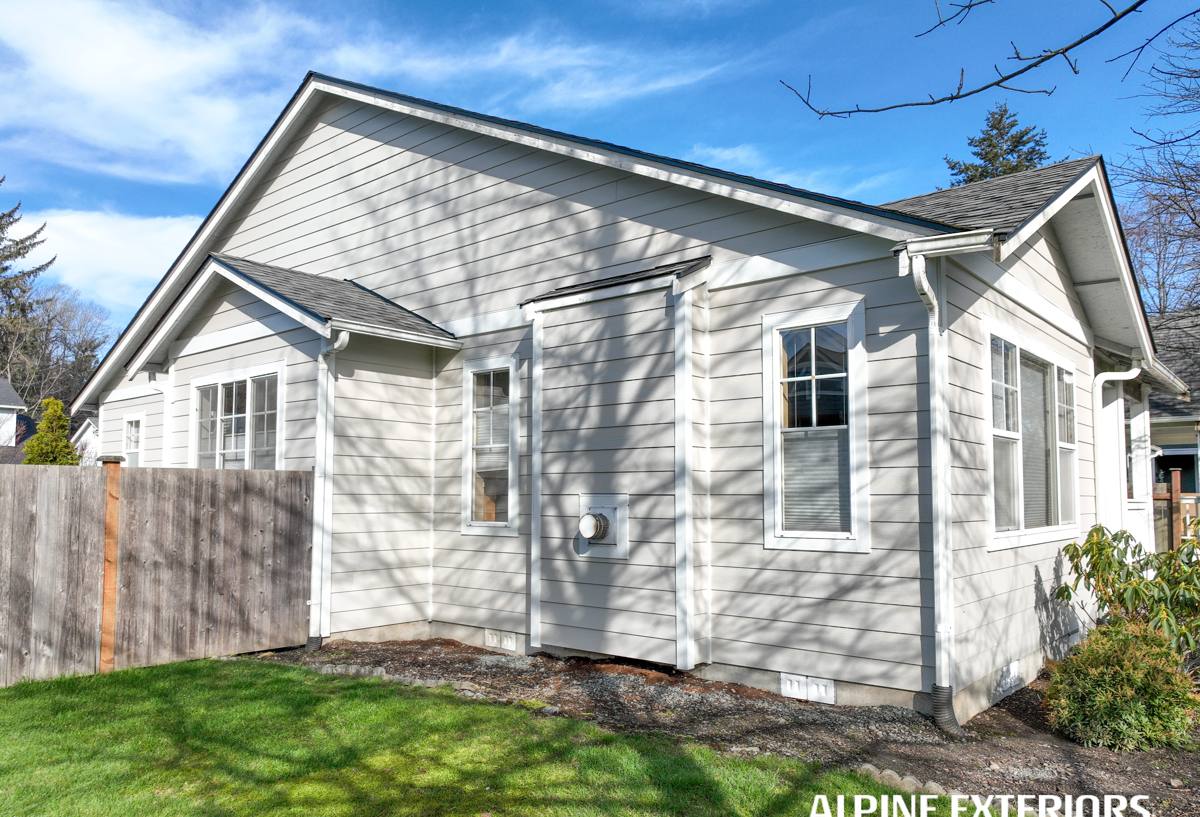
Signs a Repair Won't Cut It Anymore
Age and Accumulated Damage
Most asphalt roofs in this climate are realistically due for replacement somewhere in their late second decade, sometimes sooner if the original installation skimped on ventilation or underlayment. If your roof has already had two or three repairs for separate leaks, or if a contractor has told you the decking is showing soft spots, you're past the point where another patch makes financial sense.
Visible Wear You Can Check From the Ground
- Shingles that are curling, cupping, or losing granules in visible patches
- Moss or dark streaking that keeps coming back within months of cleaning
- Sagging along the ridge line or over the eaves
- Rusted or lifted flashing around chimneys, vents, or skylights
- Daylight visible through the attic roof boards, or damp insulation after a storm
- Granules collecting in gutters or at downspout outlets
Any one of these on its own might just need attention. Several at once usually means the roof system as a whole is failing, not just one section of it.
What a Correct New Roof Installation Actually Involves
Tear-Off and Deck Inspection
A proper installation starts with a full tear-off down to the decking, not a layover on top of old shingles. This is the only point in the whole job where the crew can actually see the plywood or OSB underneath and check it for rot, delamination, or soft spots caused by long-term moisture. Skipping this step, or only spot-checking it, is how hidden problems get sealed under a brand-new roof.
Underlayment and Moisture Protection
Given how much wind-driven rain this area sees, the underlayment layer is doing more work than in drier climates. Synthetic underlayment across the full deck, with self-adhering ice-and-water membrane at the eaves, valleys, and around any roof penetrations, gives the structure a real second line of defense if water ever gets past the shingles themselves — which, over enough storms and enough years, it eventually will at some point on any roof.
Ventilation
A roof that can't breathe stays damp longer after every rain, and a damp roof is exactly what moss and algae need to take hold. Balanced ventilation — intake at the soffits, exhaust at the ridge — lets the roof deck dry out between storms instead of staying wet for days. This is one of the most overlooked details in older installations and one of the biggest contributors to premature moss growth and shingle failure.
Flashing and Edge Details
Chimneys, skylights, valleys, and wall intersections are where the large majority of roof leaks actually start — not in the open field of shingles. Properly formed and step-flashed metal at these transitions, sealed and layered correctly with the underlayment and shingles, is what keeps driving rain from finding its way in sideways during a real windstorm.
Choosing a Roofing Material for This Climate
There's no single "best" material for every home — it depends on your budget, your roof's pitch and shape, and how much long-term maintenance you're willing to do. Here's an honest comparison of the main options we install, specifically weighed against salt air, heavy rain, and moss pressure.
| Material | Moss & Moisture Resistance | Wind/Rain Performance | Typical Maintenance |
|---|---|---|---|
| Architectural asphalt shingle | Good, with proper ventilation | Strong when properly fastened and flashed | Periodic cleaning, moss checks |
| Standing seam metal | Excellent — sheds moss, minimal organic growth | Excellent in wind and rain | Low; occasional fastener/seam check |
| Synthetic/composite shake | Very good, engineered for moisture | Strong | Low to moderate |
| Natural cedar shake | Requires ongoing treatment to resist moss and rot | Good when well-maintained | High — regular treatment needed |
We'll be direct about cedar: it can look great, but in a climate this damp it demands a level of ongoing upkeep — treatments, inspections, replacement of individual shakes — that most homeowners underestimate when they choose it. We're happy to install it for clients who understand and want to commit to that maintenance schedule, but we'll always walk you through that trade-off honestly before you decide.
Our New Roof Installation Process
- On-site inspection of your current roof, attic ventilation, and decking condition
- A written estimate with material options and a clear breakdown of scope
- Permitting handled with the local jurisdiction before work begins
- Full tear-off, haul-away, and deck inspection
- Any needed decking repair before a single new shingle goes down
- Installation of underlayment, ice-and-water membrane, and flashing
- Installation of the finish roofing material per manufacturer specification
- Final walkthrough, cleanup, and magnetic sweep of the yard for stray fasteners
We don't skip steps to save a day on the schedule. A new roof is only as good as the layers nobody sees once it's finished.
Why Local Experience in the Bellingham Area Actually Matters
Roofing crews that only occasionally work this far north and this close to the water tend to build to a generic spec sheet. Crews who work Whatcom County regularly know which valleys collect the most standing water in a hard rain, which exposures take the worst of the wind, and how aggressively moss will come back on a north-facing slope shaded by evergreens. That local pattern recognition shapes real decisions — where extra flashing is worth the cost, where a slightly different underlayment approach makes sense, how much ventilation is actually needed for a given roof shape.
It also matters for warranty follow-up. If a fastener works loose after a windstorm or a flashing detail needs a second look, you want a crew that's local enough to come back out without a multi-hour drive being the reason it gets delayed.
What Drives the Cost of a New Roof
We won't quote a number without seeing your roof, but these are the real factors that move the price up or down, in roughly the order they matter:
| Factor | Why It Matters |
|---|---|
| Roof size and pitch | More surface area and steeper slopes mean more material and labor time |
| Material choice | Asphalt, metal, and composite carry different material costs and install labor |
| Number of existing layers | Tearing off multiple old layers adds labor and disposal cost |
| Decking condition | Rotted or soft plywood/OSB sections need replacement before installation |
| Roof complexity | Valleys, dormers, chimneys, and skylights all add flashing time |
| Access and site conditions | Steep lots, tight setbacks, or overhead obstructions affect setup and safety measures |
Two roofs of the same square footage can come in at very different prices once these factors are accounted for — which is why we always inspect in person before giving a real number.
Keeping Moss From Shortening Your New Roof's Life
A well-installed roof with good ventilation will resist moss far better than an older one, but no roof in this region is completely moss-proof. A little ongoing attention goes a long way toward protecting the investment.
- Trim back overhanging branches that keep sections of the roof shaded and damp
- Keep gutters and downspouts clear so water isn't backing up under the roof edge
- Have moss growth removed gently and early, before it works under shingle tabs
- Avoid pressure washing shingles directly — it can strip protective granules and shorten the roof's life faster than the moss would
- Schedule a roof check after major storms, especially high-wind events
- Ask about zinc or copper control strips at installation if moss has been a recurring problem on your property
None of this replaces a professional inspection every couple of years, but it's the difference between a roof that reaches its full expected lifespan and one that starts needing attention early.
If your roof is showing its age, or you just want an honest read on whether repair or replacement makes more sense for your home, we're glad to take a look. Fill out the form below for a free, no-pressure estimate — we'll walk the roof, explain what we see, and give you a straight answer.