 Birch Bay Roofing
 Board & Batten Siding Built for Sandy Point's Waterfront Exposure
Sandy Point sits right up against the water, and that changes what a siding job actually needs to hold up. Homes here take a steadier dose of salt-laden air, wind-driven rain, and shaded, damp conditions than houses just a mile or two inland. Board and batten siding is one of the most popular looks for this stretch of coastline — the vertical lines read as classic Northwest coastal or modern farmhouse, and it works well on everything from a cottage-style beach house to a larger rebuild. But the look only holds up if the assembly behind it is built for the exposure Sandy Point actually gets, not the exposure a general siding spec assumes.
This page is about that one job, in that one place: what board and batten siding needs to do here, what a correct installation actually involves, and why we install it exclusively in James Hardie fiber cement rather than the wood or engineered wood versions you'll also see quoted.
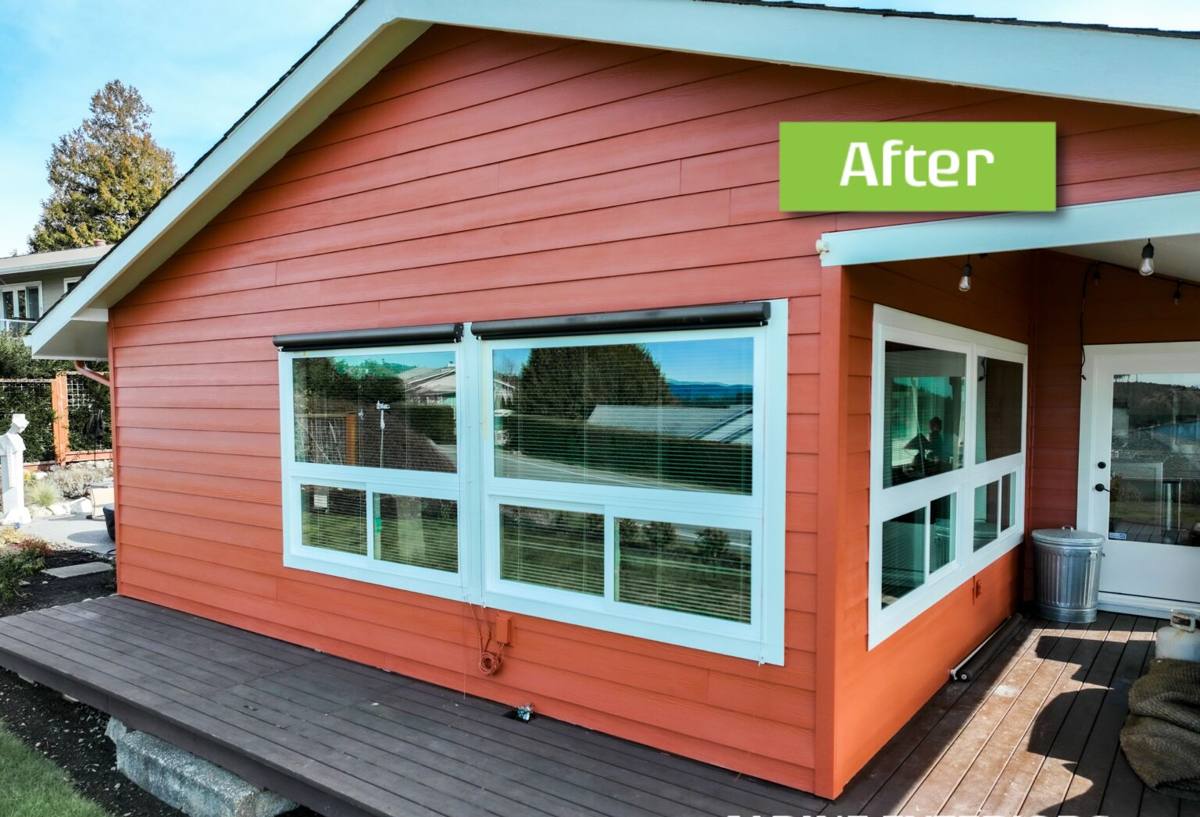
Why Sandy Point's Climate Is Tougher on Vertical Siding
Board and batten is a vertical siding profile — wide boards or panels with narrower battens covering the seams between them. That vertical orientation is part of the appeal, but it also means every seam is running with gravity instead of shedding water sideways the way horizontal lap siding does. On a standard inland home that's a minor detail. On a Sandy Point waterfront lot, it's the detail that decides whether the siding lasts fifteen years or forty.
Salt Air
Airborne salt from Puget Sound and Birch Bay accelerates corrosion on anything metal — fasteners, flashing, trim caps — and it settles into porous or improperly sealed wood fiber over time. Materials and fastener hardware that would be fine a few miles inland need to be upgraded near the water.
Driving Rain
Wind off the water doesn't just fall as rain, it drives it sideways into the wall assembly. Vertical siding with battens creates more seams for wind-driven rain to find than a lapped horizontal profile does, which is exactly why the water-resistive barrier and flashing details behind the boards matter more here than the boards themselves.
A Long Moss Season
Western Whatcom County's wet season runs long, and shaded north- and west-facing walls near mature trees or close neighboring structures stay damp for extended stretches. Moss and algae need that sustained moisture to take hold, and once established they hold even more water against the siding surface, feeding a cycle that a lot of siding products simply aren't built to resist over decades.
None of this means board and batten is a bad choice for Sandy Point — it's a great-looking, appropriate style for this coastline. It means the material and the installation both have to be matched to the exposure, not just the aesthetic.
What a Correct Board & Batten Installation Actually Involves
The finished look of board and batten siding — clean vertical lines, crisp shadow lines at the battens — hides most of what actually determines its lifespan. That work happens in layers most homeowners never see once the job is done.
- Water-resistive barrier: A continuous, properly lapped house wrap or building paper behind the siding, installed so every seam sheds water downward and outward, not into the wall.
- Rainscreen or furring strips: A gap between the back of the siding and the wall assembly lets any water that does get past the siding drain and dry instead of sitting against the sheathing — especially important on the shaded, damp walls common near Sandy Point's tree cover.
- Flashing at every penetration: Windows, doors, hose bibs, light fixtures, and any other wall penetration need proper flashing integrated with the water-resistive barrier, not just caulk.
- Correct fastener spacing and type: Board and batten panels expand and contract with temperature and moisture; fasteners have to be placed and spaced to allow for that movement without splitting the board or backing out over time.
- Corrosion-resistant hardware: Given the salt air exposure this close to the water, fastener and flashing material needs to be rated for coastal conditions, not standard interior-grade hardware.
- Sealed, factory-finished edges: Cut ends and exposed edges need to be sealed according to the manufacturer's installation instructions — this is one of the most commonly skipped steps on rushed jobs, and it's where premature failure usually starts.
Skip any one of these and the siding can still look right for a year or two. The failures show up later — behind the boards, where nobody's looking until there's a problem.
Why We Install James Hardie — Not Wood, Not Engineered Wood, Not Vinyl
Board and batten is available in several materials, and homeowners in Sandy Point will get quotes for more than one. We install James Hardie fiber cement exclusively, and given the exposure here, that's not a marketing preference — it's a practical one.
| Material | How it handles salt air & driving rain | Long-term maintenance |
|---|---|---|
| James Hardie fiber cement | Non-combustible, engineered to resist moisture-driven warping and swelling; ColorPlus factory finish resists fading and salt exposure | Occasional wash; no repainting cycle with ColorPlus finish; long transferable warranty |
| Solid wood or primed spruce boards | Absorbs moisture at end grain and seams; prone to swelling, cupping, and rot in sustained damp conditions | Repainting and caulk maintenance every few years; higher risk of rot repair near the waterline |
| Engineered wood (e.g. LP SmartSide) | Better than solid wood but still wood-based; edge sealing and joint maintenance are critical to prevent moisture wicking | Requires diligent caulk and paint upkeep; performance depends heavily on installation quality |
| Vinyl board & batten panels | Won't rot, but can warp or become brittle with UV and temperature swings; seams are a weak point for wind-driven rain | Low maintenance but limited repairability; color is baked in and can't be refreshed |
Wood and engineered wood siding aren't bad products in the right setting — they can look great and perform well when maintenance is kept up. Our issue is what happens when that maintenance slips, which is common with second homes and rental properties, both of which are common in Sandy Point. Wood-based sidings depend on an intact paint or sealant film to keep moisture out; once that film fails at a seam or cut edge, the substrate underneath starts absorbing water, and in a climate with this much sustained dampness, that clock runs faster than most homeowners expect. Vinyl avoids the rot question but trades it for brittleness, fading, and seams that aren't built to the same standard as a fiber cement rainscreen assembly.
James Hardie's fiber cement is non-combustible and engineered specifically for climate exposure like this, with product lines built around moisture and temperature performance. The ColorPlus factory finish is baked on under controlled conditions, which holds up better against salt air and UV than a field-applied paint job, and it comes with a real transferable warranty backing the material. For a vertical profile like board and batten, where every seam is doing double duty as a design line and a water-management joint, that durability matters more than it does on a simpler horizontal wall.
Our Process for a Sandy Point Board & Batten Job
The steps are the same as any quality siding install, but the details we pay closest attention to are shaped by this location.
1. On-Site Assessment
We look at wall orientation, tree cover, and how close the home sits to the water, since that determines how much rainscreen gap and flashing detail the job needs. We also check the existing sheathing and any current siding for moisture damage before quoting the job.
2. Prep and Water Management
Removal of old siding where needed, repair of any damaged sheathing, and installation of a continuous water-resistive barrier and rainscreen system built for the wall's actual exposure.
3. Board & Batten Installation
Hardie boards and battens installed to manufacturer spec — correct fastener type and spacing, proper reveal and batten alignment, and every penetration flashed before it's covered.
4. Trim, Corners, and Sealing
Corner boards, trim, and cut-edge sealing finished to hold the clean lines that make board and batten look good, without leaving an exposed seam for wind-driven rain to exploit.
5. Final Walkthrough
We walk the job with the homeowner, cover basic care, and go over the warranty coverage before calling it done.
Keeping Board & Batten Siding Looking Right in This Climate
- Rinse siding annually, and more often on shaded or tree-covered walls where moss and algae get a head start
- Keep gutters clear so roof runoff isn't dumping extra water down the wall face
- Trim back vegetation and tree limbs that keep walls shaded and damp longer than they need to be
- Check caulking at trim and penetrations every couple of years — even with fiber cement, the sealant at joints is a maintenance item
- Have any impact damage or loose boards looked at promptly rather than waiting for a bigger repair
Why Hiring a Crew That Already Works Sandy Point Matters
Board and batten installation quality varies a lot more than most homeowners assume, and the mistakes that cause problems aren't visible at handoff — they show up two, five, or ten years later as water intrusion behind the wall. A crew that regularly works this specific stretch of Birch Bay coastline already knows which walls need extra flashing attention, how much rainscreen gap makes sense for a shaded, close-to-water lot, and what fastener and hardware spec actually holds up against the salt air here instead of guessing from a generic spec sheet. That local pattern recognition is the difference between a siding job that looks good for a season and one that's still doing its job decades out.
If you're weighing board and batten siding for a home in Sandy Point, we're happy to take a look and walk you through what your specific wall exposure needs. Reach out for a free, no-pressure estimate — there's a form right below.