 Birch Bay Roofing
 Why Point Roberts Homes Are Hard on Windows
Point Roberts sits out on its own point, surrounded by water on three sides, which means every window on the property is dealing with conditions that inland Whatcom County homes rarely see in the same combination. Salt-laden air, wind-driven rain, and a moss season that can stretch from fall through spring all work on window frames, seals, and hardware at the same time. A window built for a typical suburban lot doesn't always hold up out here the way homeowners expect.
Salt Air and Hardware Corrosion
Constant exposure to salt air is hard on anything metal. Window hardware, screen frames, and some cladding fasteners can start showing corrosion years before they would in a non-coastal setting. This doesn't mean every metal component fails — it means the wrong hardware choice, or the wrong finish, shortens the window's useful life. We factor salt exposure into what hardware and finishes we recommend, especially for windows facing open water.
Driving Rain and Water Intrusion
Storms coming off the water don't just drop rain straight down — wind pushes it sideways and up under trim, sills, and poorly sealed joints. Water intrusion around windows is one of the most common problems we find on service calls, and it's rarely the glass or the sash that's the actual failure point. It's almost always the flashing, the sealant, or the way the window was set into the rough opening in the first place.
Moss and Sustained Moisture
Whatcom County's long wet season keeps north-facing and shaded walls damp for months at a time, and that dampness is exactly what moss needs to establish itself around window trim, sills, and butt joints. Once moss gets a foothold, it holds moisture against wood and painted surfaces far longer than open air would, which accelerates rot in frames and trim that aren't properly sealed or detailed.
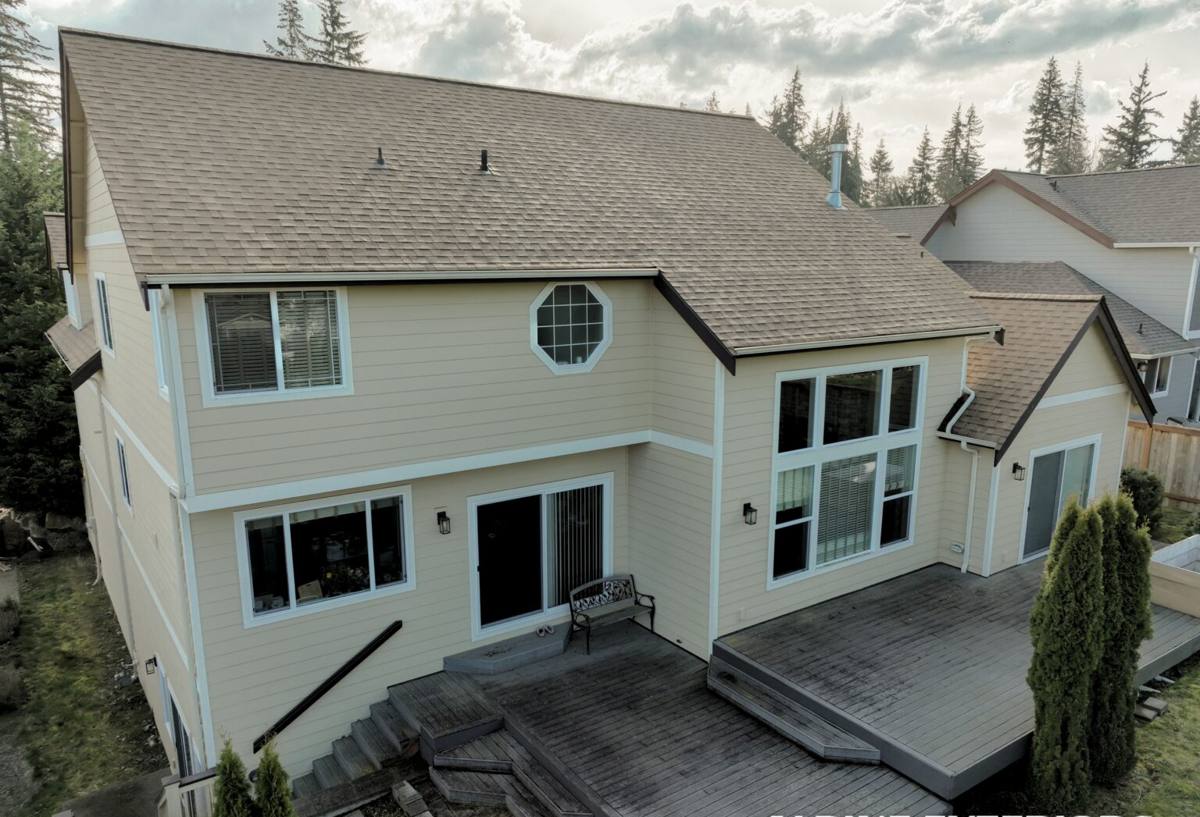
Point Roberts Access and Why It Changes the Job
Point Roberts is a geographic exclave — the only way to reach it by land from the rest of Whatcom County is through Canada. That's not a small detail for a construction project. Materials, tools, and crew all have to cross an international border to get to the job site, which means scheduling, permitting for cross-border transport of equipment, and even simple things like a mid-day supply run all take more planning than they would on a typical mainland job.
A lot of contractors either quote Point Roberts jobs high to cover the hassle, or avoid the area altogether. We already work this route regularly, so border logistics are part of our normal scheduling rather than an unpredictable delay. That matters for custom window projects specifically because window openings can't sit exposed to the weather for long — if a supplier delay or a border delay stretches a same-day install into a multi-day gap, an open rough opening in a Point Roberts storm is a real problem.
What a Correct Custom Window Installation Actually Involves
"Custom windows" gets used loosely in this trade. For us it means the window is sized, detailed, and installed to fit the actual opening and the actual exposure of that wall — not a generic stock unit dropped into a rough opening and caulked around the edges.
Rough Opening Prep
Before any window goes in, we check the rough opening for square, level, and — critically on older Point Roberts homes — for hidden rot from years of moisture exposure. Setting a new window into a compromised opening just moves the problem inside the wall where it's harder to find later.
Flashing and Water Management
This is the step that actually keeps water out, and it's the one most often shortcut. Proper flashing directs any water that gets past the exterior cladding back out and away from the framing, using a shingled, gravity-fed sequence at the sill, jambs, and head. On a coastal, wind-driven-rain property like this one, we don't treat flashing as optional or as something a bead of caulk can substitute for.
Sealing and Insulation
Around the window unit itself, the gap between the frame and the rough opening gets properly insulated and air-sealed — not overpacked with insulation, which can actually distort the frame, and not just caulked at the exterior trim and left hollow behind it. Exterior sealant joints are chosen for movement and UV exposure, since coastal sun and salt both degrade cheaper sealants faster than they would inland.
Choosing the Right Window Material for This Exposure
Material choice matters more here than on a sheltered inland lot. Here's how the common options hold up against salt air, driving rain, and sustained moisture:
| Material | Salt Air Performance | Moisture/Rot Risk | Maintenance |
|---|---|---|---|
| Vinyl | Good — won't corrode or rust | Low, but seals and hardware still need checking | Low |
| Fiberglass | Very good — stable, doesn't pit or corrode | Low | Low to moderate |
| Aluminum | Fair — can pit/corrode over time without a marine-grade finish | Low for the frame itself, but condensation-prone | Moderate |
| Wood / Wood-Clad | Fair — exposed wood needs diligent upkeep near salt air | Higher if finish or cladding is compromised | Higher |
We don't push one material on every job. A wood-framed window can look great and perform well on a covered, protected elevation; the same window on an open, water-facing wall is a maintenance commitment we'll tell you about honestly before you commit to it. Our standard recommendation for exposed elevations in Point Roberts leans toward vinyl or fiberglass for the frame, because both resist the salt and moisture cycle with less ongoing upkeep — but the right call always depends on the specific wall, the home's style, and what you're willing to maintain.
Our Process, Start to Finish
- On-site assessment — we look at each window opening individually, including sill condition, existing flashing (if any is visible), and signs of past water intrusion.
- Honest scope and estimate — you get a clear breakdown of what's being replaced, what materials we're recommending and why, and a realistic timeline that accounts for Point Roberts logistics.
- Material and hardware selection — matched to the wall's exposure, not a one-size answer for the whole house.
- Removal and opening inspection — old units come out carefully so we can check framing before anything new goes in.
- Install with proper flashing sequence — sill pan, jamb flashing, head flashing, in that order, before the window is ever sealed at the exterior.
- Interior and exterior finish work — insulation, air sealing, trim, and sealant matched for coastal UV and salt exposure.
- Final walkthrough — we check operation, seals, and finish with you before calling the job done.
Signs Your Current Windows Are Already Failing
A lot of window problems in this area show up slowly, as small issues that get written off until they're expensive. Watch for:
- Soft or discolored trim or sill wood around the window frame
- Moss or dark streaking developing on or near the window trim
- Fogging or condensation between panes on double-glazed units
- Drafts you can feel around the frame on windy days
- Windows that stick, won't latch fully, or are harder to open than they used to be
- Visible gaps or cracked/missing sealant at the exterior trim joints
- Corrosion or stiffness in window hardware and hinges
Any one of these on its own isn't necessarily an emergency, but they're worth a look before the next storm season adds to the damage.
What Drives the Cost of a Custom Window Project
Every job is different, but the main variables that move the price on a Point Roberts window project are consistent:
| Factor | Why It Matters |
|---|---|
| Window size and configuration | Larger units, custom shapes, and multi-panel configurations cost more in both materials and labor. |
| Material choice | Vinyl is typically the most budget-friendly; fiberglass and wood-clad units run higher. |
| Extent of rot or framing repair | Hidden damage found once the old window is out can add scope — we flag this before proceeding, not after. |
| Number of openings | Whole-house replacement generally has a lower per-window cost than one-off jobs due to setup efficiency. |
| Access and logistics | Point Roberts's border-crossing access is factored into scheduling, not typically a major cost driver for an established local crew. |
As a general range, homeowners in this area typically see quotes anywhere from several hundred to a couple thousand dollars per window installed, depending on the factors above. We'll give you actual numbers for your specific windows and openings — we don't work off a generic per-window rate that ignores what your house actually needs.
Why a Crew That Already Works Point Roberts Matters
Beyond the border-crossing logistics, working this area regularly means we've seen how Point Roberts homes actually age — which elevations take the worst weather, where moss tends to establish first, and which older installation methods are now causing problems decades later. That local pattern recognition is part of what an honest assessment is built on, not something we're guessing at from a manual.
We also stand behind the work with follow-up service in the same area we already serve, which matters more here than in places where any contractor can swing by easily. If a seal needs a look two years down the road, we're not a special trip — we're already in the area.
If your windows are showing wear, or you're planning a renovation that includes new custom windows, we'll come out, look at what you actually have, and give you a straightforward, no-pressure estimate. Use the form below to get started.