 Birch Bay Roofing
 Storm Damage Roof Repair for Lynden Homes
When a windstorm rolls through Whatcom County, it rarely announces itself with a single dramatic event. More often it's a night of gusts pulling at loose shingle tabs, rain driving sideways under flashing that was never quite sealed right, and a limb coming down somewhere it shouldn't have. By the time a homeowner in Lynden notices a stain on the ceiling or a shingle in the yard, the actual damage has usually been sitting up there for days or weeks, quietly getting worse. Birch Bay Roofing Co repairs storm-damaged roofs the way they need to be repaired for this region: correctly, with materials that match what's already on the roof, and with an eye toward the next storm, not just this one.
This page is specifically about storm damage repair for the Lynden area. It's not a generic "we fix roofs" page — it's what we've learned works, and what fails, when Pacific Northwest weather meets an ordinary asphalt or composition roof over a few years.
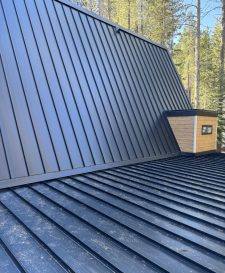
What Whatcom County Weather Does to a Roof
Roofs in this part of Washington don't usually fail from one big event. They fail from repetition — the same weather pattern hitting the same weak points, season after season, until something gives.
Wind-Driven Rain and Uplift
Storms coming off the water push rain sideways, not straight down. That matters because a roofing system is designed to shed water moving downhill, not rain being forced horizontally under shingle edges, around vent boots, and up under ridge caps. Add gusty wind and you also get uplift — shingles flexing and lifting at the tab, which breaks the seal strip underneath even if the shingle doesn't blow off outright. A roof can look intact from the ground and still have dozens of broken seals after a bad windstorm.
A Long Moss Season
Whatcom County's damp, mild stretches give moss a long window to establish itself, and moss does real damage, not just cosmetic. It holds moisture against the shingle surface, works its way under tabs and around granules, and over time it lifts edges just enough for wind-driven rain to get underneath. A roof that's been carrying a moss load into a storm is far more likely to leak than a clean one, because the moss has already compromised the seal before the wind ever showed up.
Debris and Impact Damage
Mature trees are common throughout this area, and wind events bring down limbs, cones, and occasionally whole branches. Impact damage can crack shingles, dent gutters, and knock loose or puncture flashing — and it's not always obvious from the ground. A cracked shingle doesn't always show a visible hole; it shows up later as a slow leak that seems to come from nowhere.
Signs Your Roof Needs a Storm Damage Inspection
Most storm damage is repairable if it's caught early. Left alone, the same damage turns into rot, insulation loss, and interior repairs that cost far more than the roof work would have. After any significant wind or rain event, it's worth checking for:
- Shingle tabs that look lifted, curled, or out of alignment compared to the rest of the roof
- Granules collecting in gutters or at downspout outlets — a sign of shingle surface wear or impact
- Visible gaps or movement at ridge caps and hip lines
- New or worsening moss growth concentrated in one area, often a sign water is sitting there longer than it should
- Water stains on ceilings or upper interior walls, even faint or old-looking ones
- Flashing that looks bent, pulled away from the roof plane, or missing around chimneys, skylights, and vent pipes
- Sagging or soft spots when the roof is safely viewed or walked by a professional
- Debris — branches, cones, needles — built up in valleys where water is supposed to flow freely
If any of these are present, the smart move is an inspection before the next storm, not after it causes an interior leak.
What a Correct Storm Damage Repair Actually Involves
Storm damage repair has a bad reputation in some circles because it's easy to do badly — slap a patch over the visible problem and move on. Done right, it's more deliberate than that.
Inspection Before Anything Else
We start on the roof, not from a photo or a guess. That means checking not just the obviously damaged section but the surrounding courses, the decking underneath if there's any sign of moisture intrusion, and the flashing details nearby. Storm damage is rarely confined to exactly the spot that's visibly broken — wind and water travel, and a proper inspection follows that path.
Matching Materials, Not Guessing
Whenever an existing roof still has useful life left, we repair with materials that match the existing shingle profile, color line, and exposure as closely as possible, and we work within the manufacturer's installation specifications for that product. A repair that doesn't match the surrounding roof isn't just a cosmetic mismatch — mismatched shingle profiles can create uneven exposure and new water pathways where none existed before.
Flashing, Underlayment, and the Details That Get Skipped
Most roof leaks trace back to flashing and underlayment, not the shingles themselves. A repair that replaces shingles but reuses old, bent, or improperly lapped flashing is a repair that's going to leak again. We replace flashing and underlayment sections as needed rather than working around them, because that's usually where the actual failure point is.
Repair vs. Replacement: How We Make the Call
Not every storm-damaged roof needs to come off. But sometimes storm damage is the thing that finally reveals a roof that was already near the end of its service life. We walk homeowners through the honest comparison rather than defaulting to the bigger job.
| Factor | Favors Repair | Favors Replacement |
|---|---|---|
| Roof age | Roof is well within its expected service life | Roof is already near or past typical lifespan for its material |
| Extent of damage | Damage is localized to one section or slope | Damage is widespread or found in multiple unrelated areas |
| Underlying decking | Decking is sound with no rot or soft spots | Decking shows moisture damage in more than one area |
| Shingle condition elsewhere | Remaining shingles are still flexible and granule-intact | Remaining shingles are brittle, cracking, or heavily worn |
| Moss/algae history | Minimal or well-managed moss growth roof-wide | Chronic moss problems across most of the roof surface |
We'll always give a straight answer on which side of that table your roof falls on, and why — not the answer that happens to be the bigger invoice.
Our Process, Start to Finish
1. Inspection and Documentation
We inspect the full roof, not just the reported problem area, and document what we find with photos so you can see exactly what's driving the recommendation.
2. A Clear Estimate With Real Options
You get a written estimate that spells out the scope of work, the materials involved, and — when repair versus replacement is genuinely a close call — the trade-offs of each option in plain terms.
3. The Repair Itself
Work is done to manufacturer installation standards, matching materials where a full replacement isn't warranted, and addressing flashing and underlayment as part of the fix rather than treating them as separate from it.
4. Cleanup and a Final Look
We clear debris and old material from the site, do a final walk of the completed work, and make sure you understand what was done and why — including anything worth keeping an eye on going forward.
Storm Damage and Insurance Claims
Many storm damage repairs are eligible for coverage under a homeowner's insurance policy, but every policy and every claim is different, and we're not in a position to promise coverage or interpret your policy for you. What we can do is provide clear, photo-documented findings that describe the damage, its likely cause, and the scope of repair needed — the kind of documentation an adjuster needs to evaluate a claim fairly. If you're planning to file a claim, it's worth having that inspection done as soon as possible after a storm, since insurers generally want documentation that ties damage to a specific weather event rather than gradual wear.
Why It Matters to Hire a Crew That Already Works in Lynden
Storm damage repair isn't just a checklist — it's judgment calls about what's actually causing a leak, what will hold up through the next wet season, and what's worth fixing versus replacing. That judgment gets better with local repetition. A crew that regularly works roofs across Whatcom County has already seen how wind patterns off the water tend to hit certain roof orientations harder, how long moss takes to become a real problem in this climate, and which flashing details fail first on local homes. That's not something a crew unfamiliar with the area brings on day one, and it's the difference between a repair that solves the problem and one that just moves it somewhere else on the roof.
We also stand behind the work itself. A storm damage repair should be something you don't have to think about again until the roof's natural end of life — not something you're calling about again next winter.
Get a Free, No-Pressure Estimate
If your Lynden home has visible storm damage, or you just want a professional set of eyes on the roof after a rough stretch of weather, we're happy to take a look. The estimate is free, there's no pressure to move forward, and you'll get a straight answer about what's actually going on up there. Use the form below to get started.