 Birch Bay Roofing
 New-Construction Windows Built for Lynden's Weather
Putting windows into a new build is a different job than swapping out an old window in an existing wall, and it deserves different attention. In Lynden and the rest of Whatcom County, the window install happens at the same time the house is being wrapped, flashed, and sided — which means it's one of the last chances to get the water management right before the walls are closed up. Get it wrong here and you're not looking at a drafty window in five years, you're looking at rot inside a wall that nobody opens up again for a decade.
We install new-construction windows on homes throughout Whatcom County, including builds in and around Lynden. The climate here isn't dramatic, but it's relentless: long stretches of steady rain, wind that drives water sideways into wall assemblies, and enough sustained dampness through fall and winter to grow moss on anything that holds moisture. None of that is exotic — it's just Pacific Northwest weather doing what it does for months at a time, and new-construction windows need to be detailed to handle it from day one.
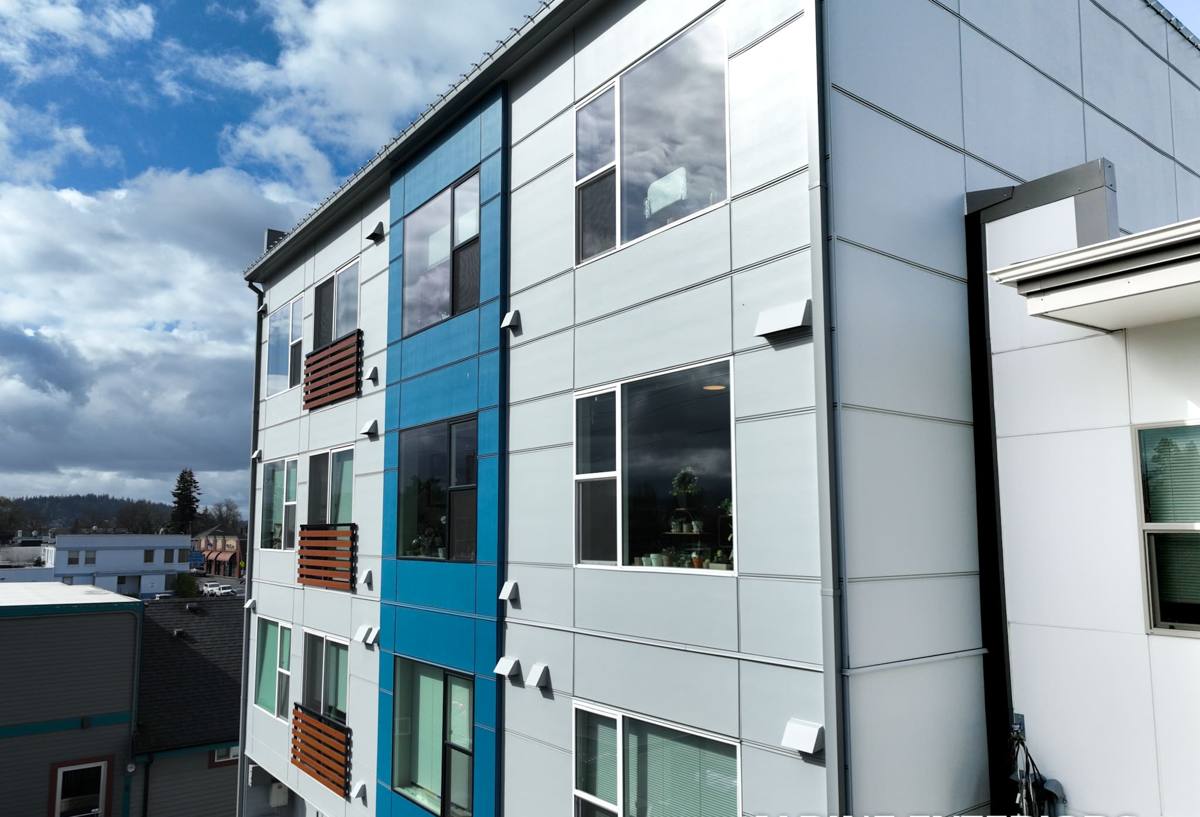
What Lynden Homes Need From New-Construction Windows
Driving Rain and Wind-Driven Water
Whatcom County storms don't just drop rain straight down — wind pushes it sideways into siding and window openings, especially during the fall and winter systems that roll through off the water. A window that's only sealed with caulk around the trim, without proper flashing underneath and behind it, will eventually let that wind-driven water find its way into the rough opening. Correct flashing sequencing matters more here than in drier climates, because the volume and duration of rain gives water more chances to find a weak spot.
Moss, Mildew, and Prolonged Damp Seasons
Whatcom County's long damp season is why moss and algae growth shows up on roofs, siding, and window sills that don't drain or dry properly. Windows with poor sill pans or inadequate slope hold water against wood trim and framing far longer than they should, which is exactly the environment moss and mildew need to get established. A correctly installed window sheds water fast and doesn't give it anywhere to sit.
Salt Air and Coastal Exposure
Lynden sits inland from the water, but it's still part of a county where salt-tinged air off the Strait and Bellingham Bay shows up on windy days, and hardware, fasteners, and finishes throughout Whatcom County are chosen with that in mind. For new construction, that means using corrosion-resistant fasteners and flashing materials rather than assuming an inland lot is fully exempt from coastal-grade detailing.
New-Construction vs. Replacement Windows
These two jobs get lumped together, but they're not the same scope of work, and the products aren't always interchangeable.
| Factor | New-Construction Window | Replacement Window |
|---|---|---|
| Installation method | Nailing fin fastened directly to sheathing, flashed into the wall assembly | Fits into existing frame; often no fin, relies on existing opening |
| Best used when | Framing and sheathing are open and accessible | Siding and trim are already finished and you don't want to disturb them |
| Water management | Full flashing system built into the wall from scratch | Depends heavily on the condition of the existing opening |
| Trim and exterior finish | Installed after the window, matched to the new siding | Usually reuses existing trim and casing |
Because a new build gives us access to bare framing, there's no excuse for cutting corners on flashing. It's the one point in the project where every layer of the water management system is visible and correctable before it gets covered up.
What a Correct New-Construction Window Install Involves
Flashing and Water Management
A proper install starts with a sill pan flashing at the bottom of the rough opening that sheds any water that gets past the window back out over the weather-resistant barrier, not into the wall. Side and head flashing then integrate with the house wrap in the correct shingle-style overlap — bottom pieces installed first, each subsequent layer overlapping the one below it, so water is always directed outward and down, never trapped behind a seam.
Nailing Fin Installation and Rough Opening Prep
The rough opening needs to be square, level, and sized correctly before the window goes in — shimming and fastening through the nailing fin without proper support underneath leads to windows that bind, leak, or settle out of square over time. We check the opening dimensions against the window specs before installation, not after.
Sealing and Insulation
Low-expansion foam or backer rod and sealant around the perimeter closes the air gap between the window frame and the rough opening. This step gets skipped or rushed more often than any other part of the job, and it's a major source of both drafts and condensation issues once the house is occupied and heated.
Choosing the Right Window for a Lynden New Build
Frame material matters as much as glass package in a climate that stays wet for months at a time. We don't push one brand — we work with several reputable manufacturers and can also install owner-supplied windows, as long as they meet current Washington energy code and are appropriate for the wall assembly.
| Frame Material | Moisture Behavior | Maintenance | Typical Fit |
|---|---|---|---|
| Vinyl | Won't rot; seams are the main water-entry risk point | Low — no painting or sealing needed | Cost-conscious new builds |
| Fiberglass | Dimensionally stable, holds up well to sustained damp exposure | Low | Higher-performance builds, larger openings |
| Wood-clad | Interior wood needs to stay dry and sealed; exterior clad protects from weather | Higher — interior finish and seals need periodic attention | Homeowners prioritizing interior wood appearance |
We're upfront about the trade-offs of each option rather than steering every job toward the same product. A wood-clad window can be the right call for the right homeowner — it just needs realistic expectations about long-term upkeep in a climate that stays wet as long as ours does.
Our Process for New-Construction Window Installation
- Review the plans and window schedule with the builder or homeowner before framing is closed in
- Confirm rough opening sizes match window specs and flag discrepancies early
- Install sill pan flashing and integrate with the house wrap
- Set windows square and plumb, fasten through the nailing fin
- Install side and head flashing in correct shingle-lap sequence
- Seal and insulate the interior perimeter gap
- Coordinate trim and exterior finish work with siding installation
- Walk the job with the builder or homeowner before final sign-off
Energy Code and Performance Considerations
Washington's energy code sets minimum performance requirements for new-construction windows, and those requirements are checked at inspection. Beyond the code minimum, homeowners in Whatcom County generally benefit from windows with a lower U-factor given how many months of the year the furnace or heat pump is running. We size and spec windows to meet code as a floor, not a ceiling, and can walk through performance options if a homeowner wants to go beyond the minimum.
Why Hire a Crew That Already Works in Lynden
A crew that only occasionally works in this region tends to detail windows the way they would in a drier climate — lighter flashing, less attention to sill pan slope, less concern about fastener corrosion. We work new-construction jobs throughout Whatcom County regularly enough that flashing for sustained rain and long damp seasons isn't an afterthought, it's just how the job gets done. That familiarity also means we coordinate cleanly with local builders, inspectors, and the sequencing of siding and roofing crews on the same job site.
Checklist: What to Confirm Before Window Installation Starts
- Rough openings measured and confirmed against window schedule
- Sill pan flashing product and installation sequence agreed upon in advance
- Flashing tape or house wrap integration plan reviewed with the siding crew
- Frame material and glass package selected based on performance goals, not just price
- Fastener and hardware corrosion resistance confirmed for the site conditions
- Interior sealing and insulation method specified, not left to be decided on site
- Timeline coordinated so windows go in before the house sits open to weather any longer than necessary
If you're building in Lynden or elsewhere in Whatcom County and want new-construction windows installed by a crew that already knows this climate, we're glad to walk the plans with you and put together a straightforward estimate — no pressure, no upsell, just a clear look at what the job actually needs. The form below is the easiest way to get started.