 Birch Bay Roofing
 Building a Deck That Actually Holds Up in Point Roberts
Point Roberts sits out on its own peninsula, surrounded by water on three sides, which means every deck built out there takes a heavier beating than one built a few miles inland. Salt-laden air corrodes fasteners and hardware faster than it does in drier parts of Whatcom County. Driving rain off the Strait of Georgia finds every gap in flashing and end-grain. And the long, wet moss season here coats horizontal surfaces — deck boards, ledgers, joist tops — with a layer of organic growth that holds moisture against wood far longer than most homeowners realize. A deck built to a generic spec sheet, without those three factors in mind, will show problems within a few seasons: soft spots, rusted fastener heads bleeding through the boards, and slick, moss-covered surfaces that are a fall hazard by the second winter.
We build decks specifically for this kind of exposure. That means different fastener choices, different flashing details at the ledger board, and decking material recommendations that match how a deck actually gets used and weathered in a coastal, moss-prone climate — not just what looks good on day one.
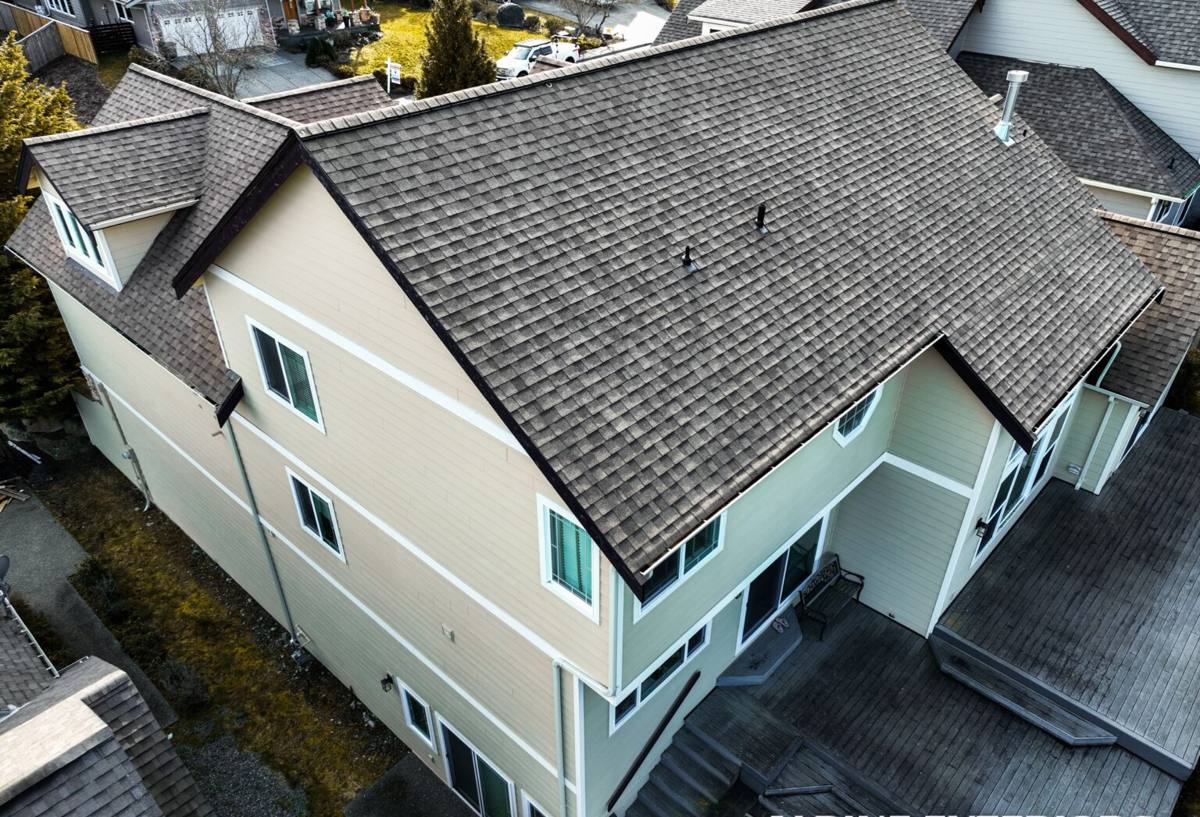
What Salt Air, Rain, and Moss Actually Do to a Deck
Salt Air and Hardware
Standard galvanized fasteners and connectors are rated for general outdoor use, but they weren't designed for sustained coastal salt exposure. Over time, salt accelerates corrosion at joist hangers, structural screws, and railing hardware — often from the inside out, where you can't see it until a connection has already weakened. This is one of the most common issues we find when we're asked to inspect or repair an older deck out here: hardware that looks fine on the surface but has lost real strength underneath.
Driving Rain and Water Intrusion
Rain that comes in sideways off open water doesn't behave like rain falling straight down. It drives up under flashing, into ledger connections, and behind poorly sealed post bases. The ledger board — where a deck attaches to the house — is the single most common failure point on any deck, and it's especially vulnerable here if flashing isn't detailed correctly at the outset.
Moss and Sustained Moisture
Whatcom County's moss season runs long, and Point Roberts' marine climate keeps things damp even between rain events. Moss holds moisture against wood surfaces, which accelerates rot in untreated or under-treated lumber and makes boards dangerously slick. Deck spacing, board orientation, and surface texture all affect how much moss actually takes hold and how manageable it is to keep clean.
What a Correctly Built Deck Requires Out Here
- Stainless steel or coated structural fasteners and hangers rated for coastal/high-corrosion exposure, not standard galvanized
- Properly flashed ledger connection with a drainage gap or flashing detail that keeps water from wicking into the house rim joist
- Joist tape or butyl flashing tape on top of all joists to keep standing water out of end-grain and fastener penetrations
- Adequate ventilation under the deck so the framing can dry out between rain events instead of staying damp
- Decking material matched to moss tolerance — grooved, ribbed, or heavily textured boards trap organic debris more than a smoother profile
- Post bases set above grade with proper drainage, not buried or sitting in standing water
- Railing hardware rated for the same exposure as the structural connectors, since railings take direct weather too
Decking Material Comparison for Coastal, Moss-Prone Conditions
There's no single "best" decking material for every home — it depends on budget, how much maintenance a homeowner wants to take on, and how the deck will be used. Here's how the common options actually perform in this specific climate:
| Material | Salt Air / Moisture Behavior | Moss & Maintenance | Typical Lifespan Out Here |
|---|---|---|---|
| Pressure-treated fir/hem-fir | Treated core resists rot, but cut ends and fasteners need re-sealing regularly | Needs annual cleaning and periodic sealing to resist moss and staining | 15–20 years with consistent maintenance |
| Cedar | Naturally rot- and insect-resistant, but softer and more prone to weathering without upkeep | Requires regular cleaning and refinishing to prevent graying and moss buildup | 15–25 years with regular care |
| Composite decking | Won't rot or absorb water into the board core; performs well in salt air | Still needs periodic washing — moss and mildew can sit on the surface, though less structurally damaging | 25–30+ years, manufacturer-dependent |
| PVC decking | Fully synthetic, essentially immune to moisture damage | Lowest maintenance for moss and mildew of the common options | 25–30+ years |
We install and work with all of these, and we'll walk through the real trade-offs for your specific project — upfront cost, how the deck will be used, and how much maintenance you actually want to do — rather than pushing one product across the board.
Our Deck Building Process
1. On-Site Assessment and Design
We look at sun/shade exposure, wind direction, drainage on the lot, and how the deck ties into the house before recommending a layout or material. A deck facing open water gets different detailing than one tucked against a windbreak.
2. Permitting
Point Roberts falls under Whatcom County jurisdiction for building permits, and most new decks — especially anything attached to the house or built above a certain height — require one. We handle the permit process as part of the job so you're not left tracking down paperwork.
3. Framing and Structural Work
This is where corrosion-resistant hardware, correct ledger flashing, and proper post footings matter most, since it's the part of the deck you won't see once it's finished — and the part most likely to cause problems years later if it's done wrong.
4. Decking, Railing, and Finish Work
Board installation, railing systems, stairs, and any built-in features get finished with the same attention to fastener quality and moisture detailing as the framing underneath.
5. Walkthrough and Maintenance Guidance
Before we call a job done, we walk the homeowner through what upkeep the specific materials chosen will actually need — because a deck's real lifespan depends as much on maintenance as on how it was built.
Logistics of Building in Point Roberts
Point Roberts is a U.S. exclave — reaching it by land means crossing the Canadian border twice. That's a real scheduling and material-delivery factor for any construction project out there, not a minor detail. Crews and suppliers unfamiliar with that reality can end up with delayed material drops, missed appointment windows, or surprise costs. We already account for border crossing times and supplier logistics when we schedule and quote Point Roberts jobs, so it doesn't turn into a delay or a change order partway through the project.
Common Deck Problems We See — and How We Prevent Them
| Problem | Root Cause | How We Prevent It |
|---|---|---|
| Rusted or failing fastener heads | Standard galvanized hardware used in a salt-air environment | Stainless or coastal-rated structural fasteners and hangers throughout |
| Soft or rotted ledger board | Missing or improperly installed flashing at the house connection | Correct ledger flashing detail with a drainage gap, checked before decking goes on |
| Slick, moss-covered boards | Board profile and spacing that traps moisture and debris | Material and spacing selection suited to moss-prone conditions, plus maintenance guidance |
| Wobbly or leaning railings | Under-spec'd or corroded railing hardware | Hardware matched to the same exposure rating as the deck structure |
Maintenance Checklist for a Coastal Whatcom County Deck
- Sweep debris off the deck surface regularly, especially in fall and through moss season
- Wash the surface at least once a year to remove moss, algae, and salt residue before it takes hold
- Check fastener heads and railing hardware periodically for early signs of corrosion
- Inspect the ledger flashing area for staining or soft wood, which can signal a leak starting
- Reseal wood decking (cedar or pressure-treated) on the manufacturer's or installer's recommended schedule — don't wait until it's visibly weathered
- Keep gutters and downspouts near the deck clear so runoff isn't dumping extra water onto the structure
Why Hire a Crew That Already Builds in Point Roberts
A deck built with inland assumptions — standard hardware, generic flashing, no plan for border-crossing logistics — is a deck that costs more in repairs down the road. We build and repair decks throughout Birch Bay and the surrounding Whatcom County coastline, including Point Roberts, so the material choices, fastener specs, and scheduling realities specific to this stretch of coast aren't an afterthought — they're built into the plan from the first estimate. That's the difference between a deck that looks good for one summer and one that's still solid a couple decades in.
If you're planning a new deck or need an honest look at one that's showing its age, we're happy to come out, walk the site, and put together a straightforward, no-pressure estimate. Use the form below to get started.