 Birch Bay Roofing
 Siding Repair Built for Point Roberts' Peninsula Exposure
Point Roberts sits on its own peninsula, surrounded by the Strait of Georgia on most sides and cut off from the rest of Whatcom County by land except through Canada. That geography matters for siding. A house here doesn't just deal with rain and humidity the way an inland Whatcom County property might — it takes salt-laden marine air from multiple directions, driving rain pushed in by open-water wind, and a moss and mildew season that can run nearly year-round on shaded walls. Siding that would hold up fine twenty miles inland can show real damage here in a fraction of the time.
Siding repair in this setting isn't just about patching a crack or replacing a damaged board. It's about understanding why the siding failed in the first place, matching the repair to the material and the exposure, and making sure the fix actually addresses the moisture path instead of just covering it up. That's the standard we hold every repair to, whether it's a single damaged panel or a full section of a wall.
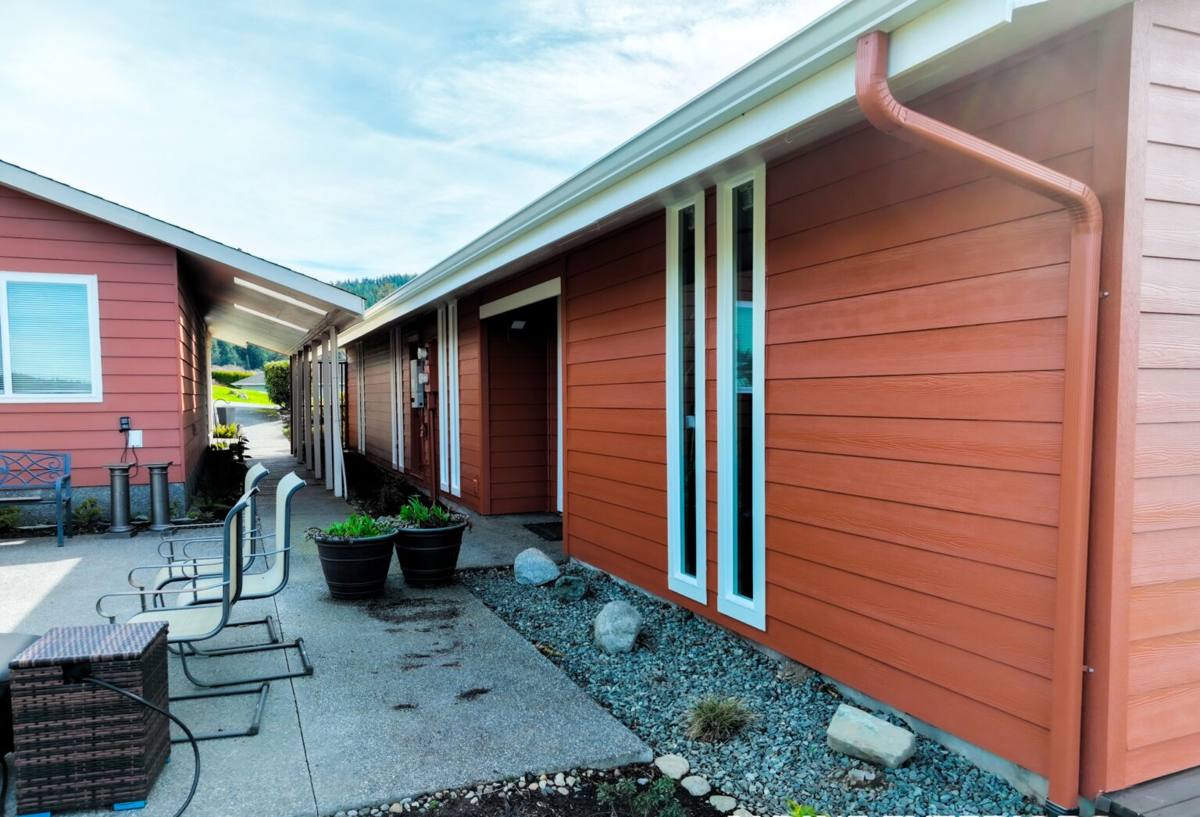
Why Point Roberts Siding Wears Differently
Salt Air From Multiple Directions
Most Whatcom County homes face salt exposure from one general direction, depending on which body of water they're closest to. A peninsula like Point Roberts gets it from more angles, which means fasteners, trim, and finishes on more sides of the house are exposed to accelerated corrosion and breakdown than a typical inland property. Repairs that don't account for this — using standard fasteners instead of corrosion-resistant hardware, for example — tend to fail again within a few seasons.
Driving Rain Off Open Water
With open water on multiple sides, wind-driven rain here doesn't behave like a simple straight-down rainfall. It gets pushed sideways into seams, laps, and trim joints, which is exactly where a lot of siding damage originates. A repair that looks fine from the ground can still be letting water in behind the surface if the underlying flashing and lap details weren't corrected along with the visible damage.
A Long Moss and Mildew Season
Mild temperatures and near-constant moisture add up to extended moss and mildew growth on shaded or north-facing walls, often longer than what inland properties see. Any siding material that's even slightly porous becomes a growth surface over time, and repairs done without addressing that moisture retention tend to develop the same staining and soft spots again within a year or two.
Signs Your Siding Needs Repair, Not Just a Repaint
A lot of siding problems get masked with paint or caulk instead of actually fixed. That buys a little time but usually makes the eventual repair more expensive, since the moisture keeps working underneath. Here's what we look for during an assessment:
- Soft spots or slight give when you press on a board or panel, especially near the bottom courses or window trim
- Visible cracking, buckling, or separation at seams and joints
- Paint or finish that's bubbling, peeling, or chalking faster than expected in one area versus the rest of the house
- Dark staining or persistent moss growth that keeps coming back after cleaning
- Gaps or separation at corner trim, window and door trim, or where siding meets the roofline
- Visible daylight or drafts from inside near an exterior wall
Any one of these can be a minor, isolated repair. But when several show up in the same area, it's usually a sign that moisture has been getting behind the siding for a while, and the repair needs to go deeper than the visible surface.
What a Correct Siding Repair Actually Involves
Finding the Moisture Path First
Before we touch a single board, we trace where water is actually getting in. That might be a failed caulk joint, a piece of flashing that was never lapped correctly, a fastener hole that opened up over time, or trim that's pulling away from the wall. Replacing the damaged siding without correcting that entry point just resets the clock on the same failure.
Matching Materials and Finish
A patched section that doesn't match the surrounding siding in material, profile, or finish stands out and can also behave differently under moisture and sun exposure than the original. Where the existing siding is James Hardie fiber cement, we match the profile and use Hardie's ColorPlus-finished product so the repair blends in and performs the way the rest of the wall does. Where the damaged section is a different material entirely, we'll walk you through the honest options rather than trying to force a mismatched patch.
Correcting Flashing and Fastening, Not Just the Panel
Any competent repair includes rechecking flashing at the repair boundary, using fasteners rated for this level of salt exposure, and confirming the drainage plane behind the siding is intact. Skipping these steps to save time on a repair is exactly how a "fixed" wall ends up with the same rot or staining problem eighteen months later.
Repair, Partial Replacement, or Full Re-Side?
Not every siding problem calls for tearing off the whole wall, and not every damaged board can be responsibly patched. Deciding which category a job falls into depends on how widespread the damage is and what's causing it.
| Situation | Typical Approach | Why |
|---|---|---|
| One or two damaged boards, isolated cause (impact damage, one bad fastener) | Spot repair with matched material | Localized issue, no evidence of broader moisture intrusion |
| Damage concentrated on one wall or elevation exposed to prevailing wind and rain | Section replacement for that wall | Exposure-driven wear usually isn't isolated to a single board once it starts |
| Widespread soft spots, staining, or moss across multiple walls | Full re-side evaluation | Suggests systemic moisture or an aging material nearing end of service life |
| Siding material is discontinued, badly faded, or a poor performer in this climate | Full replacement with James Hardie | Patching a failing material only delays a larger cost |
Why We Only Install James Hardie for Replacement Work
When a repair calls for replacing more than a small patch, we install James Hardie fiber cement — not LP SmartSide, vinyl, Cemplank, Allura, primed spruce, or cedar. That's a professional standard we've settled on, not a brand preference. A few reasons it holds up specifically to salt air and driving rain:
- Non-combustible fiber cement core: doesn't feed a fire the way wood-based siding products can.
- Factory-applied ColorPlus finish: baked on under controlled conditions, so it resists fading and chalking better than site-applied paint used to touch up other materials.
- Climate-engineered HZ5 formulation: built specifically for regions with heavy moisture exposure and freeze-thaw cycling, which fits a wet, salt-exposed peninsula like this one.
- Dimensional stability: doesn't swell, cup, or warp with repeated wetting the way engineered wood products can.
- Strong transferable warranty: backed by Hardie when installed to their published spec.
We're not going to tell you your existing LP SmartSide, vinyl, or cedar siding is worthless — plenty of it is still serviceable, and a targeted repair on those materials is often the right, honest call. But when a section is far enough gone that it needs full replacement, we install what we're willing to stand behind long-term, and that's Hardie.
Our Process for Point Roberts Siding Repair
Because Point Roberts is only reachable by land through the border crossing, we plan repair visits with that logistics reality in mind — scheduling material delivery and crew time so a job isn't held up mid-repair waiting on a second trip for parts. Our process:
- On-site assessment of the damaged area and a check of the surrounding siding for early signs of the same problem
- Diagnosis of the actual moisture entry point, not just the visible symptom
- A written scope specifying repair versus section replacement, materials, and cost before any work starts
- Repair or replacement using matched or Hardie fiber cement material, with flashing and fastening corrected as part of the job
- A final check of drainage and trim details around the repaired area before we consider the job done
Why Hiring a Crew That Already Works Point Roberts Matters
A contractor who regularly works this peninsula already understands the border crossing logistics, knows how much harder salt air and open-water wind are on fasteners and finishes here compared to more sheltered parts of Whatcom County, and isn't guessing at how long a repair will actually last in this exposure. That familiarity shows up in small decisions — which fastener grade gets used, how flashing gets lapped at a repair boundary, whether a patch is even the right call versus a section replacement — and those decisions are what determine whether a repair holds for years or needs redoing.
Questions Worth Asking Before Hiring for Siding Repair Here
- Will they diagnose the moisture source, or just replace the visibly damaged board?
- Do they carry material that matches your existing siding, or will the repair need to be a section replacement?
- What fastener and hardware grade do they use given salt exposure on a peninsula property?
- Do they provide a written scope before starting, including whether it's a repair or a full section replacement?
- Are they familiar with scheduling work around the Point Roberts border crossing?
If you've got a damaged section of siding, a soft spot you're not sure about, or recurring staining that keeps coming back after cleaning, we're glad to take a look. Reach out below for a free, no-pressure estimate on siding repair for your Point Roberts home.