 Birch Bay Roofing
 Why Bellingham-Area Roofs Wear Out Differently
A roof in Bellingham does a different job than a roof fifty miles inland. Sitting near the Salish Sea shoreline in Whatcom County means salt-laden air is a constant presence, even on days that feel calm. That air accelerates corrosion on exposed metal fasteners, flashing edges, and vent components long before the shingles themselves show their age. Add in wind-driven rain that comes in sideways off the water during fall and winter storms, and you have a roof that's being tested at every seam, valley, and penetration, not just on the open field of shingles.
Then there's the moss. Whatcom County's long, wet, mild winters create ideal conditions for moss and algae to take hold, especially on north-facing slopes and anywhere tree cover keeps a section of roof shaded and damp for weeks at a time. A roof that isn't detailed and maintained with this climate in mind doesn't fail all at once — it fails quietly, at the edges, until a homeowner notices a stain on a ceiling or a soft spot underfoot.
An asphalt shingle roof done right in Bellingham has to account for all three of these pressures at once: salt air on the metal, wind-driven rain at the transitions, and moss in the shaded, low-airflow areas. That's the standard we build to.
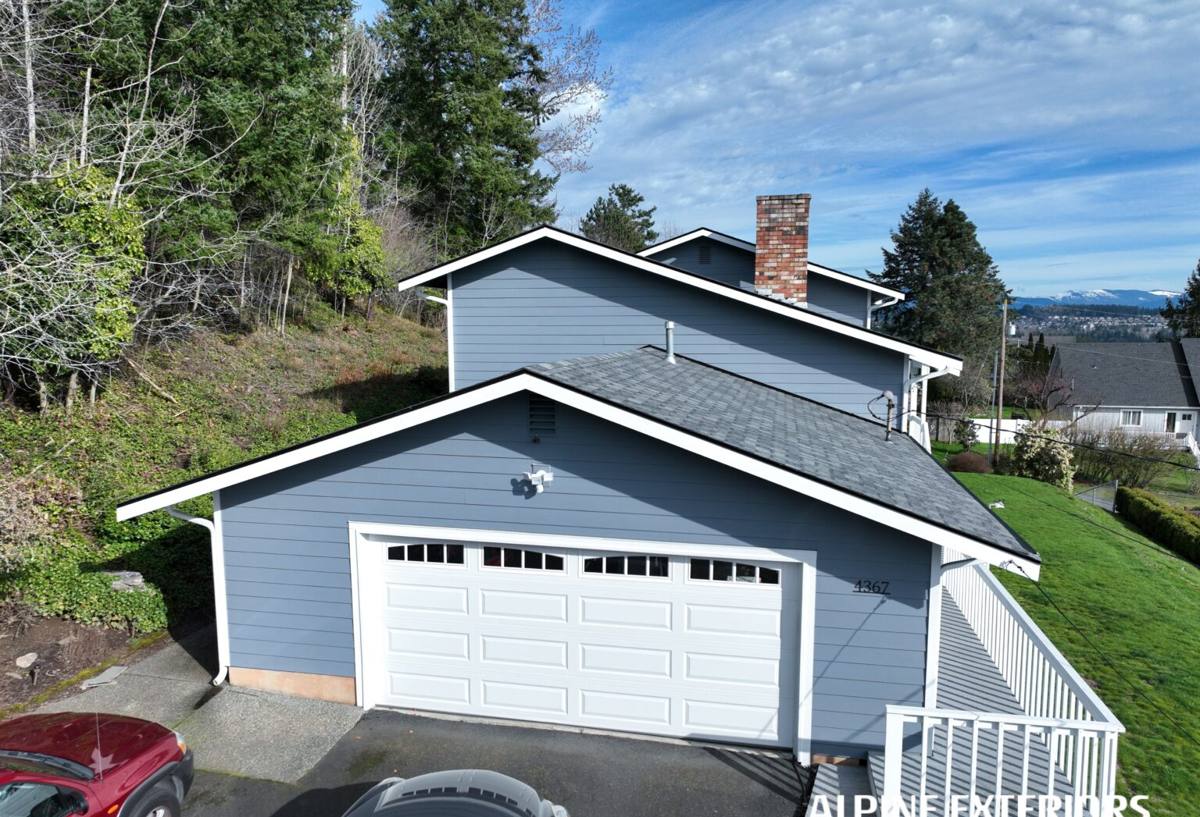
What a Correct Asphalt Shingle Roof Involves
Asphalt shingles are a proven, cost-effective roofing material, but the shingle is only one layer of a system. Most leaks and premature failures we're called out to inspect trace back to what's underneath or around the shingles, not the shingles themselves.
Underlayment and Water Barrier
A synthetic or felt underlayment goes down first as the roof's backup waterproofing layer. In areas prone to wind-driven rain, we pay close attention to underlayment overlap and fastening pattern so water that gets past a shingle edge in a bad storm still has somewhere to go besides your attic. Self-adhered ice-and-water membrane belongs at eaves, valleys, and any low-slope transitions where standing water or wind-blown moisture is most likely.
Flashing Details
Flashing around chimneys, skylights, sidewalls, and roof-to-wall transitions is where salt air does the most damage over time if the wrong material or a shortcut installation is used. Properly formed, corrosion-resistant flashing set into the roofing system (not just caulked on top of it) is one of the biggest differences between a roof that holds up near the water and one that doesn't.
Nailing and Wind Rating
Shingles are only as wind-resistant as their installation. Correct nail placement, count, and depth matter more than most homeowners realize — under-driven or over-driven nails are a common cause of shingles lifting or blowing off in a coastal storm, regardless of how good the shingle itself is rated.
Ventilation Balance
Balanced intake and exhaust ventilation keeps the attic dry and temperature-stable. In a climate this wet, poor ventilation doesn't just shorten shingle life from underneath — it also feeds the kind of trapped moisture that encourages moss and mildew to creep in at the roof deck.
Choosing the Right Shingle for This Climate
Not every asphalt shingle is built the same way, and the right choice depends on how much wind exposure, shade, and moss risk a particular roof faces. Here's how the common tiers compare for a Bellingham-area home.
| Shingle Type | Typical Lifespan | Wind Rating | Moss/Algae Resistance | Relative Cost |
|---|---|---|---|---|
| 3-Tab | 15-20 years | Lower | Standard, without AR granules | Lowest |
| Architectural / Dimensional | 25-30 years | Higher | Available with algae-resistant (AR) granules | Mid-range |
| Impact-Resistant (Class 4) | 30+ years | Highest | Available with AR granules | Highest |
For most homes in this area, we steer homeowners toward an architectural shingle with algae-resistant granules as the practical baseline — it holds up to wind better than 3-tab and resists the streaking and moss buildup that our wet climate encourages. Impact-resistant shingles are worth discussing for homes with heavy tree cover or a history of storm damage, but they're a bigger investment and not necessary for every roof.
Moss and Algae: Managing the Long Wet Season
Moss doesn't grow because a roof is old — it grows because a surface stays damp and shaded long enough for spores to take hold. That's exactly what our fall-through-spring stretch delivers, especially under tree cover or on slopes that face away from the sun. Left alone, moss mats hold moisture against the shingle surface, work their way under tabs, and can lift shingles enough to let water in.
A few things make a real difference over the life of the roof:
- Algae-resistant (AR) shingles, which use copper-infused granules to slow the growth that causes dark streaking
- Keeping overhanging branches trimmed back so shaded sections of roof get more light and airflow
- Gentle, low-pressure cleaning rather than power-washing, which can strip granules and shorten shingle life
- Zinc or copper strips near the ridge on moss-prone roofs, which let rain carry trace metal down the slope and discourage regrowth
- Keeping gutters clear so water doesn't back up and sit against the lower courses of shingles
None of these steps are a one-time fix. Moss management here is ongoing, and we're upfront with homeowners that any roof in this climate needs periodic attention, not a single treatment that solves it permanently.
Our Process, Start to Finish
We keep the process straightforward and in writing at every step:
- On-site inspection of the existing roof, decking, and ventilation — not just a drive-by estimate
- A written scope covering materials, underlayment, flashing details, and total cost, so there's nothing vague to argue about later
- Full tear-off of the old roofing so the deck can actually be inspected, rather than layering over hidden problems
- Repair of any soft or rotted decking before anything new goes down
- Installation of ice-and-water membrane, underlayment, and corrosion-resistant flashing at every vulnerable point
- Shingle installation to manufacturer nailing specifications for the wind exposure at your specific site
- Ridge and intake ventilation balanced for the size and shape of the attic
- Full site cleanup, including a magnetic sweep for stray nails
- A final walkthrough so you can see the completed work and ask questions before we consider the job done
Signs Your Roof Needs Attention
Most roofing problems in this area show up gradually. Worth checking for, or having us check for:
- Granules collecting in gutters or at downspouts
- Shingles that are curling, cupping, or losing their flat profile
- Moss mats forming on shaded or north-facing slopes
- Dark streaking across the roof surface
- Soft or spongy spots when walking the roof
- Daylight visible through the roof deck from inside the attic
- Rusting or lifting flashing around chimneys, vents, or skylights
- A musty smell or visible moisture in the attic
Any one of these on its own isn't necessarily an emergency, but they're worth a proper look before the next storm season rather than after.
Why a Crew That Already Works Bellingham Matters
Roofing crews who work this specific stretch of Whatcom County coastline see the same failure patterns over and over — the flashing that corrodes first, the north slope that always moss over first, the storm direction that finds the weak point in a valley. That pattern recognition shapes how we detail a roof from the start, instead of building it the same way we would for a dry inland climate and hoping it holds up.
Local presence also means we're not scheduling around a long drive every time a warranty question or a follow-up comes up. We know which suppliers stock the materials that actually perform here, and we plan installation timing around this area's rain patterns rather than fighting them.
What's Included and What to Expect in Writing
Asphalt shingle roofing typically carries two separate warranties: a manufacturer's warranty on the shingle material itself, and a workmanship warranty from the installing contractor covering the labor. These are not the same thing, and it's worth understanding both before signing anything. A material defect and an installation error are different problems with different remedies, and a contractor who explains that distinction clearly is doing you a favor.
Before work begins, you should have a written estimate that spells out the shingle brand and line, underlayment type, flashing approach, ventilation plan, and total cost — not a one-line quote for "new roof." That level of detail protects you and tells you a lot about how the crew plans to do the work.
If your roof is showing signs of wear, or you'd rather get ahead of the next wet season than react to a leak, we're happy to take a look and walk you through what we find. Reach out for a free, no-pressure estimate using the form below.