 Birch Bay Roofing
 Building Decks for Bellingham's Coastal Weather
Bellingham sits close enough to the water that every outdoor structure in the area deals with the same combination of problems: salt-laden air blowing off the bay, long stretches of driving rain through fall and winter, and a moss season that can run eight months or more depending on how shaded the yard is. A deck built to a generic national spec doesn't always hold up well here. A deck built for this specific stretch of Whatcom County does.
We're a local crew that works in and around Birch Bay and Bellingham regularly, so we're not guessing at how this climate treats lumber, fasteners, and footings — we see it on every job. This page covers what actually matters when you're planning a custom deck in this area: what the weather does to a deck over time, what a correctly built one needs, how our process works, and what it costs to do it right.
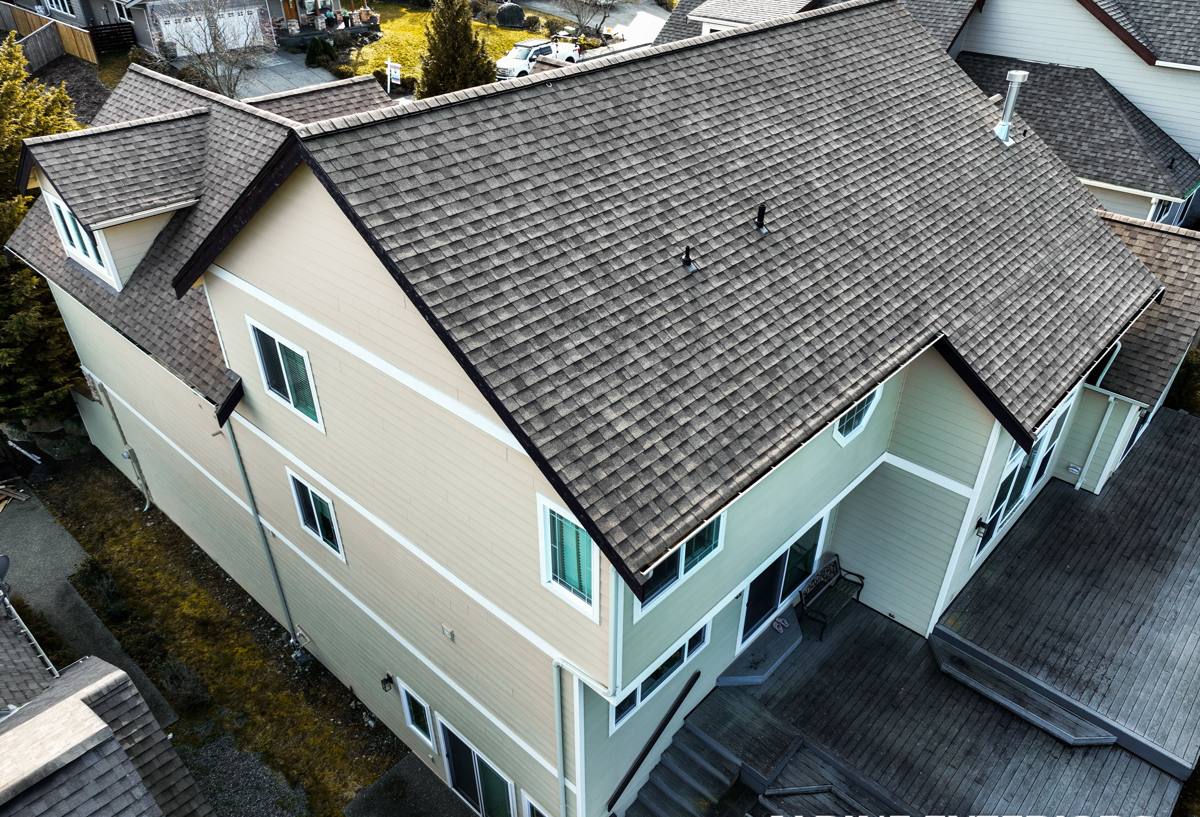
What Salt Air, Rain, and Moss Actually Do to a Deck
Salt Air and Metal Corrosion
Homes closer to the water take in fine salt particles carried on the wind, and that salt settles on every exposed metal surface. Over years, standard fasteners, brackets, and hardware can corrode faster than they would inland — sometimes visibly rusting at the screw heads and joist hangers long before the wood itself shows any wear. Once fasteners start failing, the structural connections they hold are only as good as the corroded metal underneath, even if the boards on top still look fine.
Standing Water and Wood Rot
Whatcom County gets long, steady rain rather than short heavy downpours, and that matters for decks. Wood doesn't need a flood to rot — it needs repeated cycles of getting wet and staying wet. Any spot on a deck where water collects instead of draining (a low board, a poorly flashed ledger, a footing sitting in saturated soil) becomes a rot starting point, and it usually happens from the inside or underside first, where it's invisible until the damage is advanced.
Moss, Algae, and Slip Risk
Shaded, damp decking is exactly what moss and algae need to take hold, and this area gives them months of the right conditions every year. Beyond looking bad, a mossy or algae-coated deck surface gets genuinely slippery when wet, which is most of the year. Moss also holds moisture directly against the wood or composite surface, which accelerates whatever wear pattern that material is already prone to.
What a Correctly Built Deck Needs in This Climate
Framing and Fasteners
The framing is the part of a deck nobody sees once it's finished, which is exactly why it's the part worth getting right the first time. In a salt-air, high-rain environment, that means corrosion-resistant structural hardware rated for exterior and coastal exposure, not the minimum-spec fasteners that pass inspection inland but corrode faster near the water. It also means proper flashing at every ledger board connection to the house, since a leaking ledger is one of the most common causes of hidden structural rot on older decks in this region.
Footings and Drainage
Footings need to be sized and set below the frost line and away from standing water, with the soil around them graded so water moves away from the deck instead of pooling at the base of the posts. On sites with heavier clay soil or a naturally low spot in the yard, that sometimes means additional drainage work before a single post goes in — skipping this step is a common reason decks develop soft, unstable posts within a few years.
Decking Surface Choices
The board on top of the deck is what you'll maintain (or not have to) for the next fifteen-plus years, and it's where climate-specific choices matter most. Ventilation between boards, board orientation relative to sun and shade, and picking a surface material suited to a moss-prone, rain-heavy yard all factor into whether the deck stays low-maintenance or becomes an annual chore.
Comparing Decking Materials for a Bellingham-Area Yard
There's no single "best" decking material — there's a best fit for your yard's sun exposure, your maintenance appetite, and your budget. Here's how the common options actually perform in this climate:
| Material | Moss / Moisture Behavior | Maintenance | Typical Lifespan |
|---|---|---|---|
| Pressure-treated wood | Absorbs water, needs regular sealing to resist rot and moss growth in shaded areas | Annual cleaning and re-sealing recommended | 10-15 years with upkeep |
| Cedar | Naturally rot-resistant but still needs finish maintenance in constant damp shade | Periodic cleaning and refinishing | 15-20 years with upkeep |
| Composite decking | Doesn't absorb water like wood, but can still grow surface moss/algae in deep shade | Occasional washing, no sealing or staining | 20-30 years |
| PVC / capped polymer | Fully water-resistant surface, least prone to moisture-driven degradation | Lowest — washing only | 25+ years |
We don't push one product on every job. A cedar deck on a sun-exposed lot can outperform composite in a shaded, moss-heavy yard, and vice versa. What we won't do is install a lower-grade wood substitute in a heavily shaded, wet-prone spot and call it a long-term solution — that's a maintenance burden we'd rather tell you about upfront than let you discover in year three.
Our Process for a Bellingham Deck Project
Every custom deck we build goes through the same sequence, adjusted for the specific site:
- Site walk and design conversation — we look at sun exposure, drainage, existing grade, and how the deck will actually be used before talking materials.
- Material selection based on the site — matched to shade level, moisture exposure, and your maintenance preference, not a one-size-fits-all default.
- Permitting — we handle the local permit process where required so the project is inspected and documented correctly.
- Footings and framing — footings set below frost line with proper drainage, framing built with corrosion-resistant hardware suited to coastal exposure.
- Flashing and ledger work — the connection to your house gets sealed correctly, since this is the single most common source of hidden rot on older decks.
- Decking, railing, and finish details — surface material installed with proper spacing and ventilation to reduce moisture and moss buildup.
- Final walkthrough — we go over care and maintenance specific to the material you chose and the exposure your yard gets.
Deck Maintenance Checklist for Whatcom County Homeowners
Whatever material you choose, a few habits make the biggest difference in how long a deck stays solid and safe in this climate:
- Clear leaves, needles, and debris from between boards before they trap moisture through the wet season
- Rinse or scrub visible moss and algae off the surface at least once a year, more often in shaded areas
- Check fastener heads and visible hardware for early rust or corrosion, especially closer to the water
- Confirm water is draining away from footings and not pooling under the deck after heavy rain
- Re-seal or re-stain wood decking on the manufacturer's recommended schedule, not just when it looks faded
- Inspect the ledger board connection to the house yearly for gaps, staining, or soft wood
- Trim back overhanging branches that keep sections of the deck shaded and damp longer than the rest
What Affects the Cost of a Custom Deck Here
Cost ranges vary a lot project to project, but the factors that move the price are consistent:
| Factor | Why It Matters |
|---|---|
| Decking material | Pressure-treated wood costs less upfront; composite and PVC cost more but reduce long-term maintenance |
| Site conditions | Poor drainage, sloped yards, or heavy clay soil can require extra footing and grading work |
| Height and structure | A raised or multi-level deck needs more substantial framing and stair/railing work than a low, ground-level deck |
| Ledger and flashing complexity | Older homes sometimes need extra work to tie in a new ledger board correctly and safely |
| Railing and finish choices | Cable, glass, or custom railing systems cost more than standard baluster railing |
| Permitting requirements | Larger or attached decks typically require permitting and inspection, which adds time and coordination |
We give a real number after seeing the site, not a phone-quote guess — too much of the cost here depends on drainage and framing conditions that only show up in person.
Why Hiring a Crew That Already Works in Bellingham Matters
A deck built by a crew unfamiliar with this specific stretch of coastline tends to make the same mistakes: standard-grade hardware where corrosion-resistant fasteners were needed, decking laid without enough airflow underneath in a shaded yard, or footings placed without accounting for how saturated the soil gets in a normal Whatcom County winter. None of these show up on day one. They show up in year three or four, as soft boards, rusted brackets, or a deck that never quite dries out.
Working in Birch Bay and Bellingham regularly means we've already seen how different lots handle salt exposure, shade, and drainage, and we build to that reality instead of a generic spec sheet. That local familiarity also means straightforward answers about what a site actually needs — not upselling a premium material where a mid-range option would perform just as well, and not underbuilding a foundation to hit a lower price.
If you're planning a new deck or replacing one that's showing its age, we're happy to walk the site and put together a straightforward, no-pressure estimate. There's no obligation — just an honest look at what your yard needs and what it would take to build it right. Use the form below to get started.