 Birch Bay Roofing
 Windows Built for the Way Lynden Weathers
Lynden sits inland from the Salish Sea, but that doesn't mean the coastal weather patterns skip it. Whatcom County's marine air still pushes moisture-laden systems across the county for much of the year, and Lynden gets its share of driving rain, long gray stretches, and the kind of damp cold that finds every gap in an old window frame. Add a moss season that can run from late fall through spring, and you've got a climate that's genuinely hard on aging windows — especially the single-pane or early-generation double-pane units still common in older Lynden homes.
We've worked on homes across Whatcom County long enough to know that a window that performs fine in a mild, dry climate can fail fast here. Wood frames swell and stick. Old aluminum frames turn into cold, condensation-prone liabilities every winter. Failed seals let moisture into the wall cavity, and that's where real damage starts. Energy-efficient window replacement in Lynden isn't just about a lower heating bill — it's about keeping water and cold air out of a house that sees a lot of both.
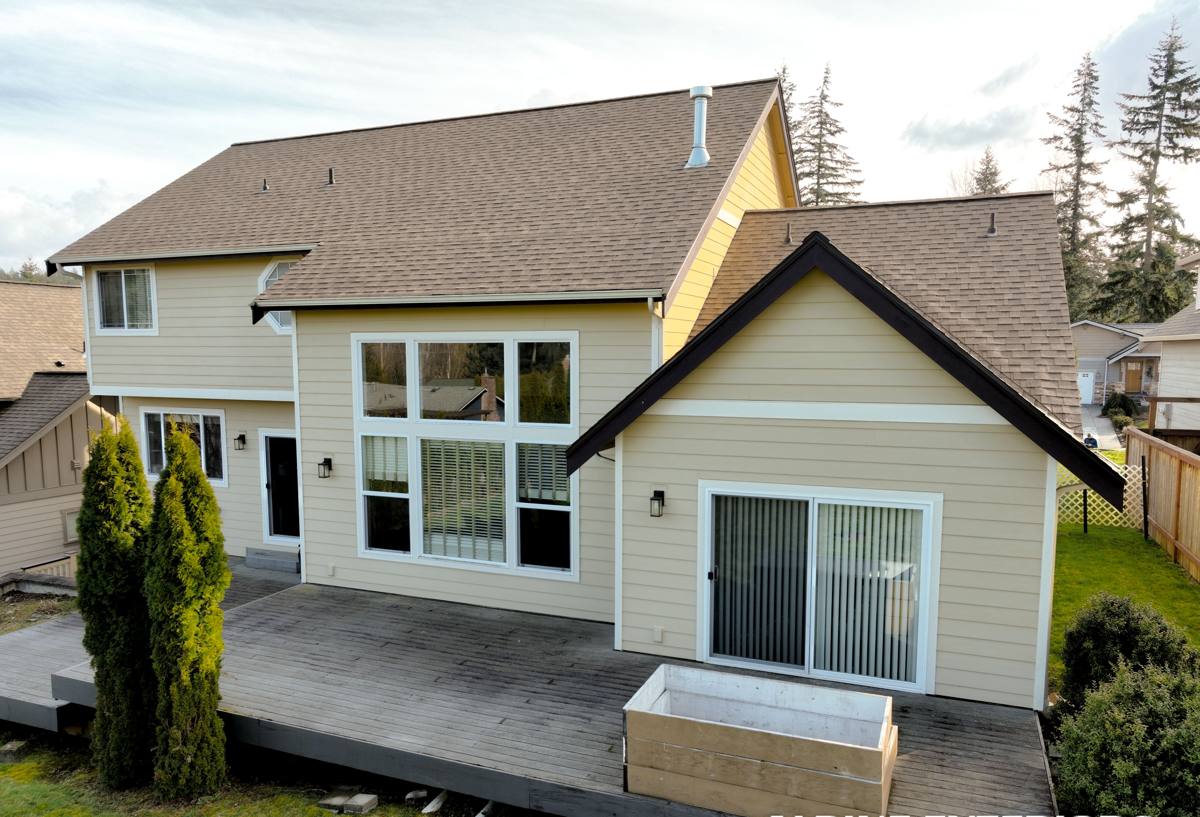
What Local Homes Actually Need From Their Windows
Moisture Management, Not Just Insulation Value
A lot of homeowners shop for windows by R-value or U-factor alone. That matters, but in this climate the bigger question is often how well a window sheds and manages water at the frame and sill. A window with a great energy rating that's installed with poor flashing or a marginal sill pan will still let water in during a hard, wind-driven rain — and once water gets behind the trim, it doesn't dry out quickly in our humidity.
Condensation Control
Cold snaps combined with indoor humidity from cooking, showers, and heating systems cause condensation on interior glass and, worse, inside the frame itself. Modern insulated glass units with warm-edge spacers and properly sized frames cut this down significantly. If your current windows fog between the panes or drip on the sill every cold morning, that's a sign the seal has already failed.
Standing Up to Moss and Grime
Moss doesn't just grow on roofs. In shaded parts of a Lynden lot, it creeps into window tracks, sits on sills, and holds moisture against wood trim and frames longer than it should. Frame materials and trim details that shed water and don't give moss anything to grab onto make a real difference in how a window looks and performs five and ten years out.
Frame Material: What We Recommend and Why
We install a range of frame materials depending on the home, budget, and how a homeowner wants the finished look. Here's how the common options actually perform in Whatcom County conditions:
| Frame Material | Moisture Performance | Maintenance | Typical Fit |
|---|---|---|---|
| Vinyl | Excellent — won't rot, swell, or corrode | Low — occasional cleaning | Most Lynden homes; best value-to-performance ratio |
| Fiberglass | Excellent — very stable in temperature swings | Low | Homes wanting a higher-end feel and long service life |
| Wood (clad exterior) | Good if maintained; exterior cladding protects the wood | Higher — exposed wood surfaces need upkeep | Historic or traditional-style homes where wood interiors matter |
| Aluminum | Poor thermal performance; prone to condensation | Low, but performance is the tradeoff | We generally don't recommend it for primary living spaces here |
We're upfront that we steer most Lynden homeowners toward vinyl or fiberglass. It isn't that wood or aluminum windows can't work — it's that in a climate with this much sustained moisture, the maintenance burden or thermal weak points tend to catch up with a house faster than homeowners expect. If you want the look of true wood, clad options give you that on the exterior while keeping the vulnerable material protected.
Glass Packages That Make Sense for This Climate
Double-pane, low-E glass with an argon fill is the practical baseline for most homes here — it balances cost against real-world performance gains. For homes with more western or southern exposure, or for rooms where afternoon heat gain is a problem, we'll talk through low-E coatings tuned to block more solar heat without darkening the glass noticeably. Triple-pane glass is available and does offer a meaningful step up in both insulation and sound dampening, which matters if the home is near a busier road — but it adds cost and weight, and for most single-family homes in this area the return doesn't always justify it over a well-built double-pane unit. We'll give you the honest comparison for your specific home rather than upselling the top-tier package by default.
What a Correct Installation Actually Involves
Replacement window failures almost never come from the window itself — they come from installation shortcuts. In a climate that gets as much wind-driven rain as Whatcom County, the details around the window matter as much as the window.
- Full removal of the old unit and inspection of the rough opening and sill framing for hidden rot or water damage before anything new goes in
- A properly sloped sill pan so any water that does get past the exterior seal drains out, not into the wall
- Correct flashing integration with the existing weather-resistive barrier — shingled top to bottom so water always sheds outward and downward
- Low-expansion foam or backer rod and sealant at the frame, sized correctly so the window isn't over- or under-insulated at the perimeter
- Exterior sealant and trim work that sheds water away from the frame rather than trapping it against it
- A final operational check — smooth opening, closing, and locking — and a walkthrough with the homeowner before we call the job done
Skip any one of those steps and you can end up with a window that looks fine but leaks or rots the surrounding framing within a few years. That's the failure mode we see most often when we're called in to fix someone else's replacement work.
Our Process for Lynden Window Projects
1. On-Site Assessment
We walk the home, look at each window being considered, and check for signs of existing water intrusion, rot, or settling around the openings. This tells us if it's a straight window swap or if there's framing repair to plan for first.
2. Straightforward Proposal
You get a clear breakdown of frame material, glass package, and installation scope — no vague line items. If we think a cheaper option will serve the home just as well as a premium one, we'll say so.
3. Scheduling Around Weather
Window replacement means open exterior walls for at least part of a day. We plan installs around forecasted dry windows where we can, and we take precautions to protect the opening if weather turns mid-job.
4. Installation and Walkthrough
Full removal, inspection, flashing, and sealing as outlined above, followed by a walkthrough so you know how to operate and maintain the new windows.
5. Follow-Up
We stand behind our installation work and are reachable if anything needs adjustment after the fact — settling, a sticky sash, or a sealant line that needs attention after the first real winter.
Signs It's Time to Replace, Not Repair
- Fogging or moisture trapped between the panes of a double-pane window — the seal has failed and can't be restored
- Frames that are soft, discolored, or show active rot at the sill or corners
- Windows that won't stay open, won't latch, or have visibly warped out of square
- Persistent drafts you can feel by hand along the frame even with the window fully closed
- Condensation forming on the interior glass regularly through the winter months
- Visible daylight or gaps around the frame from the exterior
Not every issue means a full replacement — some drafts and sticking sashes are fixable with weatherstripping or hardware adjustment. We'll tell you honestly which category your windows fall into rather than pushing replacement when a repair will do.
Why Hiring a Crew That Knows This Area Matters
Window installation looks similar on paper everywhere, but the details that keep a window performing well for fifteen or twenty years are regional. A crew used to installing in a dry climate may not think twice about sill pan slope or flashing sequence in the same way a crew that's dealt with Whatcom County's rain and humidity does automatically. We've seen what happens to windows and framing here when installation shortcuts are taken — swollen trim, stained drywall, moss creeping into tracks — and we build our process around avoiding those outcomes from the start, not fixing them later.
If your Lynden home has drafty, foggy, or aging windows and you'd like a straightforward, no-pressure look at your options, we're happy to come take a look and walk you through what makes sense for your home and budget. Use the form below to request a free estimate.