 Birch Bay Roofing
 Why Lynden's Climate Wears Out the Wrong Siding
Lynden sits inland from the Salish Sea but still gets the full weather pattern that defines this corner of Whatcom County: damp marine air carrying salt off the water, long stretches of driving rain through fall and winter, and a moss and algae season that can run eight months or longer on shaded north- and west-facing walls. Add the farmland surrounding much of the area, which keeps humidity high even between rain events, and you have a climate that is genuinely tough on exterior building materials.
Most siding failures we see in this region aren't dramatic. They're slow: a swollen bottom edge on a wood-composite board, a caulked seam that finally lets go, paint that starts chalking and peeling two or three years after a repaint because the substrate underneath was never fully sealed. By the time a homeowner notices, moisture has usually been working behind the siding for a season or two already.
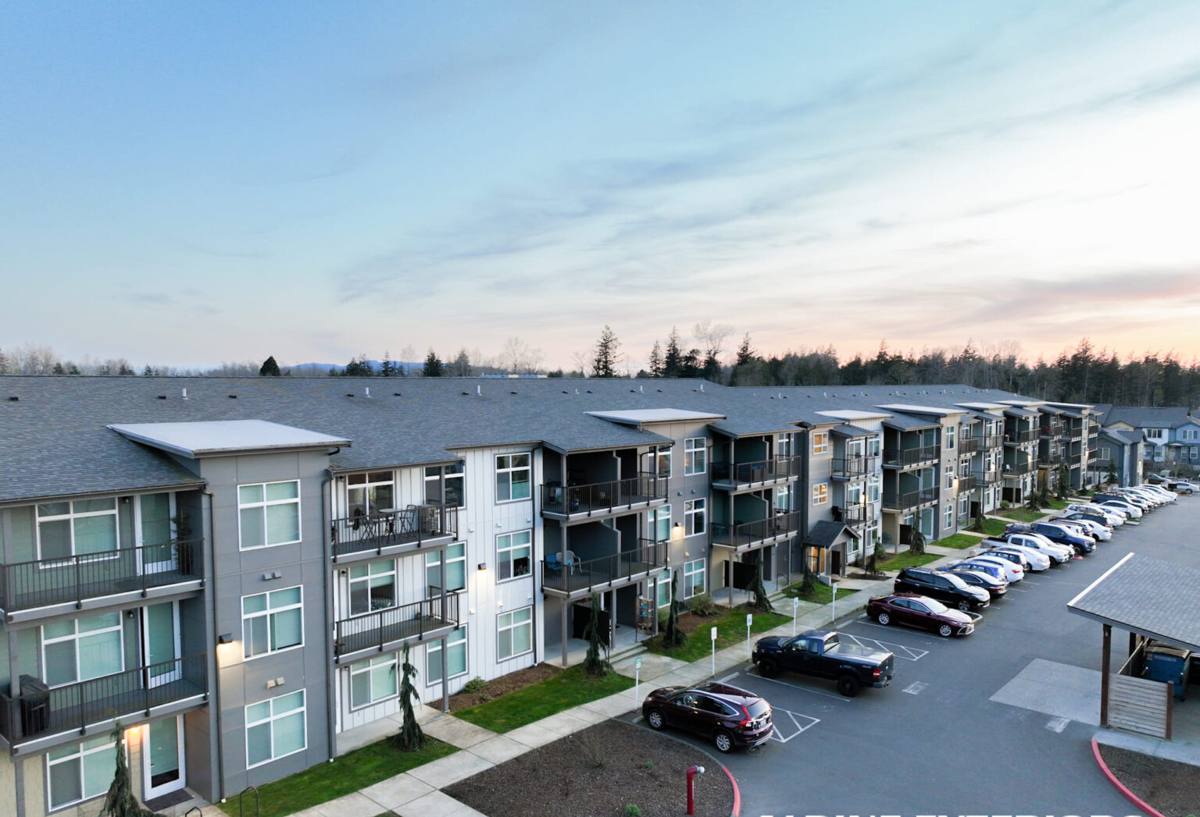
What Siding Actually Needs to Do Here
For a Lynden home, siding has three jobs, in order of importance: keep bulk water out, tolerate constant humidity without swelling or rotting, and hold its finish through repeated wet-dry cycles without cracking or delaminating. Looks matter too, but a product that can't do the first three jobs will look bad eventually no matter how good it looked on installation day.
- Resist moisture absorption at cut edges, seams, and fastener points, not just on the face of the board
- Stay dimensionally stable through winter soak and summer dry-out so joints don't open up
- Hold paint or factory finish without chalking, fading, or peeling within the first few years
- Resist moss and algae growth on shaded elevations without needing constant pressure washing
- Be non-combustible, given the wildfire smoke and dry-season fire risk that reaches even wet Western Washington in late summer
Why We Only Install James Hardie
We made a decision as a company to install exclusively James Hardie fiber cement siding, and we don't install vinyl, LP SmartSide, Cemplank, Allura, primed spruce, or cedar. That's not a marketing position — it's a practical one, built around what actually survives this climate with minimal callbacks.
Wood and wood-composite products depend on an intact factory or field-applied finish to keep moisture out of engineered wood strand or solid wood substrate. Once that finish is compromised at a cut end, a nail hole, or a poorly caulked seam, the substrate can absorb water and swell or delaminate from the inside, often before it's visible from the outside. Vinyl is inexpensive and low-maintenance in the sense that it doesn't need painting, but it's a thin plastic product that can warp in direct heat, crack in hard freezes, and it simply isn't rigid enough to hold a straight, tight reveal line the way fiber cement does. Cedar is a beautiful, genuinely traditional Pacific Northwest material, but it's also a wood product that requires disciplined, ongoing maintenance — refinishing on a real schedule — to perform in a climate this wet.
James Hardie fiber cement is cement, sand, and cellulose fiber. It doesn't rot, it doesn't support combustion, and it holds a factory-baked finish far longer than field-applied paint on wood substrates. That's the combination that matters most for homes catching salt air and driving rain most of the year.
The HZ5 Engineering Detail
James Hardie engineers its products by climate zone, and Western Washington falls in the HZ5 zone — the wettest, most moisture-exposed category in their system. HZ5 products are formulated and tested specifically for high-moisture, high-humidity regions rather than being a one-size-fits-all national product. That distinction is a meaningful reason we standardized on Hardie rather than a generic fiber cement or composite alternative.
Hardie Product Lines We Install in Lynden
Not every Hardie product fits every home, and part of our job is matching the line to the house — its style, its exposure, and the homeowner's maintenance preferences.
| Product | Best Use | Why It Fits This Area |
|---|---|---|
| HardiePlank lap siding | Most traditional and craftsman-style homes | Classic lap profile, widest color and texture selection, proven long-term performance in wet climates |
| HardiePanel vertical siding | Modern builds, accent walls, gable ends | Fewer horizontal seams means fewer water entry points on high-exposure walls |
| HardieShingle siding | Cottage and Craftsman detailing | Gives the look of cedar shingle without the moisture-absorption downside |
| HardieTrim boards | Corners, window and door trim, fascia | Matches the siding's moisture resistance so trim doesn't become the weak point |
Most homes end up with a combination — HardiePlank on the field of the house with HardieTrim boards at corners and openings, sometimes HardieShingle or HardiePanel worked in as an accent. We'll walk through what fits your home's style during the estimate rather than pushing a single product.
ColorPlus Factory Finish
Wherever possible, we install ColorPlus finished siding — color baked onto the board at the factory under controlled conditions, rather than paint applied on-site after installation. It holds up better against UV and moisture cycling than field-applied paint, and it comes with its own finish warranty separate from the substrate warranty. In a climate where repainting is a real, recurring cost, that difference adds up over the life of the siding.
What a Correct Installation Involves
Fiber cement siding is only as good as its installation. A poorly installed Hardie job can still trap moisture, and a well-installed lower-cost product can outperform a botched premium one. The details that matter most in a wet climate like Lynden's are mostly invisible once the job is done:
- Proper weather-resistive barrier and flashing at every window, door, and penetration before the first board goes up
- Correct starter strip and butt joint placement so water sheds outward instead of wicking behind the plane
- Fastener placement and spacing per Hardie's published specs — over-driven or misplaced nails create entry points
- Minimum clearance from grade, decks, and roof lines so siding never sits in standing water or constant splash-back
- Correct caulking at trim and penetrations, using products rated for the finish, not generic sealant
- Field-cut edges sealed per manufacturer spec before installation, since raw cut edges are the most vulnerable point on any fiber cement board
Skipping any one of these doesn't show up on day one. It shows up in year three or four, usually as a soft spot, a stain, or a section where paint starts failing faster than the rest of the house.
Our Process on a Lynden Home
We start with a walk-around assessment of the existing siding, looking specifically for how moisture has been moving on your house — which elevations show moss buildup, where caulk has failed, whether there's any softness at the base of walls or around penetrations. That tells us as much as the age of the current siding does.
From there we discuss product lines and finish options based on your home's exposure — a north-facing wall that stays shaded most of the day gets treated differently in our recommendations than a south-facing wall that dries out between storms. Tear-off, any necessary sheathing repair, weather barrier installation, and Hardie installation follow, with a final walk-through so you know exactly what was done and what maintenance, if any, to expect going forward.
Cost Factors for Lynden Homes
Every home is different, but the same handful of factors drive cost on most projects in this area:
| Factor | Why It Matters |
|---|---|
| Home size and number of stories | More surface area and access complexity (ladders, lifts, scaffolding) |
| Product line and finish selection | HardieShingle and custom trim details cost more in labor than straight lap siding |
| Condition of existing sheathing | Hidden rot found during tear-off adds repair scope before new siding goes on |
| Number of windows, doors, and penetrations | Each one requires flashing and trim work, which is labor-intensive |
| Site access | Tight lots, fencing, or landscaping close to the home can slow staging and material handling |
We give firm, itemized numbers after the walk-around — not a phone estimate — because the sheathing condition and trim scope genuinely change the price, and we'd rather tell you accurately than guess low and revise later.
Maintenance in a Moss-Prone Climate
James Hardie siding needs far less upkeep than wood or repainted composite, but "low maintenance" isn't "no maintenance" anywhere in Whatcom County. A short annual routine keeps it performing the way it's designed to:
- Rinse siding gently with a garden hose once or twice a year, focusing on shaded, moss-prone elevations
- Avoid high-pressure washing directly at seams and trim, which can force water behind the boards
- Check caulking at trim and penetrations annually and re-caulk if it's cracked or pulling away
- Trim back vegetation and keep gutters clear so water isn't pooling or sheeting against the siding
- Watch for any soft spots, stains, or finish changes and address them early rather than waiting
Why Local Experience on Lynden Homes Matters
A crew that already works throughout Whatcom County understands which elevations of a home take the worst of the weather, how far siding needs to sit off grade given how wet the ground stays through winter, and which moisture details actually matter in this specific climate versus a drier region's install checklist. That's not something a manufacturer's general installation guide fully captures — it comes from doing the work here, on homes dealing with the same salt air, rain, and moss that yours does.
If you're weighing a siding replacement or repair on your Lynden home, we're happy to take a look and give you a straightforward, no-pressure estimate — including an honest read on whether repair or full replacement makes more sense for where your siding is right now.