 Birch Bay Roofing
 Metal Roofing for Bellingham Homes
Bellingham sits close enough to salt water, and gets enough rain, that roofing decisions here can't be copied from a catalog written for a drier climate. Homeowners in this part of Whatcom County are looking hard at metal roofing for one simple reason: a roof here has to shed water constantly, resist moss for most of the year, and hold up to salt-laden air blowing off the bay. Metal roofing, installed correctly, does all three better than most alternatives.
This page covers what a metal roof needs to do in Bellingham's specific conditions, what a correct installation actually involves, and what to look for in a crew before you sign a contract.
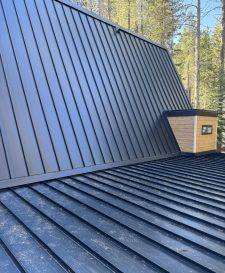
What Bellingham's Climate Actually Demands
Three things define roofing conditions in this area, and each one shapes how a metal roof should be specified and installed.
Salt Air
Proximity to Bellingham Bay and the Salish Sea means airborne salt is a real factor for homes closer to the water, and it doesn't stop at the shoreline — wind carries it inland. Salt accelerates corrosion on any exposed metal fastener, flashing, or panel edge that isn't properly coated or protected. This is a material and detailing issue, not just a "buy thicker metal" issue.
Driving Rain
Rain here rarely falls straight down. Wind off the water pushes it sideways, which means it finds its way into laps, seams, and fastener penetrations that would stay dry in a calmer climate. A metal roof's watertightness depends almost entirely on how the seams and flashings are detailed, not just on the panel itself.
A Long Moss Season
Mild, wet winters and shaded lots around Bellingham give moss and algae a long runway to establish themselves, especially on north-facing slopes and under tree cover. Moss holds moisture against a roof surface for weeks at a time, which is exactly the condition that shortens the life of most roofing materials.
A roof designed for this area needs to handle all three conditions at once, year-round, not just survive an occasional storm.
Why Metal Performs Well Here
Metal roofing has a real advantage in each of the conditions above, but only when it's specified and installed with those conditions in mind:
- Smooth, hard surface — moss and algae have a much harder time gripping and holding on a metal panel than on a textured shingle surface, which slows growth and makes what does grow easier to remove.
- Steep water shed — metal's slick surface and standing seams or interlocking panels move water off the roof faster than granular roofing materials, reducing the time water sits against any seam.
- Long service life when properly coated — a quality factory finish on the correct base metal resists the corrosive effects of salt air far longer than uncoated or poorly matched materials.
- Fewer exposed fasteners (on some systems) — concealed-fastener panels remove one of the most common failure points in coastal, wind-driven-rain climates.
None of this is automatic. The wrong panel type, the wrong fastener, or a rushed installation can turn a metal roof into a maintenance headache faster than a well-installed asphalt roof would be.
Panel Types We Install: Standing Seam vs. Exposed Fastener
Both systems are legitimate choices for Bellingham homes, but they behave differently in wind-driven rain and salt exposure, and they carry different upfront and long-term costs.
| Factor | Standing Seam | Exposed Fastener |
|---|---|---|
| Fasteners | Concealed under interlocking seams | Exposed screws through the panel face |
| Wind-driven rain performance | Excellent — no penetrations in the field of the panel | Good, but only as durable as each fastener's seal, which degrades over time |
| Maintenance | Minimal; no fasteners to re-seat or re-seal | Fastener washers should be checked periodically and replaced as they age |
| Upfront cost | Higher | Lower |
| Best fit | Primary roofs, homes closer to the water, long-term owners | Outbuildings, shops, budget-driven projects |
For a primary residence in Bellingham, especially anything within a few miles of the water, we generally recommend standing seam. The cost difference buys you a roof with far fewer maintenance touchpoints over its life — which matters when every exposed fastener is a potential entry point for driving rain and a site for salt-driven corrosion.
What a Correct Installation Actually Involves
The panel itself is only part of a metal roofing system. Most of the failures we get called out to look at trace back to installation shortcuts, not the metal itself.
Underlayment and Ice/Water Protection
A synthetic, high-temperature underlayment goes down first, with self-adhering ice-and-water membrane at eaves, valleys, and any penetration — the spots where wind-driven rain is most likely to work its way underneath the panels.
Ventilation
Metal roofs need proper intake and exhaust ventilation just as much as any other roof type. Trapped moisture under a metal roof condenses on the underside of the panels, and in a climate as damp as ours, poor ventilation shows up as rust, rot, or mold in the attic long before it shows up on the surface.
Flashing Details
Chimneys, skylights, valleys, and wall-to-roof transitions are where roofs actually leak. Metal flashing needs to be formed to fit the specific detail, not bent from a generic profile and caulked into place. Caulk is a backup, not a waterproofing plan.
Fastener and Panel Compatibility
Fasteners, flashing, and panel metal all need to be compatible with each other to avoid galvanic corrosion — mixing incompatible metals in a salt-air environment accelerates rust at every contact point.
Panel Layout and Expansion
Metal panels expand and contract with temperature swings. Clips and seams need to allow for that movement, or panels can oil-can, buckle, or pull loose at fasteners over time.
Metal Roofing and the Moss Problem
Metal doesn't eliminate moss risk in Bellingham's climate, but it changes the equation. Moss struggles to establish a foothold on a smooth metal surface the way it does on shingles, and what does accumulate — usually in valleys, under overhanging branches, or where debris collects — is easier to remove without damaging the roofing material underneath.
That said, metal roofing still benefits from the same basic upkeep any roof needs in this region:
- Keeping gutters and valleys clear of needles and leaf debris where moss spores can take hold
- Trimming back overhanging branches to reduce shade and moisture retention
- Rinsing off accumulated debris periodically, especially on north-facing slopes
- Avoiding pressure washing directly against seams or fasteners, which can drive water underneath
What It Costs and What Drives the Price
Metal roofing costs more upfront than asphalt shingles, and the range varies based on several factors specific to your home and site.
| Cost Factor | Why It Matters |
|---|---|
| Panel system (standing seam vs. exposed fastener) | Standing seam costs more in material and labor but reduces long-term maintenance |
| Roof complexity | Valleys, dormers, and multiple planes add labor for cutting and flashing |
| Roof pitch and access | Steeper or harder-to-access roofs take longer and require more safety setup |
| Tear-off vs. overlay | Removing old roofing adds cost but is often the right call for ventilation and deck inspection |
| Coating and gauge | Heavier gauge and higher-grade coatings cost more but last longer in salt air |
We'll walk through these factors specifically for your roof during an on-site estimate rather than quoting a number that doesn't account for your home's actual layout and condition.
Our Process for Bellingham Metal Roof Projects
Every metal roofing project follows the same core steps, adjusted for your roof's specifics:
- On-site inspection — we look at the existing roof, deck condition, ventilation, and any trouble spots before recommending a system.
- System selection — we walk through standing seam vs. exposed fastener options based on your home, budget, and how close you are to the water.
- Tear-off and deck check — old roofing comes off and the deck gets inspected for rot or damage before anything new goes down.
- Underlayment and ice/water membrane — installed at all eaves, valleys, and penetrations.
- Panel installation — panels and seams laid out to manage thermal movement correctly.
- Flashing and detail work — chimneys, skylights, valleys, and transitions get custom-formed flashing.
- Final walkthrough — we go over the completed roof with you before calling the job done.
Why a Local Crew Matters for This Job
Metal roofing rewards experience with the specific conditions it's being installed in. A crew that regularly works in Bellingham and the surrounding Whatcom County area already knows which details tend to leak in wind-driven rain off the bay, which north-facing slopes hold moss longest, and how salt exposure changes fastener and flashing choices depending on how close a property sits to the water. That's knowledge you don't get from a general specification sheet — it comes from doing the work here, roof after roof, through the actual weather this region produces.
If you're weighing metal roofing for a home in Bellingham, we're happy to take a look and walk you through what makes sense for your specific roof — no pressure, no pushy sales pitch. Reach out using the form below to schedule a free estimate.