 Birch Bay Roofing
 Siding for a Community Surrounded by Water
Point Roberts sits on its own peninsula at the southern tip of the Tsawwassen headland, bordered by water on three sides and reachable from the rest of Whatcom County only by crossing through Canada. That geography is what makes the exterior of a Point Roberts home work harder than a house just a few miles inland. Salt-laden air moves off the water and settles on siding, trim, and fasteners year-round. Driving rain off the Strait comes in sideways during winter storms, testing every seam and joint. And the tree cover that gives many Point Roberts lots their privacy also keeps the north and shaded sides of a house damp long after the rain stops, which is exactly what moss needs to get established.
None of that is unusual for this corner of Washington. But it does mean the siding material and the installation details matter more here than they would in a drier, more sheltered part of the state. This page covers what fiber cement siding needs to do in Point Roberts specifically, what a correct installation looks like, and why we send a crew that already knows this community rather than treating it as just another stop on the route.
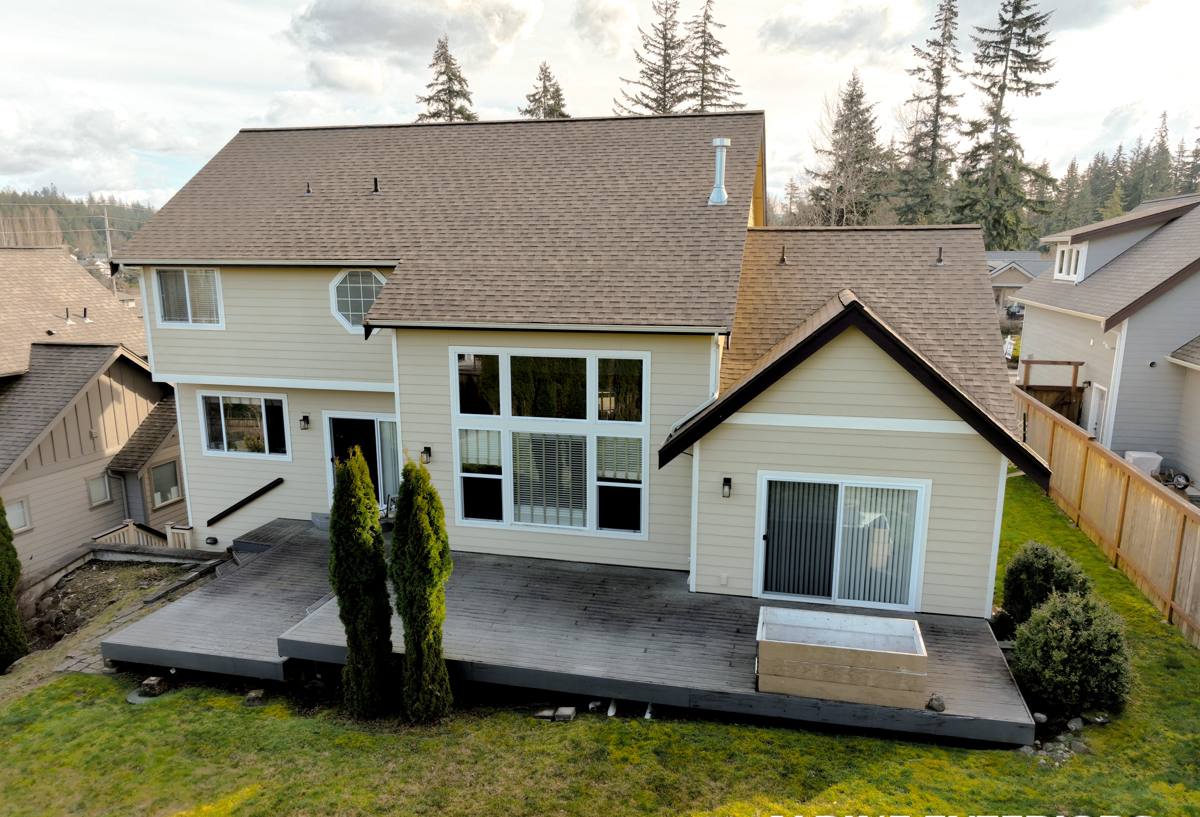
What Point Roberts' Climate Actually Does to Siding
Salt Air and Marine Exposure
Airborne salt is corrosive to metal fasteners, flashing, and trim, and it accelerates the breakdown of coatings that aren't formulated to resist it. On homes closer to the water, salt residue builds up on siding faces and window trim faster than most homeowners expect, which is one reason paint and caulk on lower-grade siding products tend to fail early in this kind of setting.
Wind-Driven Rain
Storms moving through this stretch of the Strait of Georgia and the Salish Sea don't just drop rain straight down — they push it horizontally into wall assemblies, especially on exposed elevations and around windows, corners, and roof-to-wall transitions. Siding that isn't installed with proper drainage behind it, or that relies on caulk alone to keep water out, is the first thing to show problems in these conditions.
A Long Moss and Shade Season
Between the tree canopy on many Point Roberts properties and the Pacific Northwest's extended wet season, north-facing and shaded walls can stay damp for weeks at a stretch. That's a perfect environment for moss and algae to take hold on siding surfaces, and it's a slow but real source of moisture intrusion if it's left to spread into seams and butt joints over time.
Why We Install Only James Hardie Fiber Cement Siding
We install James Hardie fiber cement exclusively — we don't install vinyl, LP SmartSide, Cemplank, Allura, or bare cedar and primed spruce. That's a deliberate standard, not a sales position, and it's worth explaining honestly rather than just asserting it.
Vinyl siding is inexpensive and low-maintenance in mild conditions, but it's a thin plastic product that expands, contracts, and can become brittle with UV and temperature swings, and it isn't sealed at the seams the way fiber cement can be — which matters when wind-driven rain is a regular event. LP SmartSide is an engineered wood product with an OSB-based substrate; it performs reasonably where it stays dry, but wood-based siding is inherently more vulnerable to sustained moisture exposure than a cement-based product, and a marine climate with a long wet season isn't where we want that vulnerability tested. Cedar and primed spruce look good on day one, but both require ongoing refinishing, caulking, and moisture vigilance to avoid rot — upkeep that's easy to fall behind on, especially on a part-time or seasonal residence, which describes a meaningful share of Point Roberts homes.
Fiber cement is cement, sand, and cellulose fiber — it doesn't rot, it doesn't feed insects, and it's non-combustible. Among fiber cement manufacturers, we standardized on James Hardie specifically for its factory-applied ColorPlus finish, its climate-engineered HZ product lines, and a transferable warranty backed by a company with a long installed track record. That combination is what we're willing to put our name behind on a Point Roberts home.
The James Hardie Lines We Use in This Climate
James Hardie engineers its siding by climate zone, and the zone rating matters more here than in a lot of the country because of the moisture and salt exposure discussed above.
| Product Line | Built For | Relevant to Point Roberts |
|---|---|---|
| HardiePlank Lap Siding (HZ5/HZ10) | Cold, wet, freeze-thaw climates | Engineered moisture and freeze resistance for Pacific Northwest winters |
| HardiePanel Vertical Siding | Board-and-batten and modern styles | Fewer horizontal laps means fewer joints exposed to driving rain |
| HardieTrim Boards | Corners, fascia, window and door trim | Non-combustible, stable trim that pairs with the field siding |
| ColorPlus Factory Finish | Baked-on, UV-cured color coat | Resists fading and holds up better to salt air than field-applied paint |
We select the specific plank exposure, texture, and trim package based on the home's elevation, sun exposure, and how directly it faces the water — a shaded, north-facing wall and a wide-open south wall don't need to be treated identically.
What a Correct Installation Actually Involves
Fiber cement siding is only as good as the assembly behind it. A lot of the siding problems we get called out to inspect on older homes trace back to installation shortcuts, not the material itself.
Drainage Plane and Rain Screen
Siding needs a code-compliant weather-resistant barrier behind it, and in a wind-driven-rain climate like this one, a drainage gap (rain screen) behind the siding gives incidental water a way out instead of trapping it against the sheathing.
Fastening and Clearances
James Hardie specifies fastener type, spacing, and embedment depth, along with minimum clearances from the ground, roof lines, and decks. Skipping these — nailing too close to panel edges, or letting siding sit too close to grade or a roof surface — is one of the most common causes of early failure.
Flashing, Not Just Caulk
Every window, door, and roof-to-wall transition needs proper flashing integrated with the water-resistive barrier. Caulk is a secondary seal, not a substitute for flashing — a distinction that matters most exactly where wind-driven rain is common.
Cut Edges and Field Sealing
Factory-primed and ColorPlus edges that get cut on site need to be sealed per Hardie's specification before installation. An unsealed cut edge is a direct path for moisture into the panel over time.
How We Approach a Point Roberts Project
- On-site assessment — we walk the exterior, check the existing siding and sheathing condition, and note sun/shade and wind exposure by elevation.
- Moisture and substrate check — before ordering material, we confirm the sheathing underneath is sound, especially on any wall that's shown past staining, soft spots, or moss buildup.
- Removal and prep — old siding comes off, the substrate is repaired as needed, and the weather-resistive barrier and rain screen components go on correctly the first time.
- Flashing and trim — windows, doors, and roof transitions are flashed before any field siding goes up.
- Siding installation — HardiePlank, panel, or trim installed to James Hardie's fastening and clearance specifications, matched to each elevation's exposure.
- Final detailing and cleanup — caulking, touch-up, and job site cleanup, with a walkthrough before we call it finished.
Living With Moss, Salt, and Rain After Installation
Fiber cement is low-maintenance compared to wood siding, but "low-maintenance" doesn't mean "no maintenance," especially in this environment. A short annual routine keeps a Point Roberts installation performing the way it should for decades.
- Rinse siding annually, and more often on shaded, moss-prone walls — a garden hose and soft brush is usually enough; avoid high-pressure washing directly at seams and joints.
- Keep gutters clear so water isn't sheeting down the siding face during storms.
- Trim back branches and shrubs that keep a wall shaded and damp — more airflow means faster drying after rain.
- Inspect caulking at trim, windows, and corners once a year and re-caulk any joints that have cracked or pulled away.
- Watch the ground clearance at grade and decks — soil, mulch, or debris that builds up against the bottom of the siding should be cleared.
What Drives Cost on a Point Roberts Siding Job
We don't quote pricing without seeing the house, but the same factors tend to move the number up or down on every project in this area.
| Factor | Why It Matters Here |
|---|---|
| Existing siding condition | Rot or hidden moisture damage under old siding adds sheathing repair before new siding can go on |
| Home size and wall complexity | More corners, dormers, and trim detail means more labor and material waste |
| Elevation exposure | Walls facing prevailing wind and rain may warrant added flashing detail or a different plank profile |
| Access and logistics | Material delivery and disposal both have to route through the border crossing, which affects scheduling more than cost directly |
| Trim and finish level | HardieTrim corner boards, window casing, and custom detailing add cost over a basic trim package |
Why It Matters That We Already Work in Point Roberts
Point Roberts isn't a place a contractor can treat like a normal service call. Material deliveries, crew travel, and disposal hauls all have to cross the border, which means scheduling has to account for crossing times and documentation in a way that doesn't apply almost anywhere else in Whatcom County. A crew that hasn't done this before will underestimate how much that logistics layer affects a realistic timeline — and that shows up as delays and rescheduled site visits.
Working out of Birch Bay, we're close enough to plan Point Roberts projects properly and familiar enough with the crossing logistics that they don't become a surprise mid-job. We also know what this specific stretch of coastline does to a house — which elevations take the worst of the driving rain, which walls hold onto moss the longest, and where salt exposure is worst — because we've already seen it on other homes in the area, not because we're guessing from a spec sheet.
If you're planning a siding project on a Point Roberts home, we're glad to take a look and talk through what your house specifically needs. There's no pressure and no cost for a straightforward, honest estimate — just a real look at your siding and a clear explanation of what we'd recommend and why.