 Birch Bay Roofing
 A Peninsula Climate That Doesn't Forgive Cheap Siding
Point Roberts sits on its own peninsula, surrounded by saltwater on three sides and cut off from the rest of Washington by the Canadian border. That geography means homes here take on a version of Whatcom County's marine climate that's even more concentrated: salt-laden air blowing straight off the water, driving rain that comes in sideways during winter storms, and long stretches of grey, damp weather that barely let siding dry out between soakings. Add the shade from mature evergreens on many lots and you get a moss and algae season that can run most of the year instead of a few months.
Siding in Point Roberts isn't decorative — it's the first line of defense against a coastal environment that will find every weak seam, every unsealed joint, and every material that can't handle repeated wet-dry cycling. We've built our whole approach around installing a product that's engineered for exactly this kind of exposure, and installing it the way the manufacturer actually specifies.
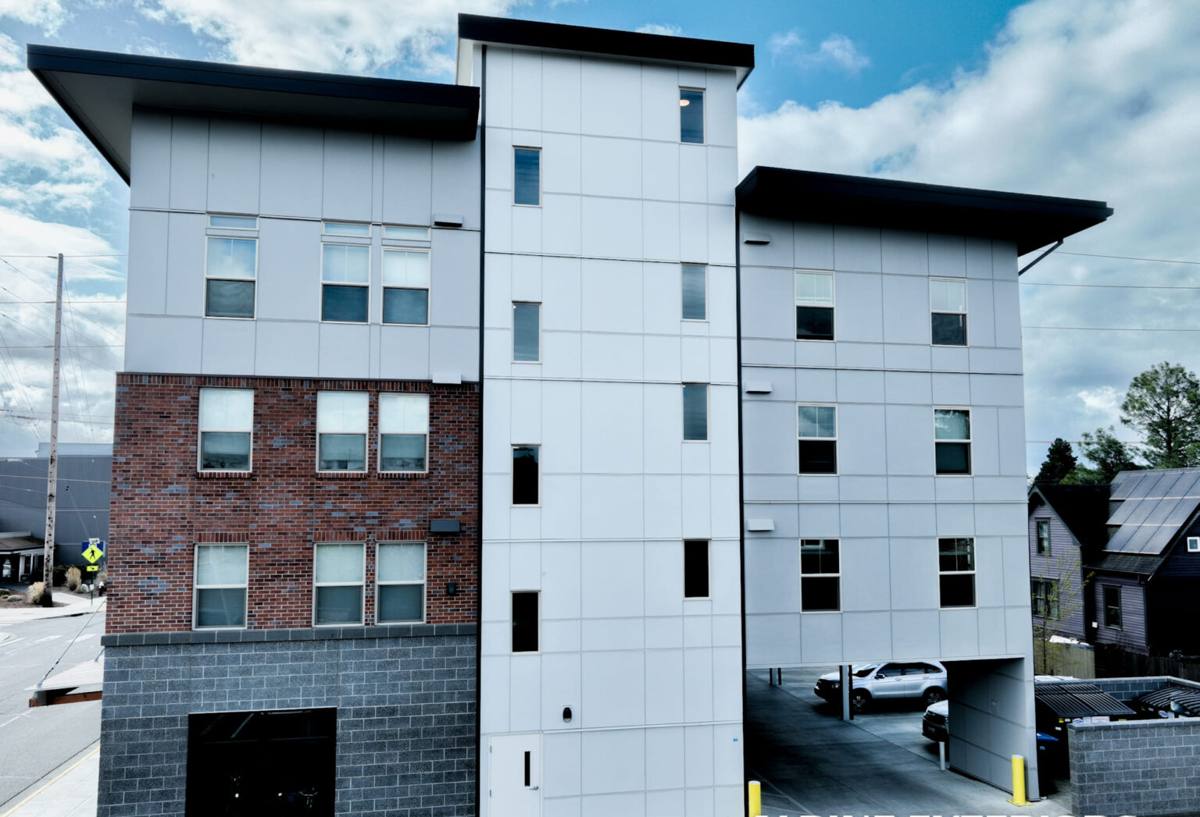
Why We Only Install James Hardie Fiber Cement
We get asked why we don't offer vinyl, LP SmartSide, cedar, or the cheaper fiber cement alternatives. The honest answer is that we've made a professional call: on a peninsula exposed to salt air and constant moisture, the trade-offs of those products show up faster and cost homeowners more in the long run.
- Vinyl expands and contracts with temperature swings, and salt air accelerates fading and brittleness over time — it also isn't fire-resistant, which matters this close to dry summer brush.
- LP SmartSide and other engineered wood products use wood strand cores. If moisture gets behind the panel through a failed seal or damaged edge, that core can swell and rot — a real risk in a climate where siding rarely gets a long dry spell.
- Cedar and primed spruce look great initially but need ongoing refinishing, and salt-air exposure shortens the interval between recoats significantly.
James Hardie fiber cement doesn't have an organic core to rot, isn't combustible, and holds its factory finish far longer under UV and salt exposure than field-applied paint. That's why it's the only product we put on homes.
How Salt Air and Moisture Actually Attack Siding
It helps to understand the mechanism, not just the conclusion. Airborne salt is hygroscopic — it pulls moisture out of the air and holds it against whatever surface it settles on. On a wood-based product, that means the surface stays damp longer than it would inland, which is exactly the condition fungi and rot need. On metal fasteners and trim, salt accelerates corrosion. On paint and factory finishes, the combination of salt crystals and UV exposure breaks down the coating faster than a drier climate would.
| Material | Behavior Under Salt Air & Constant Moisture | Typical Maintenance Burden |
|---|---|---|
| Vinyl siding | Fades and becomes brittle faster near salt water; panels can warp with heat | Low, but limited lifespan in marine exposure |
| Engineered wood (LP SmartSide) | Wood-strand core vulnerable to swelling and rot if moisture penetrates a seam | Moderate — depends heavily on caulk/paint upkeep |
| Cedar / primed wood | Absorbs moisture, prone to cupping and rot without diligent refinishing | High — recoating every few years |
| James Hardie fiber cement | Cement composition doesn't rot; factory ColorPlus finish resists salt/UV fading | Low — periodic rinsing, no repainting cycle needed |
The Right Hardie Product Line for This Location
James Hardie makes climate-specific formulations, and for a saltwater peninsula in the Pacific Northwest, that distinction matters. HZ5 products are engineered for regions with significant moisture exposure and freeze-thaw cycling — which describes Point Roberts winters well. We spec HZ5 as the baseline for homes here rather than a generic formulation meant for drier climates.
ColorPlus Technology
Rather than site-applied paint, ColorPlus finishes are baked on in a controlled factory process, which produces a harder, more UV- and salt-resistant top coat than most field painting can achieve. In a climate where repainting siding every several years is a real cost, a factory finish that's warrantied against fading is worth the upfront consideration.
Plank, Panel, or Shingle Profile
HardiePlank lap siding is the most common choice for Point Roberts homes and pairs well with the area's mix of traditional and coastal-cottage styles. HardieShingle gives a cedar-shake look without the maintenance cedar demands, and HardiePanel works well for accent walls or modern designs. The right choice depends on your home's existing lines and how much wall area is exposed to direct wind-driven rain.
What a Correct Installation Actually Requires
Fiber cement siding is only as good as its installation. Most of the failures we see on older homes here trace back to installation shortcuts, not the material itself.
- Proper clearances — Hardie specifies minimum gaps between siding and roof lines, decks, and grade so water can't wick up into the bottom edge of the panel.
- Correct fastening — nails or screws driven to the manufacturer's depth and pattern, not overdriven, which can crack the board or create an entry point for water.
- Rain screen or drainage plane — a gap behind the siding lets any moisture that does get past the surface drain and dry out rather than sitting against the sheathing, which matters more here than in drier parts of the county.
- Flashing at every penetration — windows, doors, hose bibs, and vents all need flashed and sealed correctly, since wind-driven rain will find any gap over time.
- Factory-cut edges sealed — any field cut exposes raw fiber cement that needs to be sealed per Hardie's instructions to maintain the moisture warranty.
We install to Hardie's published specifications, which is also what keeps the manufacturer's warranty valid — a detail some lower-bid installers skip.
Living With a Long Moss Season
Between the marine humidity, tree cover on many Point Roberts lots, and short winter daylight, moss and green algae growth on siding, trim, and roofing is a near year-round concern rather than a seasonal one. A few practical realities:
Fiber cement doesn't feed mold and moss growth the way organic wood surfaces can, but moss can still take hold on any exterior surface where moisture, shade, and debris accumulate — especially at ground-contact areas, under overhangs, and anywhere leaves and needles collect against the wall. Keeping gutters clear and trimming back vegetation that shades siding year-round goes a long way toward slowing growth, and an occasional gentle rinse keeps the ColorPlus finish looking like new without damaging it. Pressure washing at high force or with harsh chemicals can void the finish warranty, so we advise homeowners on the right approach for their specific siding.
Our Process for Point Roberts Projects
Working in Point Roberts takes some extra planning that a lot of contractors aren't set up for. Because the community is only reachable by road through Canada, material deliveries, crew scheduling, and permitting timelines all need to be planned further in advance than a typical Whatcom County job. We build that into our estimate and schedule up front, rather than surprising homeowners with delays mid-project.
- On-site assessment — we look at your home's current siding condition, exposure direction (which walls take the worst wind-driven rain), and any moisture damage already present.
- Product and line recommendation — we specify HZ5 or the appropriate Hardie line and profile based on your home's exposure and style.
- Scheduling and logistics — materials and crew time are coordinated around the border crossing and weather windows so the job isn't left half-finished during a stretch of rain.
- Installation to manufacturer spec — proper clearances, fastening, drainage plane, and flashing at every penetration.
- Final walkthrough — we review the completed work and warranty documentation with you before we consider the job done.
What Point Roberts Siding Projects Typically Involve
| Cost Factor | Why It Matters Here |
|---|---|
| Home size and number of stories | More wall area and higher elevations exposed to wind-driven rain need more attention at flashing and joints |
| Existing siding removal and any moisture damage found | Salt-air exposure can hide rot behind older siding that needs repair before new material goes on |
| Product line (HZ5 vs. standard) | Climate-engineered lines cost more upfront but hold up better against this specific exposure |
| Profile choice (plank, shingle, panel) | Shingle profiles and detailed trim work take more labor time than straight lap plank |
| Logistics and scheduling | Material delivery and crew access require extra lead time for this location |
Signs Your Point Roberts Home May Need New Siding
- Visible cracking, bubbling, or peeling on painted wood or engineered siding
- Soft spots or a spongy feel when pressed, especially near the bottom courses or below windows
- Persistent moss or algae staining that returns quickly after cleaning
- Fading or chalking that's noticeably worse on wind- and rain-exposed walls
- Gaps opening up at seams, corners, or trim where caulk has failed
- Visible warping or cupping on wood-based siding panels
If you're seeing any of these, it's worth having the siding and the sheathing behind it checked before small problems turn into structural repairs.
If you'd like an honest look at your home's siding and what it would take to move to James Hardie, we're happy to walk the exterior with you and put together a free, no-pressure estimate using the form below.