 Birch Bay Roofing
 Sandy Point sits close enough to the water that its homes take on a different kind of exposure than properties even a mile or two inland in Whatcom County. Salt-laden air moves off the water and settles onto siding, trim, and window frames every day, not just during storms. When wind-driven rain shows up, it often comes in sideways instead of straight down, which tests every seal and flashing detail a window has rather than letting gravity do the easy work. And the shade and dampness common along this stretch of coastline support a moss and mildew season that runs long — sometimes most of the year on north- and west-facing walls.
Windows absorb more of that punishment than almost any other part of a house. They have moving parts, multiple seals, and a frame that has to hold its shape and finish against constant moisture. In Sandy Point, we regularly see windows fail years before their rated lifespan for reasons that trace back to exposure, not to a bad product — and a correct replacement, installed with that exposure in mind, is what actually fixes the problem instead of just resetting the clock on it.
Why Windows Wear Out Faster in Sandy Point
Manufacturer lifespan estimates assume average conditions — moderate humidity, occasional rain, and hardware that isn't sitting in salt air year-round. None of that describes a home this close to the water. Salt accelerates corrosion on hinges, locks, balances, and screws faster than a drier inland setting would, so hardware that should last decades can start binding or failing within a handful of years. Wind-driven rain finds gaps in seals and flashing that would never get tested somewhere calmer, which is how water ends up behind a window frame instead of running off it. And persistent moisture on shaded or north-facing walls feeds moss and mildew growth on sills, trim, and low-quality weep systems, which traps water against the frame instead of letting it drain.
The Failure Points We See Most
It's rarely the glass itself that goes first. The seals around the sash, the weep holes meant to drain condensation and wind-driven rain out of the frame, and the hardware that lets a window open, close, and lock are almost always the first things to give out. Once those fail, moisture starts working on the frame material and the wall assembly behind it, and what started as a maintenance issue turns into a rot or mold problem that costs more to fix than the window itself.
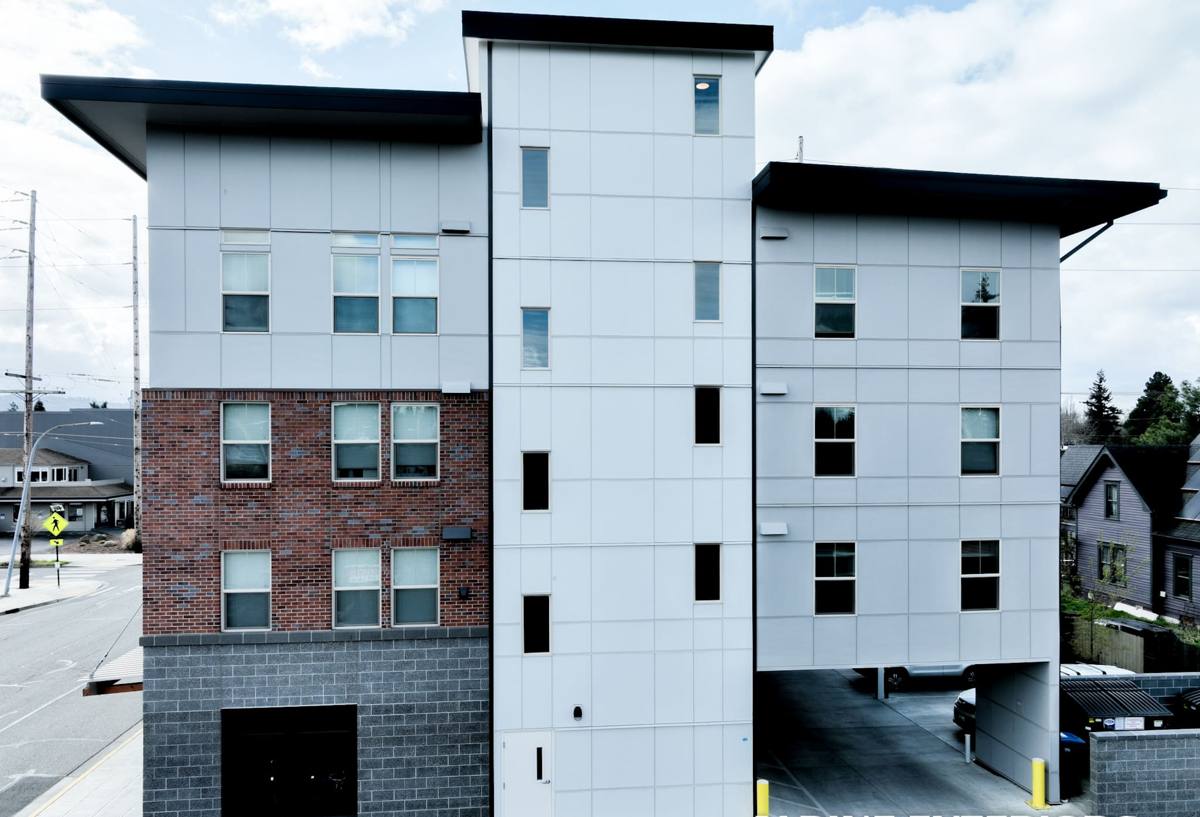
Signs Your Windows Need Replacing, Not Repairing
Not every window problem means a full replacement. But in a coastal environment like this, waiting too long to make that call usually costs more than acting on it early. Here's what tends to mean the window itself, not just a part of it, is done:
- Fogging or a permanent haze between the panes of a double-pane window — the seal has failed and the gas fill is gone
- Windows that are difficult to open, close, or lock, especially if hardware has been replaced once already
- Visible corrosion or pitting on hinges, cranks, or locks that cleaning and lubrication no longer fix
- Soft, discolored, or spongy trim and sills around the window, which usually points to water getting past the frame
- A noticeable draft or cold spot near the window even when it's fully closed and locked
- Persistent moss, mildew, or black staining on the frame or sill that keeps returning after cleaning
- A visible gap between the frame and the siding or trim, which lets wind-driven rain in directly
Any one of these on its own might be repairable. Several at once, or any sign of moisture reaching the wall behind the window, usually means it's time to talk about replacement before the damage spreads past the window opening itself.
Retrofit vs. Full-Frame Replacement
There are two honest ways to replace a window, and which one is right depends on the condition of what's already there — not on which one is faster or cheaper for us.
Retrofit (Pocket) Replacement
A retrofit window is built to fit inside the existing frame, leaving the original frame and exterior trim in place. It's less invasive, faster, and usually less expensive. It's a reasonable option when the existing frame and the wall assembly around it are still sound and dry. It is not the right call when there's already evidence of moisture damage, rot, or failed flashing behind the old frame, because a retrofit installs a new window against a problem instead of fixing it.
Full-Frame Replacement
A full-frame replacement removes the window down to the rough opening, which exposes the framing, sheathing, and flashing behind it. It costs more and takes longer, but it's the only option that lets us actually see and correct what's happening behind the old window — which matters in a home this exposed to wind-driven rain. We'll tell you honestly which approach your windows need once we can see the opening, rather than defaulting to whichever is easier to sell.
Frame Materials That Hold Up on the Water
Frame material choice matters more here than it would a few miles inland, since a window facing salt air and sustained moisture has more working against it over its lifespan. We'll walk through the honest trade-offs for your specific windows rather than defaulting to whatever's fastest to install.
| Frame Material | Coastal Performance | Maintenance | Best Fit |
|---|---|---|---|
| Vinyl | Resists corrosion well; won't rot; performance varies by manufacturer quality | Low — no painting or sealing required | Budget-conscious replacements where color/finish flexibility isn't a priority |
| Fiberglass | Very strong resistance to moisture, salt, and temperature swings; holds paint well if color changes are wanted later | Low | Water-facing walls and homes wanting a longer service life with minimal upkeep |
| Aluminum | Won't rot, but conducts heat and cold and can corrode over time in salt air without a quality coating | Moderate — coating and hardware need periodic attention | Specific architectural or commercial-style applications |
| Wood (uncladded) | Attractive, but exterior-exposed wood is the most vulnerable material to sustained coastal moisture | High — regular painting/sealing required to prevent rot | Interior-facing applications, or exteriors with disciplined maintenance |
| Wood-clad (composite or vinyl exterior) | Combines an interior wood look with a low-maintenance exterior shell | Low to moderate, depending on cladding quality | Homes wanting a wood interior appearance without exterior upkeep |
For most water-facing replacements in Sandy Point, we lead with vinyl or fiberglass because they hold up to sustained salt exposure with the least ongoing maintenance. That's not a rule without exceptions — where the interior look matters and the homeowner understands the upkeep involved, a clad or well-maintained wood option can still be the right call.
What a Correct Window Replacement Job Involves
Assessment and Measuring
We start by checking the actual condition of the opening — not just the window itself. That means looking for soft framing, checking whether the existing flashing is doing its job, and field-measuring rather than assuming a stock size will fit cleanly. This is also where we decide, honestly, whether the job calls for a retrofit or a full-frame replacement.
Removal Without Damaging the Opening
Old windows come out carefully, especially on a full-frame job, so we don't create new damage to siding, trim, or sheathing in the process. If there's hidden rot or a prior flashing mistake behind the old unit — which isn't unusual on a home that's absorbed years of wind-driven rain — this is where we find it and address it before anything new goes in.
Flashing and Weatherproofing
This is the step that matters most given the exposure here. Flashing has to be layered correctly — building paper or house wrap, sill pan, side flashing, and head flashing — so that any water that does get past the window sheds down and out instead of pooling or working its way into the wall. Skipping or rushing this step is the single most common reason a "new" window ends up with the same moisture problems as the old one within a few years.
Sealing, Insulation, and Interior Finish
Once the new window is set, shimmed level and square, and mechanically fastened, the gap between the frame and the rough opening gets insulated and sealed correctly — not just caulked over. Interior and exterior trim is then reinstalled or replaced to match the surrounding wall, so the finished job looks intentional and performs the way it's supposed to.
Practical Checklist Before You Hire
- Ask whether your windows need a retrofit or full-frame replacement, and why
- Confirm the crew will inspect the framing and flashing behind the old window, not just swap units
- Get a written explanation of the flashing sequence they'll use, not just a materials list
- Ask which frame materials they recommend for a water-facing wall and why
- Confirm current Washington contractor licensing and insurance
- Ask how the window unit and the installation labor are each covered under warranty
Our Process, Start to Finish
- On-site assessment — we inspect the existing windows, check the framing and flashing condition, and determine whether retrofit or full-frame replacement is the right call
- Honest recommendation — we explain what we found and why we're recommending a specific approach and frame material for your situation
- Measuring and ordering — precise field measurements, with a realistic timeline for the units to arrive
- Removal and opening prep — old windows come out carefully, and any hidden framing or flashing issues get addressed before the new units go in
- Installation and flashing — new windows are set, shimmed, and flashed to a sequence built for this level of exposure
- Sealing and finish — insulation, sealing, and trim work completed to match the surrounding exterior
Cost Factors: What Actually Moves the Price
We won't quote a number without seeing your windows in person, but the factors that actually move price on a Sandy Point replacement are fairly consistent from job to job:
| Factor | How It Affects Cost |
|---|---|
| Retrofit vs. full-frame | Full-frame costs more upfront but is often necessary once moisture has reached the framing |
| Frame material | Vinyl is typically the most affordable; fiberglass and clad-wood options cost more but ask less in upkeep |
| Number of windows | Replacing multiple windows in one visit is usually more efficient per unit than one-off jobs |
| Condition of the existing opening | Hidden rot or a prior flashing mistake adds repair time before the new window can go in |
| Glass package | Upgraded Low-E coatings or gas fills add cost but can be worth it on water-facing exposures |
| Access and site conditions | Second-story or hard-to-access windows take more time to remove and install safely |
Why a Local Sandy Point Crew Matters
Manufacturer installation instructions are written for average, moderate-climate conditions — they're not written with a water-facing lot in Whatcom County in mind. Salt air, wind-driven rain, and a long wet season stack the deck against a shortcut installation more than they would somewhere drier and calmer, and that shows up in the small decisions that don't come up in a sales pitch: how much lap a flashing course needs on a sill that takes rain from three directions, when a weep system needs extra attention because of how a particular wall is oriented to the wind, which hardware finishes actually hold up under sustained salt exposure instead of just looking good in a showroom.
A crew that has replaced windows on this specific stretch of coastline knows which parts of standard installation guidance are non-negotiable here, and where the extra time on flashing and sealing is worth it even when it wouldn't be required a few miles inland. That experience is what decides whether a replacement window is still performing cleanly in fifteen years or showing drafts, fogging, and soft trim again in five.
If your windows in Sandy Point are showing drafts, fogging, sticking hardware, or soft trim, it's worth having someone look at the actual openings before you start pricing units. We offer free, no-pressure estimates for window replacement in Sandy Point and the surrounding Birch Bay area — use the form below to get a time on the schedule.