 Birch Bay Roofing
 Why Window Choice Matters More Near the Water
Homes around Bellingham and Birch Bay deal with a specific combination of weather that most window manufacturers design around, not for. Salt-laden air off the bay accelerates corrosion on hardware and fasteners that would otherwise last decades inland. Driving rain, pushed sideways by wind off the water, finds gaps that a calm-weather installation would never expose. And the long, damp moss season here keeps north-facing walls and window sills wet for months at a stretch, which is exactly the condition that rots wood trim and lets mildew take hold in poorly sealed frames.
None of this means Bellingham homeowners need exotic products. It means the frame material, the glass package, and — just as important — the installation details around flashing and sealant have to be matched to this climate rather than picked off a generic spec sheet. A window that performs fine in a dry inland town can fail here in five or six years instead of twenty.
What "Custom" Actually Means
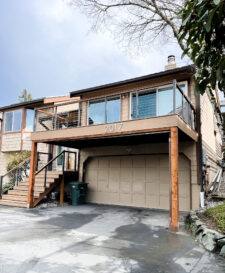
Custom windows aren't necessarily fancier windows — they're windows built to fit your actual opening, your home's actual style, and your actual performance needs, rather than the nearest stock size. That matters a lot in this region because Whatcom County has a wide mix of housing stock: older farmhouses, mid-century ramblers, newer waterfront construction, and additions built at odd angles to catch a view. Few of these have perfectly standard rough openings.
Common reasons a window needs to be custom-built
- Non-standard opening sizes in older homes, especially pre-1980 construction
- Bay, bow, or angled window configurations
- Matching sightlines and grid patterns across a whole elevation
- Taller or wider openings designed to capture a water or mountain view
- Replacing a failed or discontinued window shape without reframing the wall
Custom sizing also lets us correct problems while we're in there — squaring up an opening that's settled slightly, or upgrading flashing details that were never adequate in the original build, even if the window itself is a standard shape.
Frame Materials: What Holds Up in Coastal Whatcom County
Frame material is the single biggest factor in how a window ages here. Salt air and moisture don't punish every material equally.
| Material | Salt air / moisture resistance | Maintenance | Typical use case |
|---|---|---|---|
| Vinyl | Good — won't rot or corrode, seams can be a weak point over time | Low | Budget-conscious replacements, rentals |
| Fiberglass | Very good — dimensionally stable, resists moisture and salt exposure well | Low | Coastal exposure, larger custom sizes |
| Wood, unclad | Poor without diligent upkeep — vulnerable to rot in prolonged damp/moss season conditions | High | Historic restoration where appearance is the priority |
| Wood-clad (aluminum or vinyl exterior) | Good on the exterior face, interior wood still needs normal care | Moderate | Traditional look with better weather protection |
| Aluminum | Fair — can corrode near salt air without a quality finish, conducts cold | Low to moderate | Modern narrow-sightline designs |
We don't push one material on every job. A home a few blocks from the water gets a different recommendation than one further inland, and we'll walk you through the honest trade-offs — appearance, upkeep, and cost — rather than just selling whatever's in stock.
Glass Packages That Make Sense Here
Dual-pane glass with Low-E coating and an argon or krypton gas fill is the baseline we recommend for this area — it's less about dramatic energy savings and more about controlling interior condensation, which is a bigger nuisance here than in drier climates thanks to the humidity that comes with our extended wet season. Homes with strong wind exposure or road noise nearby sometimes benefit from a thicker or laminated glass option as well. We size the glass package to the specific wall and orientation, not just the whole house at once — a west-facing window catching driving rain has different needs than a sheltered interior room.
Signs Your Current Windows Are Already Losing the Fight
Because failure here tends to happen behind the trim before it's visible on the surface, it helps to know what to check for before a small problem becomes a wall repair.
- Fogging or moisture between panes — a sign the seal has failed
- Soft or discolored wood trim, especially on north- or west-facing walls
- Visible mildew or green moss buildup on sills and lower trim
- Drafts or whistling during windstorms off the water
- Hardware (locks, hinges, cranks) that's stiff, corroded, or won't fully latch
- Paint or caulk that's cracked or pulled away from the frame
- Difficulty opening or closing that wasn't there a year or two ago
Any one of these is worth a look. Several together usually mean the window and the flashing behind it both need attention, not just a caulk touch-up.
How We Handle a Custom Window Install
- On-site measurement and assessment — we check the opening, the existing flashing condition, and any water damage before quoting anything
- Material and glass selection based on the wall's actual exposure, not a one-size-fits-all package
- Removal of the old unit with a check for hidden rot or damage in the framing
- Repair of any compromised sheathing or framing found during removal
- Installation of the new window with flashing tape and drainage details set up to shed water outward, not trap it
- Sealing and trim work finished to match the home's existing exterior
- Final walkthrough so you can see the operation and finish before we consider the job done
Step four is the one that gets skipped by crews trying to move fast. In a region with this much driving rain and prolonged wet weather, hidden rot behind an old window is common enough that we budget time to actually check for it rather than covering it back up.
Flashing and Moisture Management: The Part You Won't See Later
Most window failures in this climate aren't glass failures — they're installation failures around the perimeter. A window can be top-quality and still leak if the flashing isn't lapped correctly to shed water down and out, or if sealant is used as a substitute for proper flashing instead of a backup to it. Given the amount of wind-driven rain Whatcom County sees off the bay, we treat the flashing and weather barrier tie-in as the most important part of the job, not an afterthought once the window's set.
Timeline and What Affects Cost
Custom windows take longer to source than stock sizes, so timelines run a bit longer than a straight swap. Cost depends on several factors more than on the window brand alone.
| Factor | Why it matters |
|---|---|
| Frame material chosen | Fiberglass and clad-wood options cost more upfront but hold up better to salt air and moisture |
| Opening condition | Rot or framing repair found during removal adds time and material |
| Number and size of custom shapes | Non-standard sizes and angled units require more lead time to fabricate |
| Glass package | Upgraded Low-E, gas fill, or laminated glass affects both energy performance and price |
| Access and site conditions | Second-story or hard-to-access windows add labor time |
We give straightforward, itemized quotes so you can see where the cost is actually going rather than one lump number.
Why It Matters to Hire a Crew That Already Works This Area
A crew that primarily works drier, inland regions can install a technically correct window that still isn't right for Bellingham conditions — wrong flashing lap direction for our prevailing wind-driven rain, or a frame material that wasn't chosen with salt air in mind. Working regularly in Birch Bay and Bellingham means we've seen how specific walls, orientations, and older building methods in this part of Whatcom County actually hold up over time, and we bring that into every recommendation rather than relying on generic manufacturer guidance.
Living With Custom Windows Here: Simple Upkeep
Even a well-installed window benefits from a little seasonal attention in this climate. Rinse salt residue off exterior frames periodically if you're close to the water, keep weep holes and drainage tracks clear of debris and moss buildup, and check exterior caulk lines once a year for cracking. None of this is heavy maintenance — it's the difference between a window that looks and performs the same in year fifteen and one that starts showing problems by year seven.
If you're weighing a window replacement or addition in Bellingham or Birch Bay, we're happy to take a look and give you a straight, no-pressure estimate — just fill out the form below and we'll follow up to schedule a time that works.