 Birch Bay Roofing
 Building a Deck That Actually Holds Up in Sandy Point
Sandy Point sits right up against the water, and that changes what a deck needs to survive. A design that works fine a few miles inland in Blaine or Ferndale can start showing problems within a couple of seasons on a low-lying, wind-exposed lot near the beach. Salt-laden air corrodes hardware faster, driving rain off the Strait finds every gap in flashing and fastening, and the long, damp moss season here in Whatcom County keeps deck surfaces wet longer than most homeowners expect. None of that means you can't have a great deck in Sandy Point — it means the deck has to be built with that environment in mind from the framing up, not just picked out of a catalog.
This page covers what actually matters for a deck built in this specific stretch of Birch Bay: material choices that hold up to salt exposure, framing and fastening details that keep water from doing quiet damage underneath the surface, and the permitting and process side of getting it done right the first time.
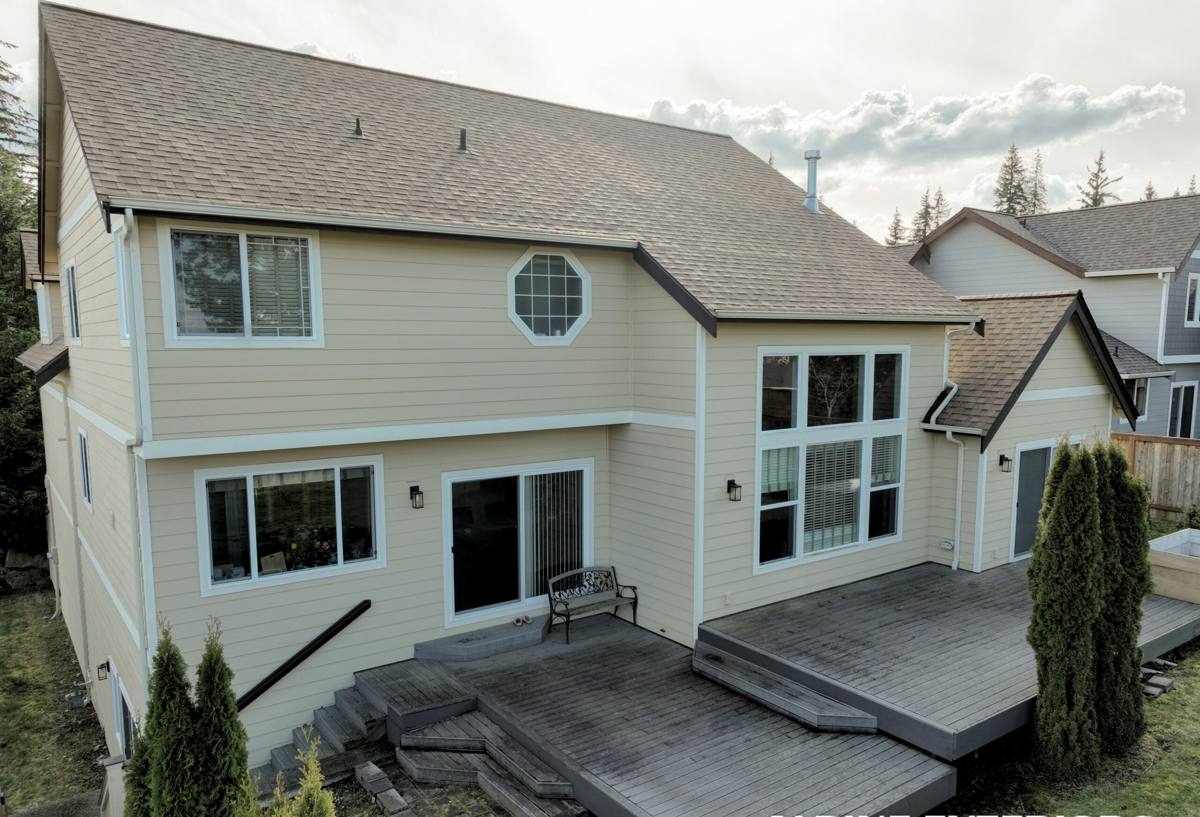
Salt Air, Driving Rain, and Moss: The Three Things That Wear Decks Out Here
Salt Air
Airborne salt from the Strait of Georgia and Semiahmoo Bay settles on everything nearby, including your deck. It accelerates corrosion in unprotected metal — screws, joist hangers, bolts, railing brackets — long before the wood or decking itself shows real wear. A deck built with standard interior-grade hardware in Sandy Point will show rust streaks and weakened fasteners years ahead of the same deck built a few miles inland.
Driving Rain
Storms coming off the water tend to drive rain sideways as much as down, which pushes moisture into places a straight-down rain never would — under rail posts, behind ledger boards, into end grain at butt joints. A deck that isn't flashed and sealed with that in mind will trap water where you can't see it, and rot starts from the inside.
Moss Season
Whatcom County's wet season runs long, and a shaded or low-airflow deck surface can stay damp for weeks at a stretch. Moss and algae aren't just cosmetic — a slick, moisture-holding layer on a deck surface accelerates wood decay and makes the deck genuinely slippery underfoot. Deck orientation, gap spacing between boards, and material choice all affect how much of a moss problem you'll actually have.
Choosing the Right Decking Material for a Waterfront Lot
There's no single "best" decking material — every option is a trade-off between upfront cost, maintenance, and how it handles moisture and salt exposure over time. Here's how the common choices actually perform on a Sandy Point lot:
| Material | Salt/Moisture Handling | Maintenance | Notes for This Location |
|---|---|---|---|
| Pressure-treated fir/hem-fir | Good if properly sealed and re-coated regularly | High — annual inspection, periodic staining/sealing | Lowest upfront cost; needs real upkeep discipline near salt air or it fades and checks fast |
| Cedar | Naturally rot-resistant but still needs sealing near salt spray | Moderate to high | Attractive, ages to gray if unsealed; softer, so more prone to surface wear |
| Capped composite | Excellent — won't absorb moisture or rot | Low — occasional washing | Higher upfront cost, but the cap layer resists salt staining and moss gets a foothold on the surface, not inside the board |
| PVC decking | Excellent — fully synthetic, no organic material to rot | Low | Most resistant to moisture and salt long-term; can run hotter underfoot in direct sun |
For most Sandy Point homeowners, the decision comes down to how much annual maintenance you want to take on versus upfront budget. Wood costs less to install but demands consistent sealing and inspection to keep pace with the salt air and rain here. Composite and PVC cost more initially but largely remove moisture absorption from the equation, which matters more here than in a drier, inland part of the county.
Framing and Foundation: The Part You Won't See Later
A deck's surface material gets all the attention, but the framing underneath is what actually determines how long the deck lasts. On a low-lying, sandy-soil lot near the water, a few things matter more than they would elsewhere:
- Footings sized and set to reach stable bearing soil, not just poured to a standard depth regardless of what's actually under the sand
- Joists and beams rated and treated for ground contact where they're close to grade, not just standard exterior-rated lumber
- Proper drainage slope away from the ledger board attachment point at the house
- Ledger flashing that actually sheds water away from the house band board, since this is the single most common point of hidden rot on any deck
- Adequate airflow underneath the deck to help the structure dry out between rain events instead of staying damp through the wet season
Skipping any of these to save time or money doesn't show up as a problem on day one — it shows up two or three years later as soft framing, rusted-through hangers, or a ledger connection that's failed quietly behind the siding.
Fasteners and Hardware: Small Parts, Big Consequences
This is where a lot of decks fail early in a salt-air environment, and it's an easy thing to get wrong if a crew is using whatever's standard stock rather than what the site actually calls for. Galvanized hardware is fine in a lot of the country, but in direct salt exposure it corrodes faster than most homeowners expect. We spec stainless steel or marine-grade coated fasteners and connectors for decks in Sandy Point specifically because the cost difference is small relative to the deck's total price, and the failure mode of cheap hardware — a joist hanger that rusts through — is exactly the kind of hidden problem that turns into a safety issue instead of a cosmetic one.
Permits and Site Considerations in Birch Bay
Deck projects in Whatcom County generally require a building permit once the deck exceeds a certain height or size threshold, and waterfront-adjacent lots can carry additional setback or shoreline considerations depending on the parcel's proximity to the water. Requirements vary by exact lot and elevation, so we pull the specifics for your property before finalizing a design rather than assuming a one-size-fits-all standard. Handling the permit correctly up front avoids a much more expensive conversation later if a deck needs to be modified or re-inspected.
Our Process for a Sandy Point Deck Build
1. On-Site Assessment
We walk the actual lot — sun exposure, wind direction, drainage, soil condition, and how close the structure will sit to salt spray — before recommending a material or design. A deck facing the water needs different detailing than one tucked on a more sheltered side of the house.
2. Material and Design Conversation
We go through the honest trade-offs between wood and composite/PVC options for your specific budget and maintenance tolerance, rather than pushing one product line by default.
3. Permitting
We confirm what Whatcom County and any applicable local requirements call for on your specific lot and handle the permit process before construction starts.
4. Build
Footings to stable bearing, corrosion-resistant fasteners and hardware throughout, correctly flashed ledger connection, and board spacing/orientation set to reduce moisture and moss retention.
5. Walkthrough
We go over the finished deck with you, including what maintenance it actually needs and on what schedule, so there are no surprises down the line.
Keeping a Sandy Point Deck in Good Shape Year-Round
Whatever material you choose, a little seasonal attention goes a long way in this climate. A basic checklist we recommend to homeowners:
- Rinse or sweep debris and organic buildup off the deck surface before it accumulates, especially in shaded areas prone to moss
- Inspect fasteners and railing hardware annually for rust or corrosion, particularly after winter storm season
- Check the ledger board flashing and the deck-to-house connection point for any signs of moisture intrusion
- Re-seal or re-stain wood decking on the manufacturer's recommended schedule — don't wait until it visibly fades
- Keep gutters and downspouts near the deck clear so runoff isn't draining directly onto or under the structure
- Look underneath the deck periodically for standing water, soft framing, or gaps in ventilation
Why It's Worth Hiring a Crew That Already Works This Area
A deck built to a generic spec sheet can look identical to one built for this specific environment — until a few winters of salt air and driving rain expose the difference. Crews who regularly work Birch Bay and the surrounding waterfront communities already know which fastener grades hold up, how to detail flashing for wind-driven rain, and how much airflow a deck actually needs underneath to manage the region's long moss season. That's not something you can fully evaluate from a proposal alone — it comes from having built and later serviced decks in the same conditions your home sits in.
If you're planning a new deck or replacing one that didn't hold up the way it should have, we're happy to walk your Sandy Point property, talk through material options honestly, and put together a straightforward estimate — no pressure, no obligation. Use the form below to get started.