 Birch Bay Roofing
 Lynden Decks Face a Different Kind of Wear
Lynden sits inland from the water, but it doesn't escape what Whatcom County weather does to outdoor structures. The same weather system that drives salt-laden air across Birch Bay and the rest of the county pushes long stretches of steady, soaking rain across Lynden through fall, winter, and much of spring. Add a moss season that can run six months or longer in shaded yards, and a deck here is under more sustained moisture pressure than most homeowners assume. This isn't a place where a deck just needs to look good on a sunny July afternoon — it needs to hold up through months of gray, wet weather every single year.
A deck built without that reality in mind doesn't usually fail all at once. It fails slowly: a soft spot near a post base, a joist that's darker and spongier than the ones around it, fasteners bleeding rust through the decking boards, moss creeping across boards that never quite dry out between rains. By the time it's obvious, the fix is bigger and more expensive than it needed to be.
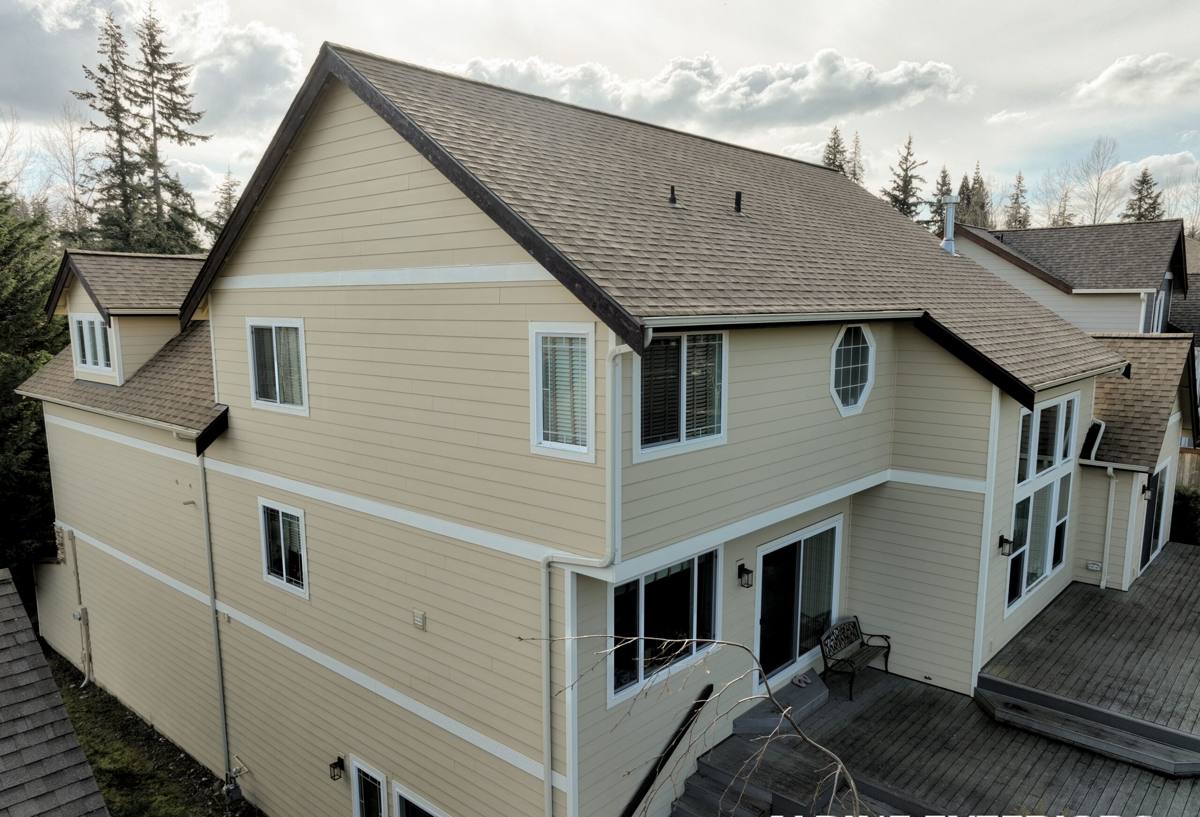
What a Deck Built for This Climate Actually Requires
Building a deck that holds up in Lynden isn't about exotic materials — it's about getting the basics right in a way that accounts for how much moisture this deck will see over its lifetime.
Fasteners and Hardware
Every fastener, bracket, and hanger on an outdoor structure here should be rated for exterior, corrosive-prone environments — hot-dipped galvanized at minimum, stainless steel where it matters most (ledger connections, post bases, anywhere metal sits in direct, repeated contact with wet wood). Mixing the wrong fastener with the wrong treated lumber chemical is a common shortcut that causes accelerated corrosion, and it's invisible until the connection starts to loosen.
Ledger Attachment and Flashing
The ledger board — where the deck attaches to the house — is the single most common failure point on any deck in a wet climate, and it's also the point with the most serious consequences if it fails. Proper flashing that sheds water away from the house band joist, correct fastening patterns, and a gap or drainage path so water doesn't sit trapped between the ledger and siding are not optional details. They're the difference between a deck that's still solid in fifteen years and one with hidden rot behind the house wall in five.
Air Flow Underneath
A deck built too low to the ground, or without any thought to airflow beneath it, traps moisture against joists and posts. In a climate with this much sustained rain and shade-driven moss growth, that trapped moisture is exactly what accelerates decay in untreated or poorly treated wood.
Choosing Decking Material for a Lynden Yard
There's no single "best" decking material — there's a best material for a given yard, budget, and how much upkeep a homeowner actually wants to do. Here's how the common options compare for this climate specifically:
| Material | Moisture Performance | Maintenance | Typical Lifespan |
|---|---|---|---|
| Pressure-treated wood | Good if properly sealed and re-sealed; absorbent if neglected | Annual cleaning, re-staining every 2-3 years | 15-20 years with upkeep |
| Cedar | Naturally rot-resistant but still needs sealing in this climate | Regular cleaning and periodic sealing | 15-20 years with upkeep |
| Composite decking | Excellent — doesn't absorb water or rot | Periodic washing to slow surface moss/mildew | 25-30+ years |
| PVC decking | Excellent — fully synthetic, no organic material for moss to grip | Lowest — occasional rinsing | 25-30+ years |
Composite and PVC cost more up front, but in a yard with heavy shade or a moss problem, they cut the maintenance burden dramatically because there's no wood grain for moss and mildew to take hold in. Wood decking can absolutely last in this climate — it just requires a homeowner who's willing to stay on top of sealing and cleaning on a schedule, not "whenever it gets bad."
Framing and Footings: Where the Real Work Happens
The decking boards are what everyone sees. The framing underneath is what determines whether the deck is still safe in twenty years. In Whatcom County's saturated soils, footing depth and drainage matter more than they would in a drier climate — frost heave and waterlogged soil can both move a footing that wasn't set correctly. Joist spacing, proper blocking, and correctly rated structural connectors all need to match the actual load the deck will carry, including snow load in winter, not just the minimum someone can get away with.
We treat framing as the part of the job that isn't negotiable on quality, even when it's the part a homeowner will never see again once the decking goes down.
How We Build a Deck in Lynden
- On-site assessment — we look at drainage, sun/shade exposure, existing moss or moisture problems on the property, and how the deck will tie into the house.
- Design and material selection — sized to the space and budget, with an honest conversation about wood versus composite/PVC trade-offs for that specific yard.
- Permitting — pulling the required permits and building to current code, including footing depth and structural connections.
- Foundation and framing — footings, posts, beams, and joists built to carry the real load, with corrosion-resistant hardware throughout.
- Ledger flashing and waterproofing — done correctly at the house connection, every time, not just when it's convenient.
- Decking installation — proper fastening and spacing to allow for material expansion and drainage.
- Final walkthrough — we go over basic care so the deck actually reaches its expected lifespan.
Moss Season and Long-Term Deck Care
Moss on a deck is more than a cosmetic problem. It holds moisture against the surface of the boards, and on wood decking that moisture exposure is exactly what accelerates rot underneath the moss. A deck built with good airflow underneath and the right fastener choices resists this pressure a lot better than one that wasn't, but no deck material here is entirely moss-proof if it sits shaded and damp all winter.
Simple habits go a long way: keeping gutters and downspouts directing water away from the deck rather than onto it, sweeping leaves and debris off the surface before they trap moisture, and washing down the boards once or twice a year to knock back moss and mildew before it establishes. None of this is complicated, but it's the difference between a deck that ages gracefully and one that needs board replacement inside a decade.
Permits and Local Code
Deck construction in Lynden and the surrounding area is subject to local building code and typically requires a permit, particularly for decks attached to the house or built above a certain height. Skipping this step is a common shortcut that can create real problems later — at resale, with insurance, or if there's ever a structural question down the road. We handle the permitting process as a standard part of the job rather than something the homeowner has to chase down separately.
What to Ask Any Contractor Before Hiring Them for a Deck
- Are you licensed, bonded, and insured in Washington State?
- Will you pull the required building permit, and is that included in the quote?
- What fastener and hardware grade do you use, and is it rated for this climate?
- How do you handle ledger board flashing at the house connection?
- Can you walk me through footing depth and framing specs before work starts, not after?
- Do you have experience with the specific decking material I'm considering?
- What does your warranty actually cover — labor, materials, or both?
A contractor who answers these questions clearly and specifically, without vague reassurances, is one who actually builds this way as a matter of habit.
Why a Crew That Already Works This Area Matters
A deck built by a crew that's worked across Whatcom County understands, without needing to be told, why the ledger flashing detail matters more here than it would in a drier region, why footing depth needs to account for local soil and frost conditions, and why the material conversation always includes a real answer to "how much moss maintenance am I signing up for." That familiarity isn't a marketing point — it shows up in fewer callbacks, fewer surprises, and a deck that's still solid well past the point where a shortcut-built one would be showing problems.
If you're planning a new deck in Lynden or need an honest assessment of one that's already showing its age, we're happy to take a look and walk you through the options. Reach out for a free, no-pressure estimate using the form below.