 Birch Bay Roofing
 Roofing in Point Roberts Is Its Own Challenge
Point Roberts sits on a peninsula that catches weather from every direction — open water on three sides, wind that doesn't have much to slow it down, and a climate that stays damp for most of the year. Roofs out there don't fail the way roofs fail twenty miles inland. They fail at the edges, at the penetrations, and wherever moisture has a chance to sit instead of run off.
We're a Birch Bay-based crew, and Point Roberts has been part of our regular service area for years. That matters more here than in most places, because getting work done on the peninsula isn't as simple as hopping in a truck. We'll get into why later in this page — but the short version is that a contractor who doesn't already have Point Roberts in their regular rotation is going to treat your repair as a special trip, and that shows up in scheduling, pricing, and sometimes in how carefully the job gets done.
This page is about roof repair specifically — patching, fixing, and extending the life of a roof that isn't ready for full replacement yet. If your roof is sound structurally and the issue is localized, repair is almost always the right call, and doing it correctly the first time is what keeps it that way.
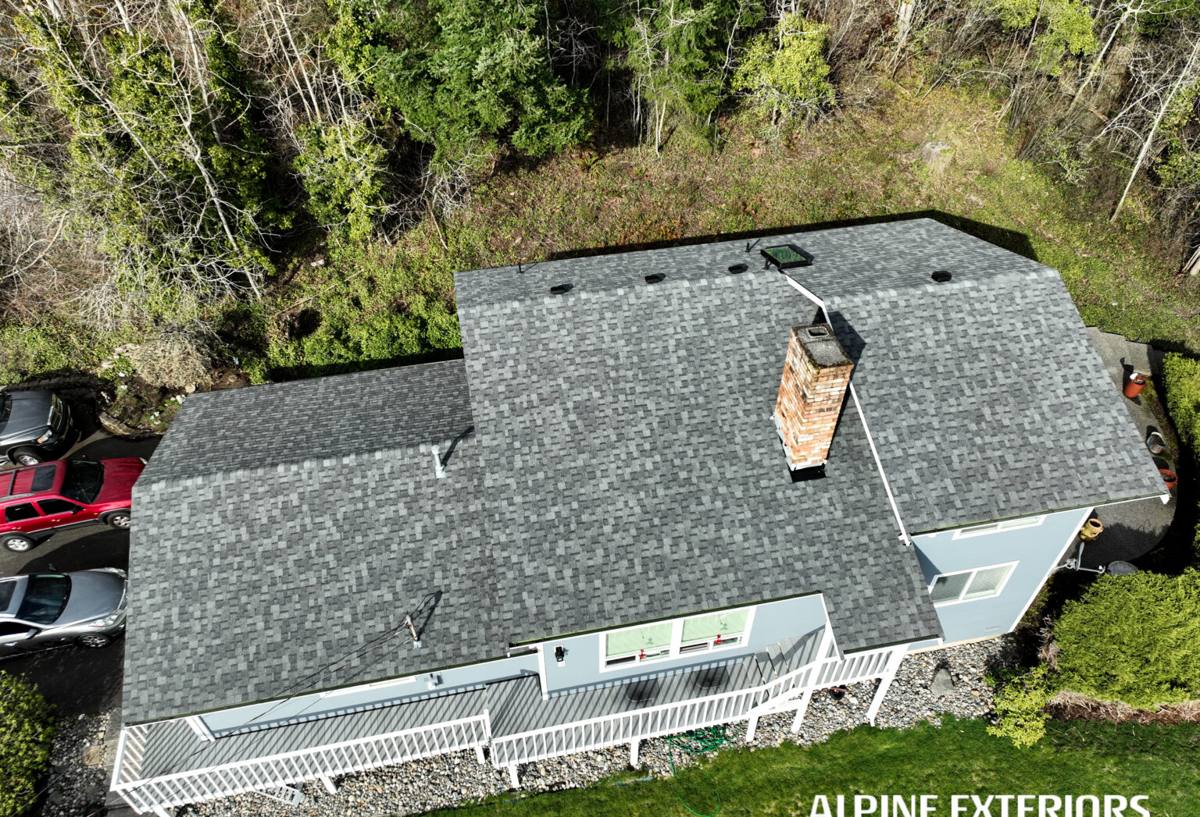
What Salt Air, Driving Rain, and Moss Actually Do to a Roof
Salt Air
Airborne salt from the water accelerates corrosion on anything metal — nail heads, flashing, gutter fasteners, vent caps. On an inland roof, exposed metal might last decades without much trouble. On a Point Roberts roof, unprotected or poorly coated metal starts showing rust and pitting years earlier. Once flashing corrodes, it stops sealing properly, and that's how water starts getting into places it shouldn't.
Wind-Driven Rain
Rain that comes in sideways behaves differently than rain that falls straight down. It gets pushed up under shingle edges, into vent seams, and around chimney flashing that would otherwise shed water fine. Standard installation techniques that work in calmer areas sometimes aren't enough here — laps, seals, and fastening patterns all need to account for wind pressure, not just gravity.
A Long Moss Season
The combination of shade, moisture, and mild temperatures in this part of Whatcom County means moss and algae have a long window to establish themselves — often nearly year-round on north-facing slopes and anywhere tree cover keeps a section of roof from drying out. Moss isn't just cosmetic. It holds water against the roofing surface, works its way under shingle tabs and shakes, and gradually lifts materials that are supposed to lie flat and shed water.
Common Point Roberts Repairs We See
- Corroded or failing flashing around chimneys, skylights, and roof-to-wall transitions
- Moss-lifted shingles, particularly on shaded north- and east-facing slopes
- Wind-driven leaks around vent boots and pipe penetrations
- Loosened or blown-off shingles and shakes after a windstorm off the water
- Gutter and edge-flashing failures that lead to fascia and soffit rot
- Soft or discolored decking found during a leak investigation, once the roofing above it is pulled back
Most of these start small. A cracked flashing seal or a patch of lifted shingles doesn't look urgent, but on this stretch of coast, small openings get tested by weather constantly. What might take years to become a real problem elsewhere can become an active leak here in a single wet winter.
What a Correct Repair Actually Involves
A roof repair that's done right isn't just "find the leak, cover the hole." It starts with figuring out where the water is actually entering — which is often not directly above the stain or drip you see inside. Water can travel along decking or framing before it shows itself, especially on a slope with wind-driven rain pushing it sideways.
Once we've traced the source, the repair itself generally involves:
- Removing the damaged or compromised material down to sound decking
- Checking the decking underneath for soft spots, staining, or rot and replacing any that's compromised
- Replacing flashing rather than resealing it, when the flashing itself is corroded or undersized for the exposure
- Matching shingle or shake material as closely as possible so the repair blends and performs consistently with the surrounding roof
- Re-fastening and sealing with attention to wind exposure, not just a standard nailing pattern
- Clearing moss and debris from the surrounding area so the repaired section doesn't fail again for the same reason
Skipping the decking check is one of the most common shortcuts in a rushed repair. Covering a leak without confirming the wood underneath is sound just means the same repair gets redone — or gets worse — within a season or two.
Repair vs. Replacement: How to Tell Which You Need
| Factor | Points Toward Repair | Points Toward Replacement |
|---|---|---|
| Age of roof | Roof is well under its expected material lifespan | Roof is at or past the end of its typical service life |
| Extent of damage | Problem is localized to one area or feature | Multiple areas failing independently |
| Decking condition | Decking is sound where exposed | Widespread soft spots or rot found |
| Moss/algae coverage | Limited to a section, manageable with cleaning | Heavy, roof-wide growth affecting material integrity |
| Material availability | Matching material still findable | Discontinued material, poor match likely |
| History of repairs | First or second repair in this area | Same area repaired repeatedly without lasting results |
We'll always tell you honestly which side of this table your roof falls on. A repair that's likely to fail again within a year or two isn't a good use of your money, and we'd rather say so upfront than sell you a patch job that doesn't hold.
Our Process for Point Roberts Jobs
Because Point Roberts is a peninsula that requires crossing an international border to reach by road, we plan these jobs a little differently than a repair down the street in Birch Bay.
- We batch material and crew time. Once we're on the peninsula, we make the most of the trip — which keeps our pricing fair instead of charging a premium for every visit.
- We confirm materials and tools before we go. A forgotten part means a delay measured in hours, not minutes, so our prep for Point Roberts jobs is more thorough than for a local Birch Bay call.
- We schedule with buffer. Border wait times and ferry-adjacent traffic patterns on peak days can add unpredictability, so we build that into our estimates rather than promising a tight window we might miss.
- We inspect thoroughly on the first visit. Since a second trip isn't as simple as driving back across town, we do a complete assessment the first time — checking flashing, decking, ventilation, and moss coverage together, not just the specific leak you called about.
Why a Local Crew That Already Works Point Roberts Matters
Plenty of roofing contractors in Whatcom County will say yes to a Point Roberts job if you ask. Fewer actually work there regularly. That difference matters in a few concrete ways.
A crew unfamiliar with the peninsula's logistics may underprice the trip and then either cut corners to make the job pencil out, or come back with a change order once they realize what the crossing and scheduling actually cost. A crew that hasn't dealt with this coastline's specific combination of salt exposure, wind direction, and moss growth may also default to generic repair methods that hold up fine inland but don't account for what this environment does to a roof over time.
We've been doing Point Roberts repairs long enough that the logistics are routine for us, not a surprise. That means fewer scheduling headaches for you, pricing that reflects the real cost of the trip rather than padding for uncertainty, and repair methods chosen because we've seen what actually holds up out here — not just what's standard in a training manual written for a different climate.
What You Can Check Before You Call
Not every roof issue needs an emergency visit, and a little homeowner observation helps us diagnose faster once we do come out.
- Look for water stains on ceilings or in the attic, and note roughly where they are relative to the roofline
- Check gutters and downspouts for granules, moss clumps, or standing debris
- From the ground, look for visibly lifted, cracked, or missing shingles
- Note whether staining or leaks appear only during wind-driven rain, versus any steady rain
- Check for moss buildup, especially on shaded north-facing slopes
- If safely visible, look at flashing around chimneys and vents for rust streaks or gaps
- Write down when the issue started and whether it's gotten worse after a specific storm
None of this requires getting on the roof yourself — a pair of binoculars and a walk around the house is usually enough to give us a useful starting point.
Get an Honest Look at Your Roof
If you're dealing with a leak, lifted shingles, or moss creeping across a section of your Point Roberts roof, we'd rather take a look and tell you straight what it needs than have you guess. Fill out the form below for a free, no-pressure estimate, and we'll walk you through exactly what we find and what it would take to fix it properly.